
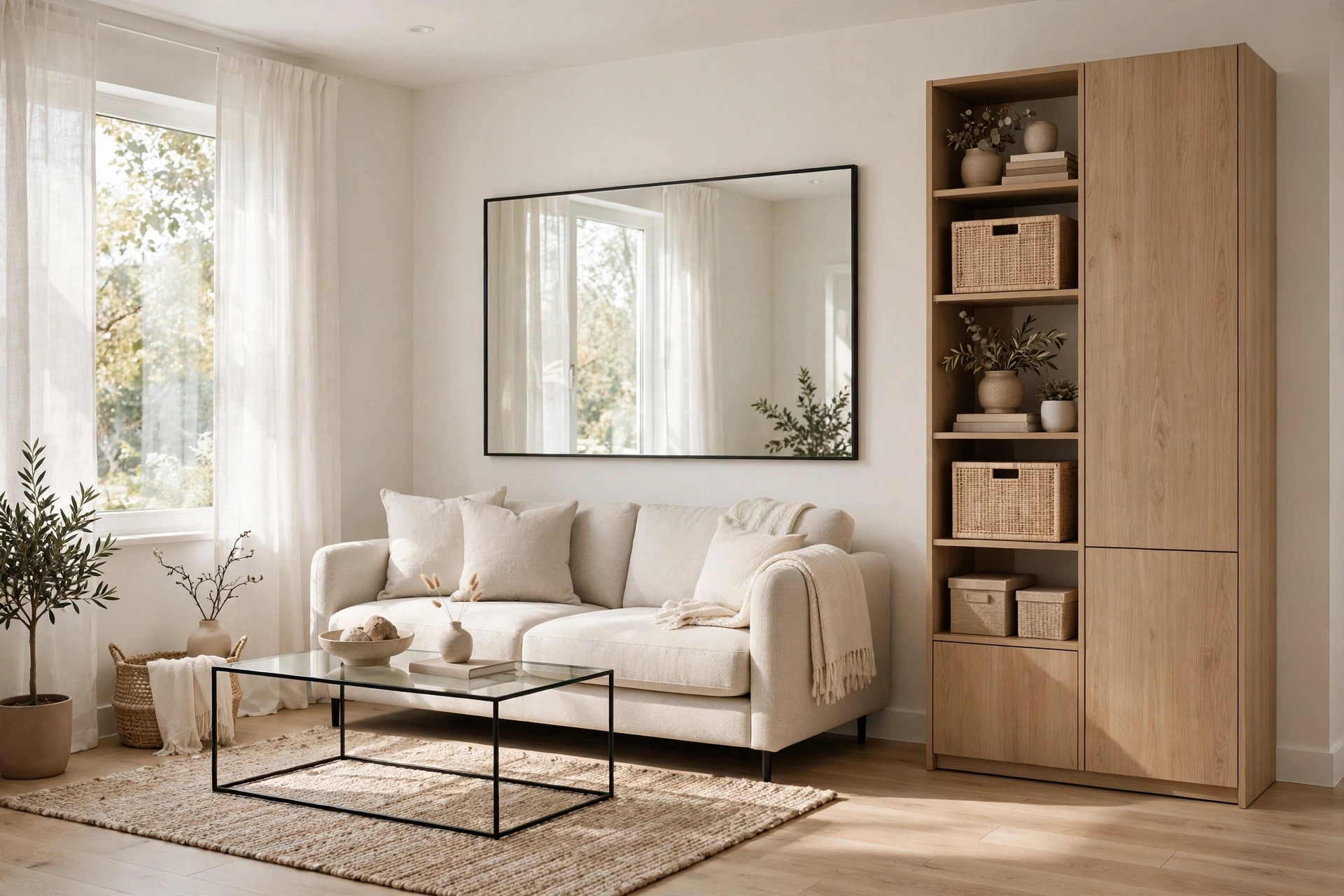
Small living rooms have a secret superpower: with the right choices, they can feel just as open and inviting as rooms twice their size. The trick is choosing smarter — furniture that earns its footprint, colors that stretch the eye, and layouts that waste nothing.
Whether you are styling a studio apartment or a snug family sitting room, these 30 small living room ideas will help your space feel bigger, brighter, and beautifully put together. These small living room decorating ideas are renter-friendly and budget-conscious, and many double as smart small apartment living room ideas. For broader inspiration, explore our home decor collection — and if you are tackling a tiny sleep space too, our small bedroom ideas guide is full of clever tricks.
1. Start with a Light, Airy Color Palette
Light colors are the easiest way to make a small room feel larger. Soft whites, warm beiges, and pale grays bounce light around instead of absorbing it, so keep walls, ceiling, and larger textiles in the same light family.
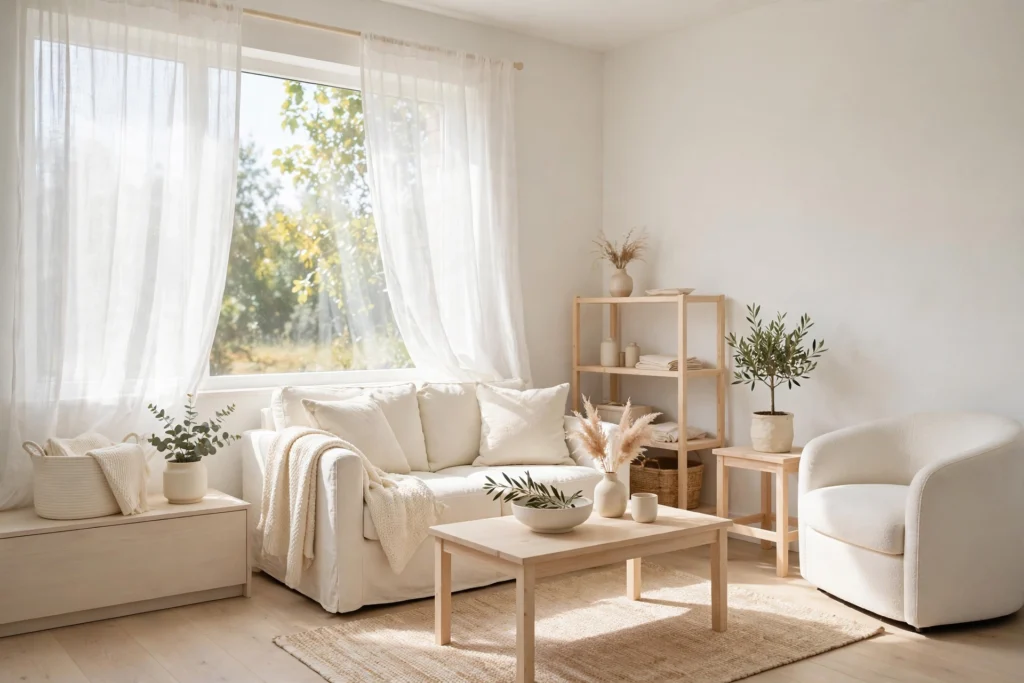
2. Hang a Large Mirror
A mirror is a small room’s best friend. Hung opposite or beside a window, it doubles both the light and the view, creating the illusion of extra square footage — one oversized mirror beats a cluster of small ones.
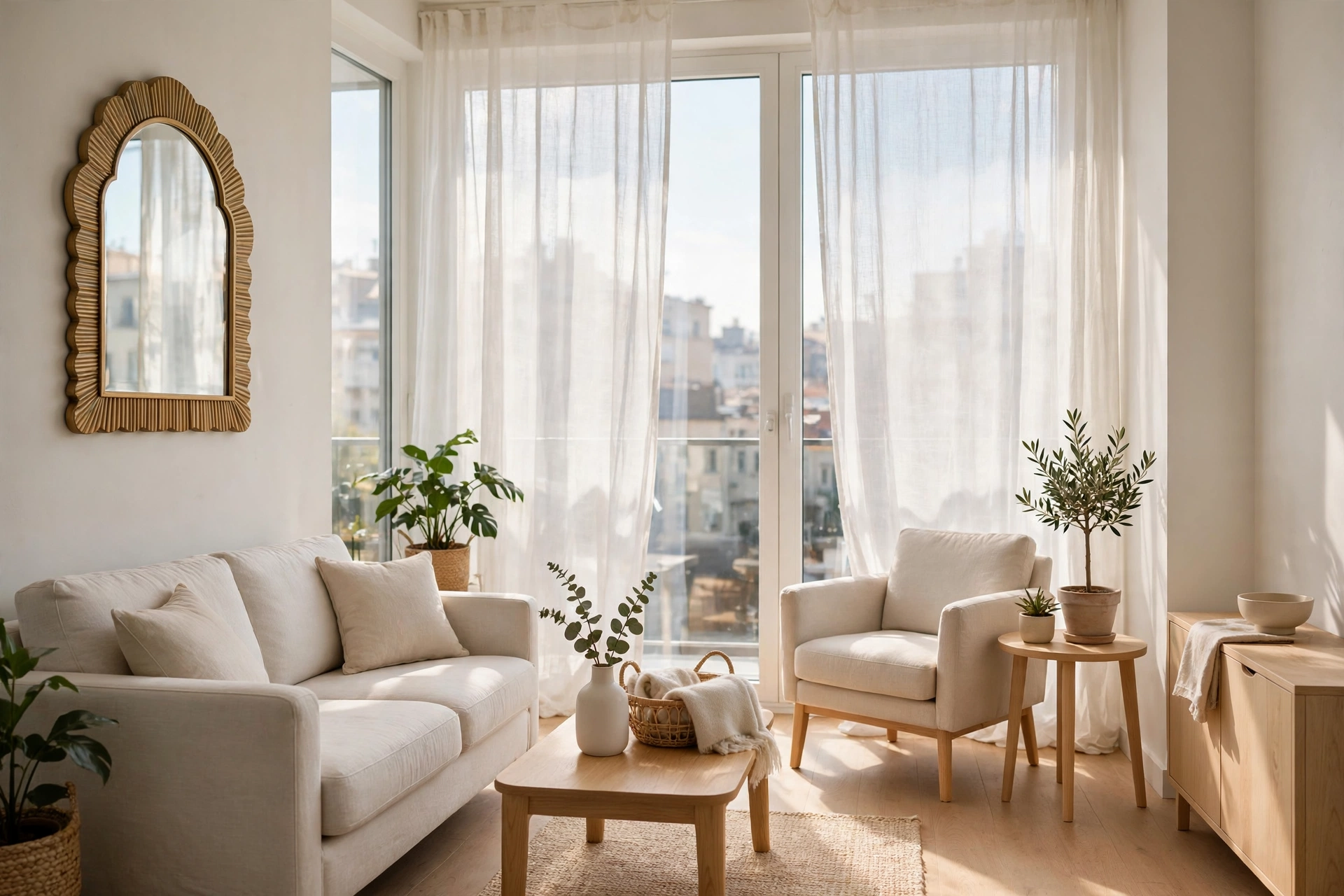
3. Choose Furniture with Exposed Legs
When you can see the floor beneath your sofa and chairs, the room instantly feels airier. Choose mid-century-style pieces with tapered legs, and avoid heavy skirted furniture that sits flat and visually anchors the room down.
4. Swap a Bulky Sofa for a Loveseat
An oversized sofa can swallow a small living room whole. A well-chosen loveseat or apartment-size sofa seats two comfortably while leaving precious floor space free — add an accent chair for flexible extra seating.
5. Invest in Multifunctional Pieces
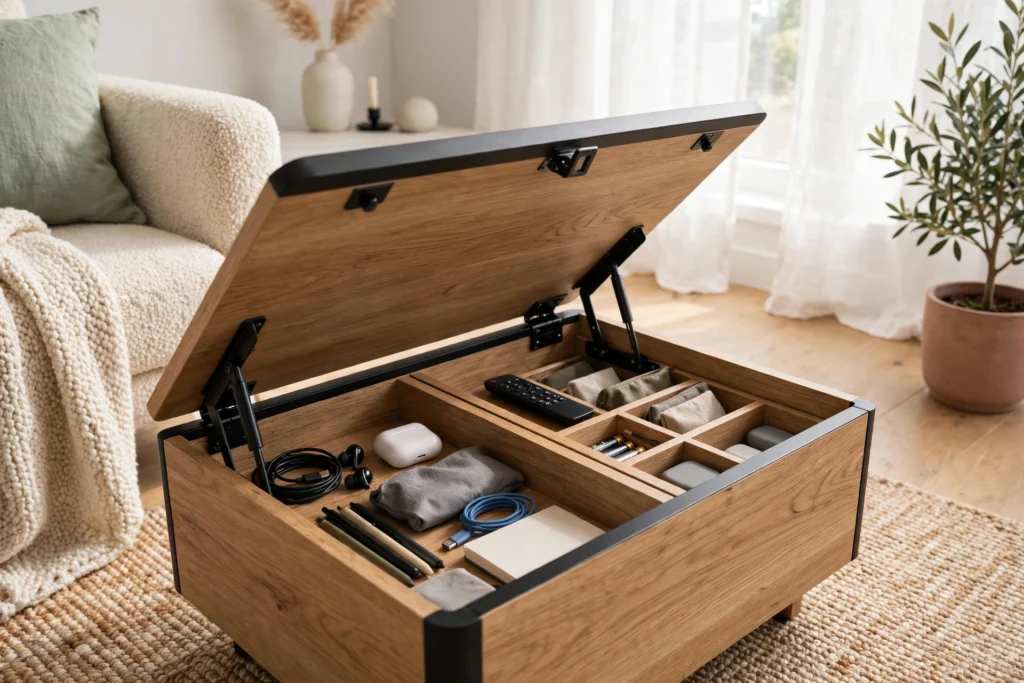
In a small space, every piece should work hard. Look for storage ottomans, nesting side tables, and coffee tables with hidden compartments: furniture that serves two purposes means you need fewer pieces overall.
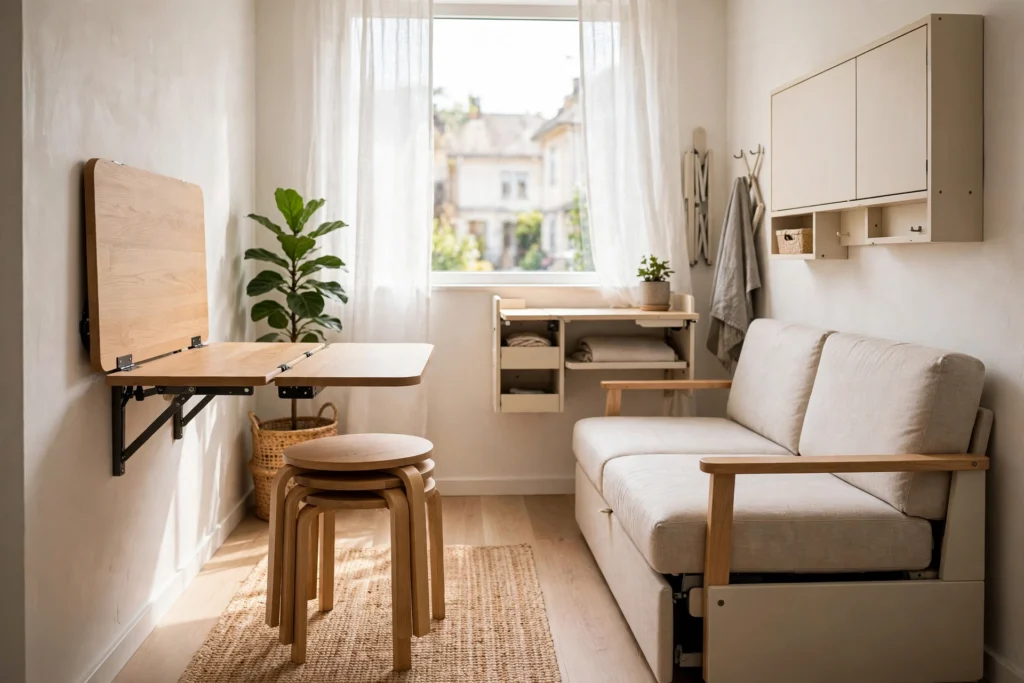
6. Leave Breathing Room Around Key Pieces
Resist pushing every piece flat against the walls — even a few inches of space between furniture and wall feels intentional and airy. Most importantly, keep one clear pathway through the room at all times.
7. Keep More Floor Visible
The more floor you can see, the bigger the room feels. Choose a rug that fits the seating zone without covering every inch, and avoid lining the perimeter with small items that chop up the space.
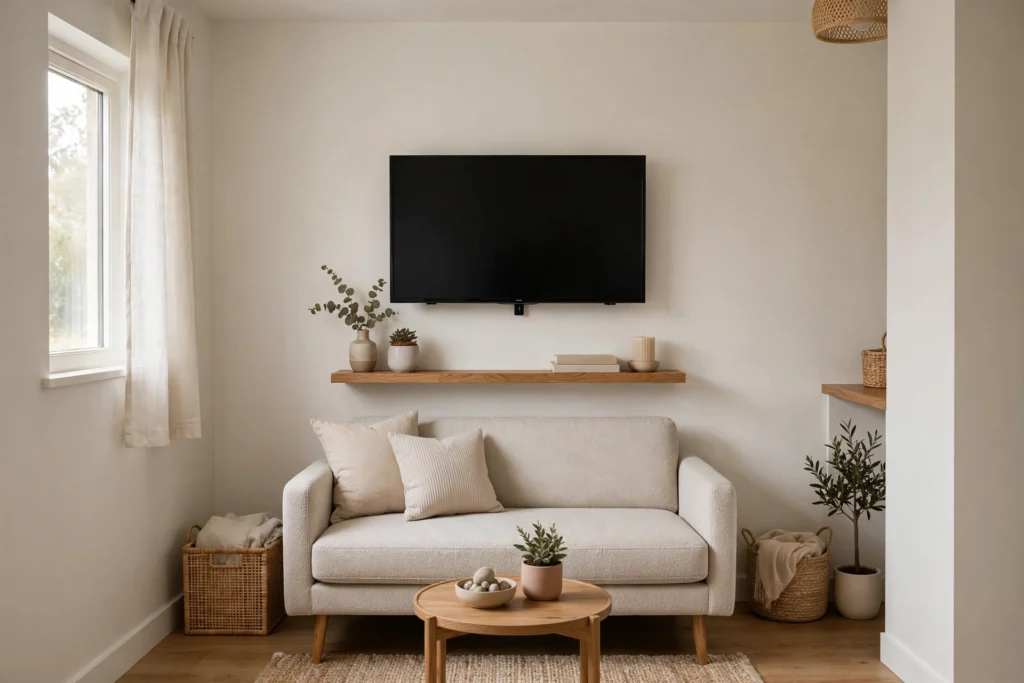
8. Mount the TV on the Wall
A wall-mounted TV frees up the entire footprint of a media console. The floor stays open, the wall looks cleaner, and the room breathes — if mounting is not an option, choose a slim floating console.
9. Think Vertical with Storage
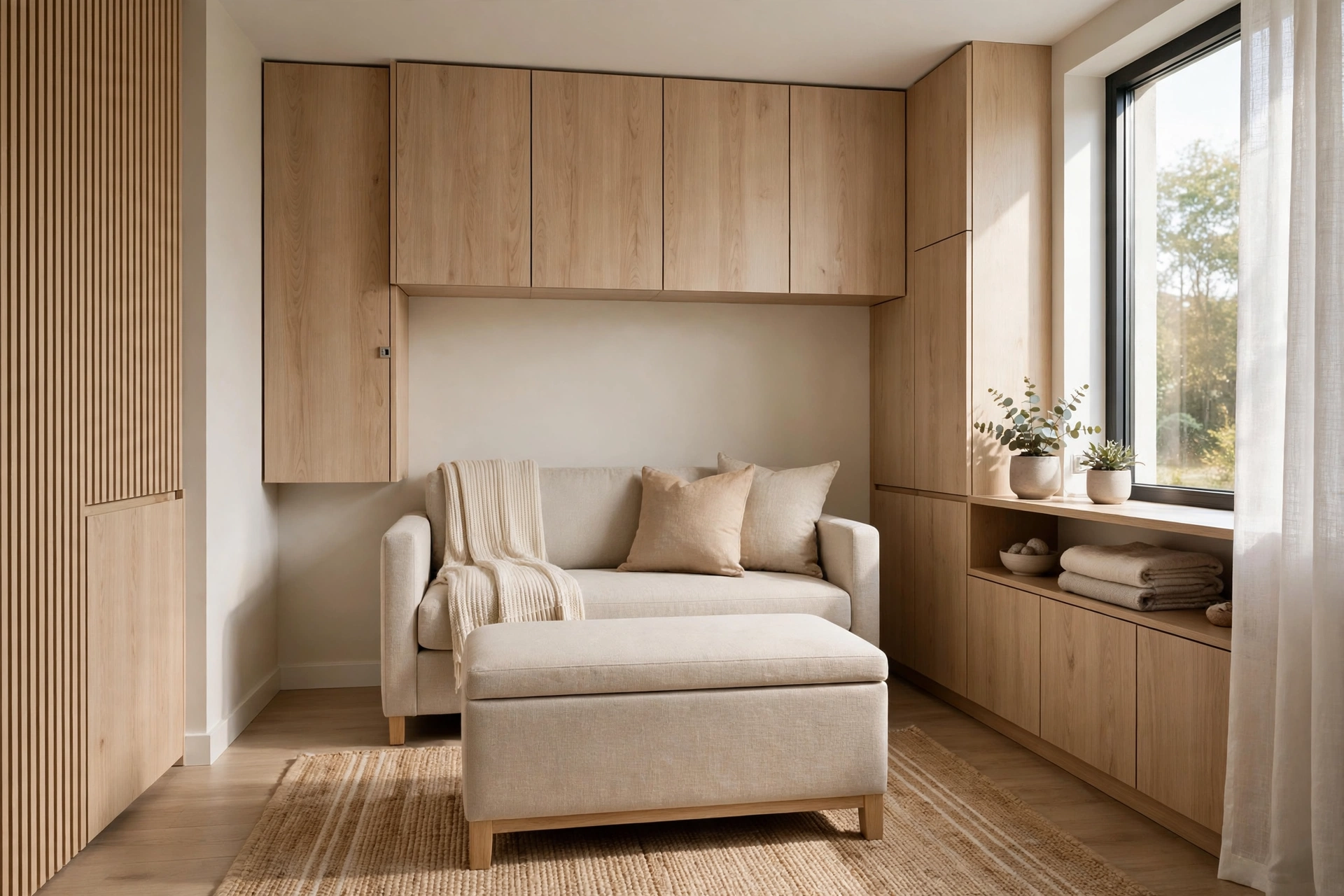
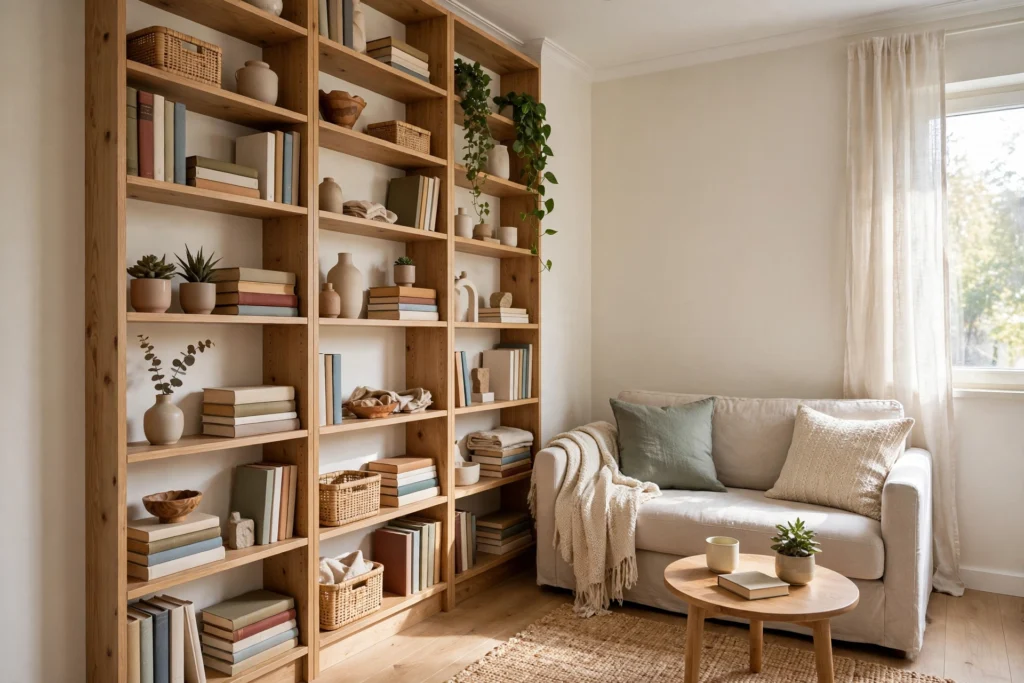
When floor space is scarce, build upward. Tall, narrow bookcases and floating shelves store plenty while occupying almost no floor area, and drawing the eye up makes ceilings feel higher.
10. Try Glass or Acrylic Accents
Transparent furniture is like magic in a small room. A glass coffee table or acrylic side chair provides full function without visual weight, letting the eye travel straight through as if the piece barely exists.
11. Run One Flooring Throughout
Visual breaks chop a small space into smaller pieces. Keep the same flooring flowing into adjoining areas wherever you can — without thresholds interrupting the eye, the whole space reads as one generous room.
12. Maximize Natural Light
Daylight is the single biggest space multiplier there is. Keep windows unobstructed and position mirrors to bounce light deep into the room — a bright room always feels larger than a dim one of the same size.
13. Choose Sheer Curtains
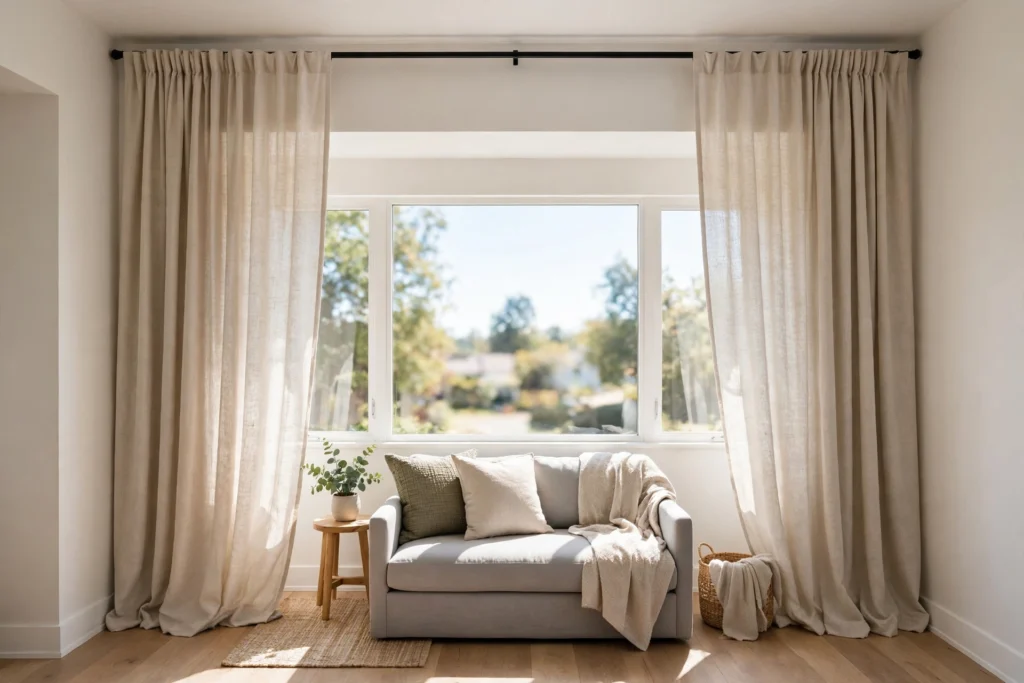
Heavy drapes block precious light and add visual weight. Sheer curtains give privacy while letting sunshine filter through beautifully; hang them high and wide so windows feel as large as possible.
14. Keep Patterns Small and Subtle
Bold, large-scale prints can overwhelm a compact room. Choose small-scale patterns — fine stripes, tiny geometrics, delicate florals — that add interest without shouting, or stick to solids in varied textures.
15. Define Zones with a Rug
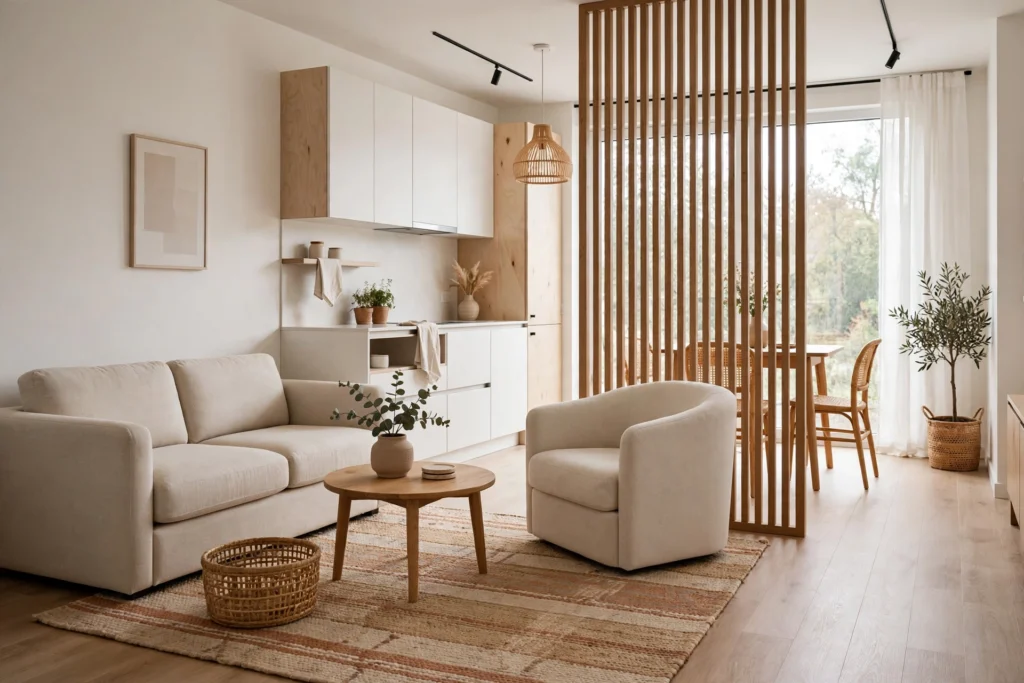
In open-plan spaces, a rug anchors the living area and gives it purpose without building walls. Choose one large enough to sit under the front legs of your seating — a single rug makes a small zone feel complete.
16. Go Monochromatic
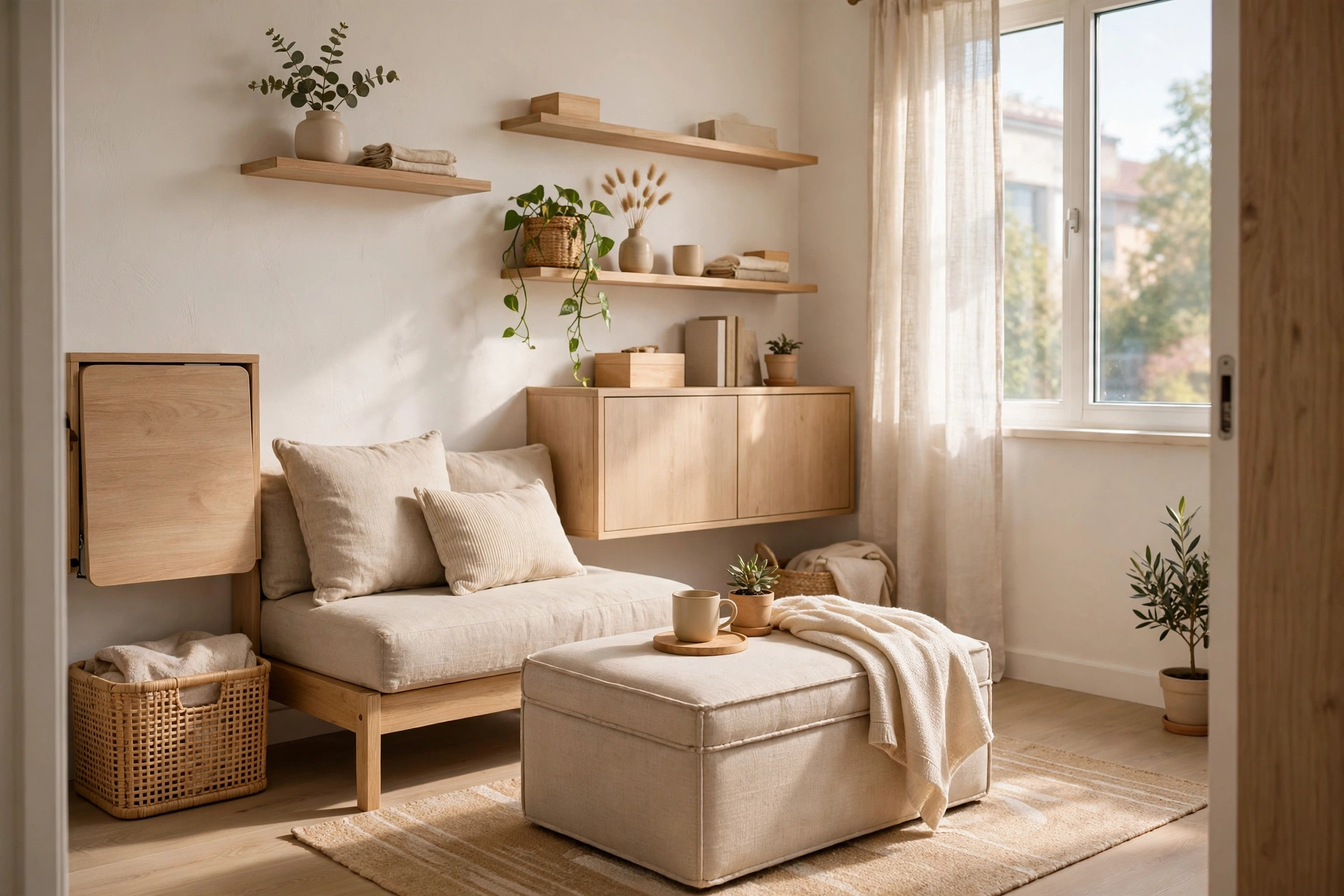
Decorating in tones of one color family creates a seamless look with no jarring stops for the eye. A monochromatic scheme in warm beige or soft gray feels calm and continuous — add depth with texture rather than contrast.
17. Pick a Round Coffee Table
Round tables have no sharp corners jutting into walkways, so they improve flow in tight layouts. A small round ottoman-coffee-table hybrid adds softness, seats extra guests, and hides storage inside.
18. Use Ottomans with Hidden Storage
A storage ottoman is the hardest-working piece in a small living room: footrest, extra seat, and a hiding place for throws and remotes. Choose one in a light fabric so it stays visually quiet.
19. Keep Decor Minimal but Meaningful
Every object in a small room is on display, so make each one count. Choose a few pieces you genuinely love and give them space to breathe — restraint reads as calm, and calm reads as spacious.
20. Hang Curtains High and Wide
Mount curtain rods close to the ceiling and extend them well beyond the window frame. This classic designer trick makes windows look dramatically taller and wider, which makes the whole wall feel larger.
21. Try Armless or Slim-Arm Seating
Bulky rolled arms eat up inches you cannot spare. Armless chairs and sofas with slim track arms have a much narrower profile, so you fit more seating into the same footprint with a lighter, more modern look.
22. Choose Light Upholstery
Dark, heavy fabrics absorb light and make furniture look massive. Light upholstery — cream, oatmeal, pale gray — keeps large pieces feeling buoyant; add color through easily swapped pillows instead.
23. Add Reflective Surfaces
Beyond mirrors, any reflective surface helps bounce light around: a mirrored tray, a glass vase, a brass lamp. These small gleams trick the eye into perceiving more depth and brightness.
24. Keep Walkways Clear
Nothing makes a room feel small like squeezing past furniture. Aim for about 30 inches of clear walking space on main paths — if you have to shuffle sideways, something needs to move or go.
25. Use a Slim Console Behind the Sofa
A narrow console tucked behind a floating sofa adds storage, display space, and a spot for lamps in about ten inches of depth. It also creates graceful division in open-plan layouts without closing anything off.
26. Embrace the Corner Layout
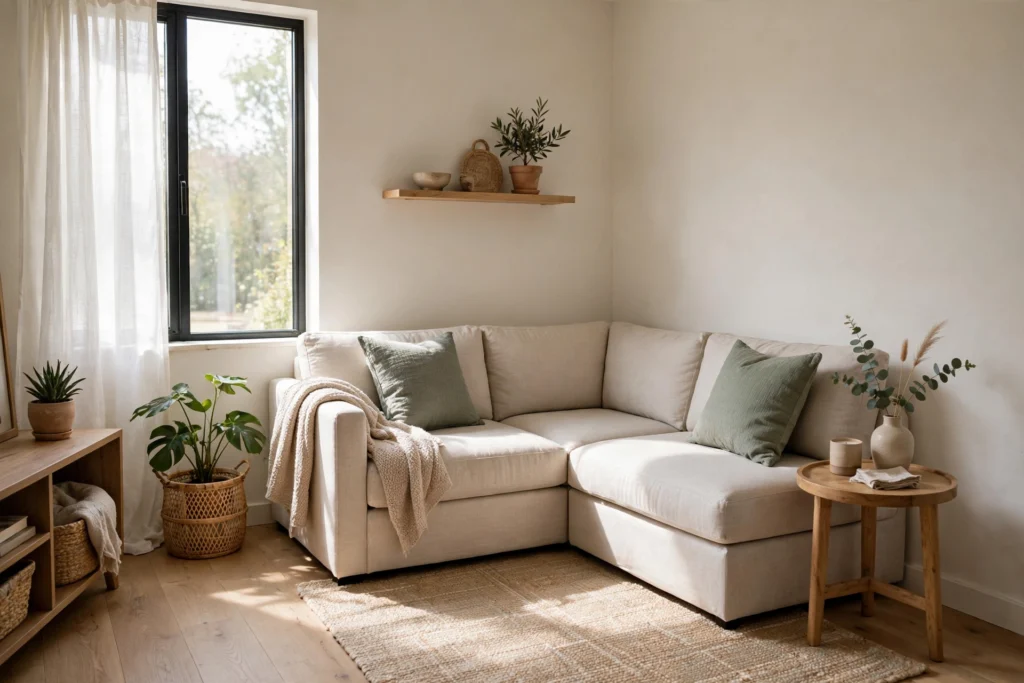
An L-shaped arrangement tucked into the corner is one of the most space-efficient layouts there is. It opens up the center of the room and leaves the opposite corner free for a plant or reading chair.
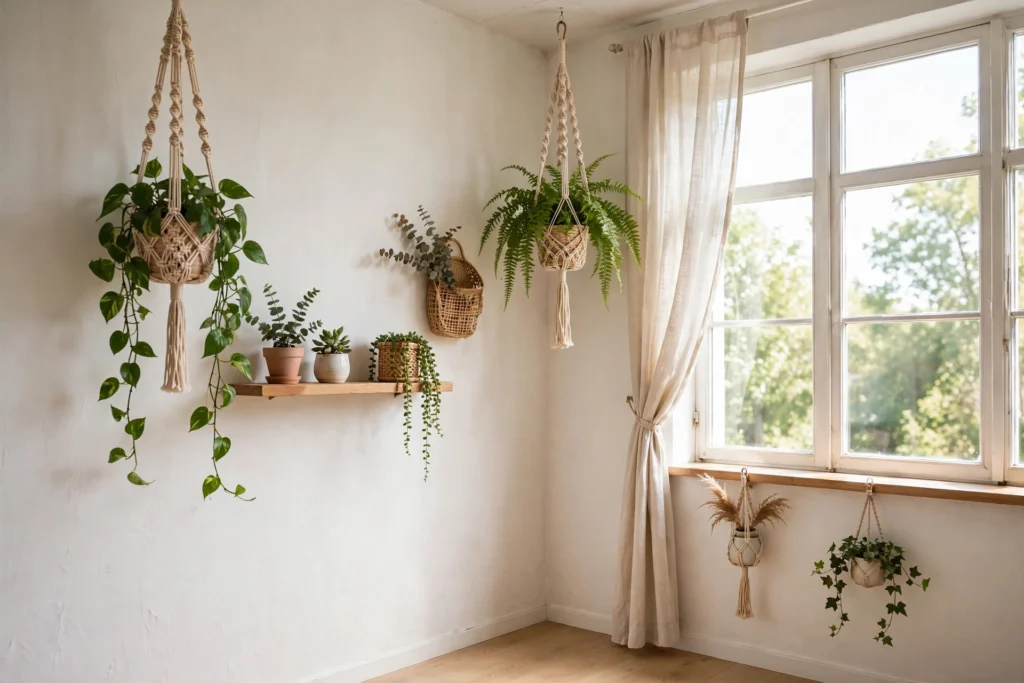
27. Add Greenery, Sparingly
Plants bring life and depth, but a jungle will overwhelm a small room. Choose one statement plant — a tall olive tree or graceful palm — rather than a dozen small pots scattered about.
28. Swap Floor Lamps for Wall Sconces
Every square inch of floor matters, so move lighting onto the walls. Plug-in sconces beside the sofa free up the floor space a lamp would claim, while keeping the warm, layered light you love.
29. Keep the Ceiling Bright White
A bright white ceiling reflects light downward and makes the room feel taller. Even with warm beige or softly colored walls, keep the ceiling crisp white for an outsized effect on loftiness.
30. Edit Ruthlessly and Often
The fastest way to shrink a room is clutter. Make editing a habit: if something does not serve a purpose or spark joy, find it a new home — every surface you clear gives the space room to breathe.
Frequently Asked Questions
What colors make a small living room look bigger?
Light, warm neutrals — soft white, cream, pale beige, light gray — reflect the most light and blur the room’s boundaries. Keep walls, trim, and large furniture in one cohesive light palette for the most expansive effect.
How should I arrange furniture in a small living room?
Anchor seating on a rug, keep one clear walkway, and choose scaled, multifunctional pieces. Floating furniture slightly off the walls and storing vertically keeps the floor open and the layout generous.
Can a small living room still feel cozy?
Absolutely — small spaces become cozy faster than large ones. Layer soft textures, warm lighting, and personal touches; our cozy living room ideas guide shows exactly how.
What is the biggest mistake people make in a small living room?
Choosing furniture that is too large — or too many tiny pieces that create visual clutter. Pick fewer, well-scaled items, give each breathing room, and edit decorative objects regularly.
What are the best small living room ideas for apartments?
Renters should focus on small living room ideas for apartments that do not require drilling or painting: lean a large mirror against the wall, use freestanding shelves, choose light slipcovered furniture, and try small living room decor ideas like sheer curtains, a light rug, and reflective accents. These temporary updates make a big difference without risking your deposit.
Small Space, Big Style
A small living room is not a limitation — it is an invitation to be intentional. With light colors, smart layouts, mirrors, and hardworking furniture, your compact space can feel open, calm, and completely you. And spacious and cozy are not opposites: for warm finishing touches, explore our cozy living room ideas and our home decor collection next.
2 thoughts on “30 Small Living Room Ideas That Feel Spacious”