
There is nothing quite like a living room dressed for Christmas: the tree glowing in the corner, the smell of pine, the soft light of candles on a cold evening. If you are looking for christmas living room decor ideas that feel warm rather than overdone, you are in the right place. This year, the mood is jewel tones — burgundy, emerald, plum, and champagne gold — layered over warm lighting and nostalgic, collected-over-time styling. Think velvet cushions, real garlands, flickering candlelight, and a tree that looks like it has stories to tell. Below you will find 15 ideas you can mix and match, whether your living room is large or small, and whether your budget is generous or delightfully tiny. Each idea works on its own, but together they build a room that feels intentional: a palette that repeats, lighting that glows, and textures that invite you to stay a little longer. So put on a Christmas playlist, make yourself a warm drink, and let’s turn your living room into the coziest room in the house.
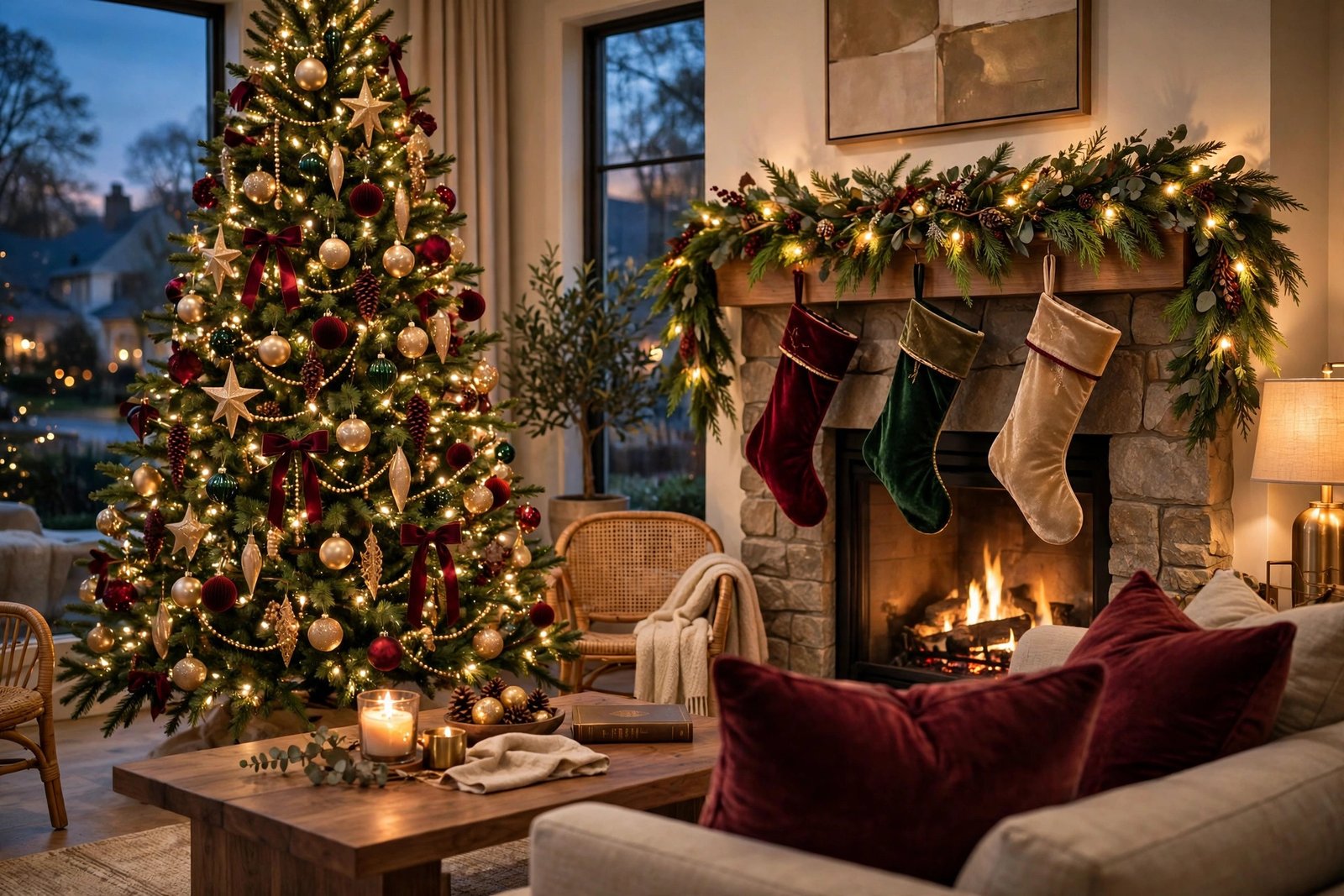
1. Start With a Jewel-Tone Palette
Before you buy a single ornament, choose your palette. This season’s most inviting Christmas living rooms lean on jewel tones: deep burgundy, rich emerald, plum, and champagne gold, grounded by warm cream and natural evergreen. Pick three tones and repeat them across the tree, cushions, throws, and wrapping paper so the room feels designed rather than random. Jewel tones work beautifully with warm-white lights, which soften the richness instead of competing with it. If your sofa is neutral, you are already halfway there — just add velvet cushions in two of your chosen tones and a throw in the third.
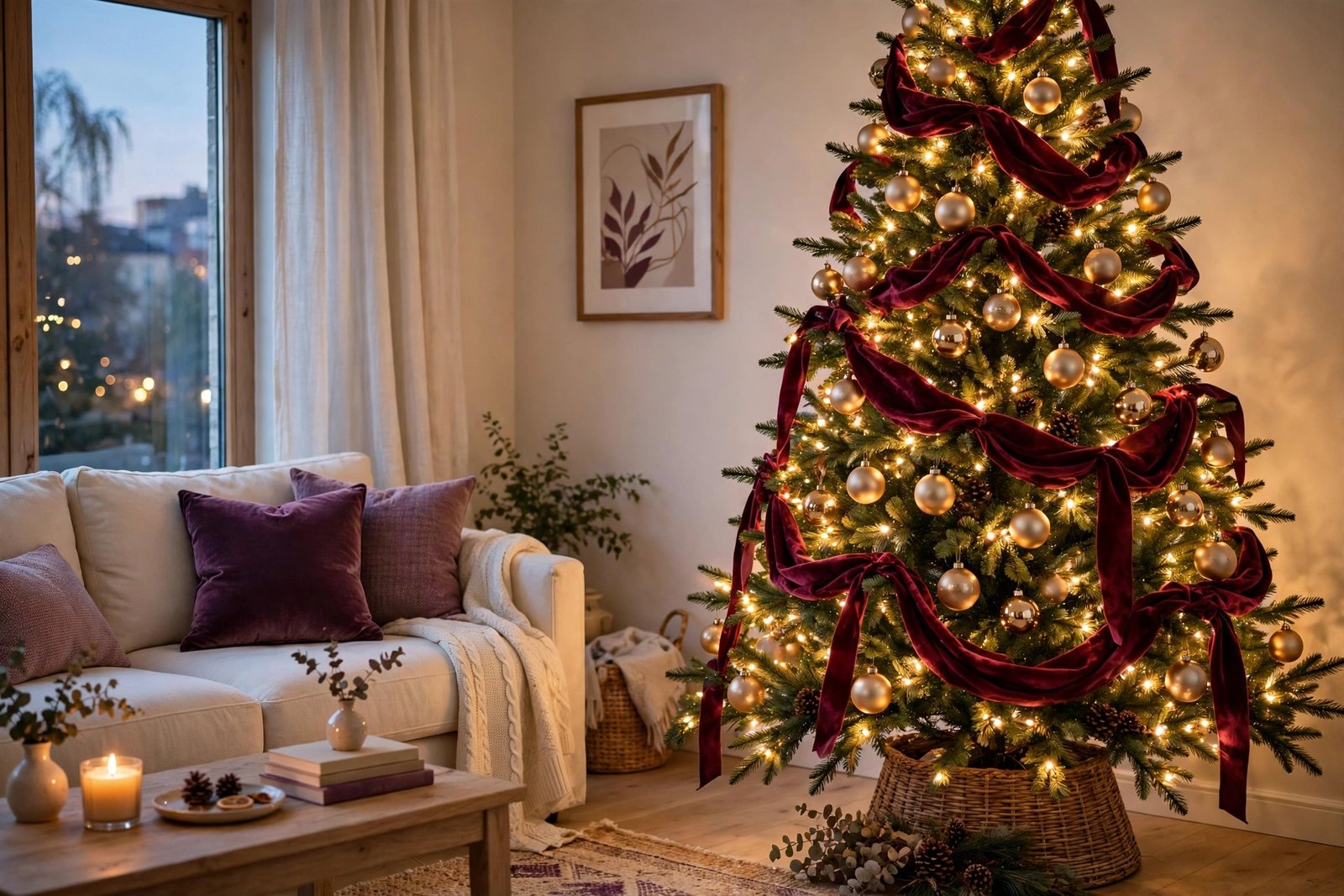
2. Let the Tree Be the Star
Your tree sets the tone for the whole room, so give it the attention it deserves. A burgundy and champagne scheme looks instantly elegant: velvet ribbons, gold baubles in mixed finishes, and warm-white lights wrapped generously from the inside out. Step back every few ornaments to check the balance, and cluster ornaments in groups of three rather than spacing them evenly — it looks far more natural. Finish with a simple topper, like a gold star or a soft bow, and let the lower branches hold the ornaments your family loves most, where they can actually be seen.

3. Dress the Mantel Like a Showpiece
If you have a fireplace, the mantel is your second focal point. Layer a thick fresh or faux evergreen garland along it, weaving in warm-white fairy lights and a few ornaments in your palette. Hang stockings at varied heights for a collected feel, and anchor the ends with candle lanterns or small potted evergreens. Keep the center simple — a mirror, a wreath, or a framed print — so the garland can shine. Even if your fireplace never gets lit, a glowing mantel makes the whole room feel warmer on a winter evening.
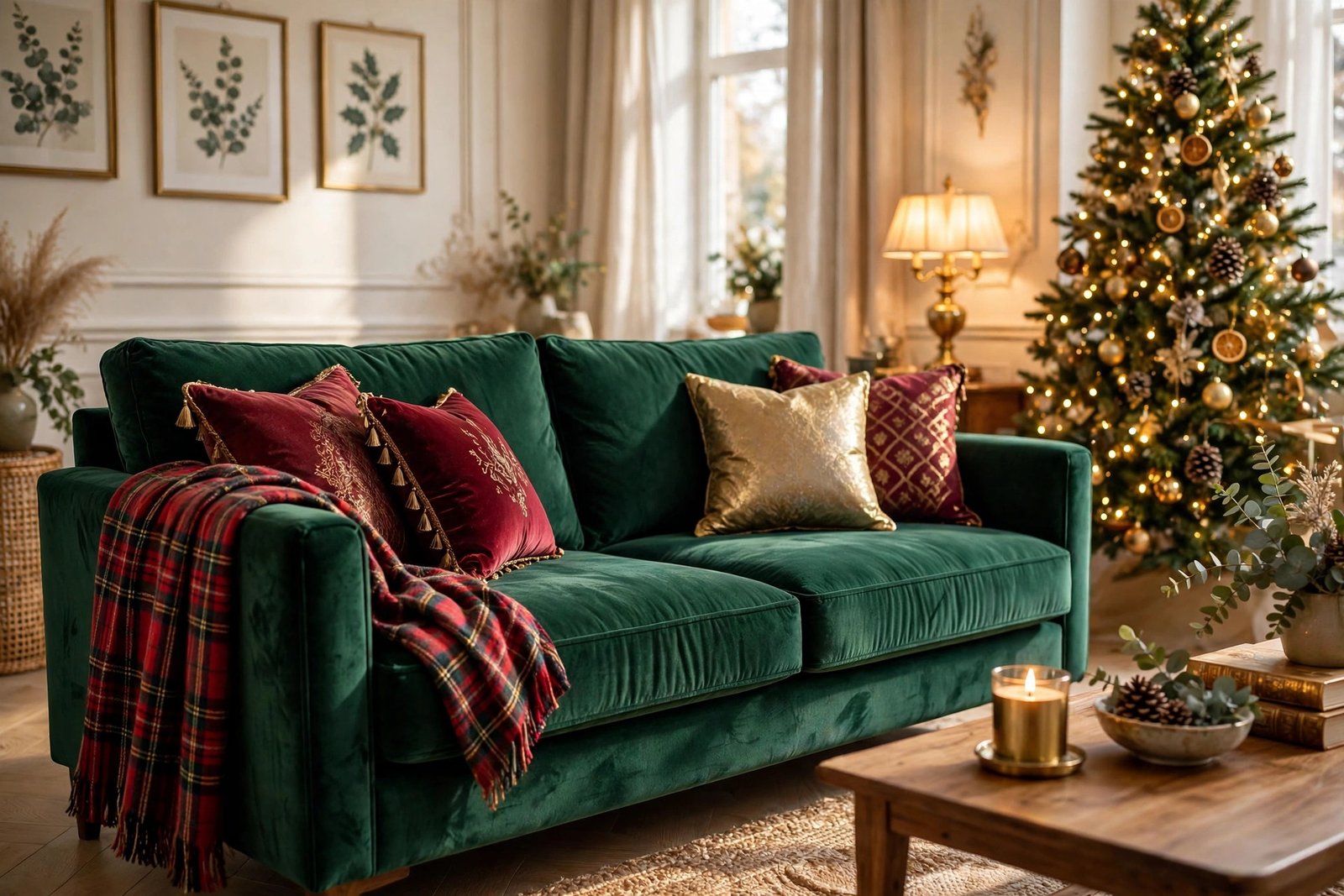
4. Swap in Velvet and Plaid Textiles
The fastest way to make a living room feel like Christmas is to change its textiles. Swap everyday cushions for velvet ones in emerald or burgundy, drape a plaid throw over the sofa arm, and layer a chunky knit blanket on the chair. These textures instantly signal the season, and they invite people to curl up. Choose covers with zippers so you can store them flat after the holidays and reuse them year after year. A couple of well-chosen textiles will do more for the room than a dozen small decorations scattered everywhere.
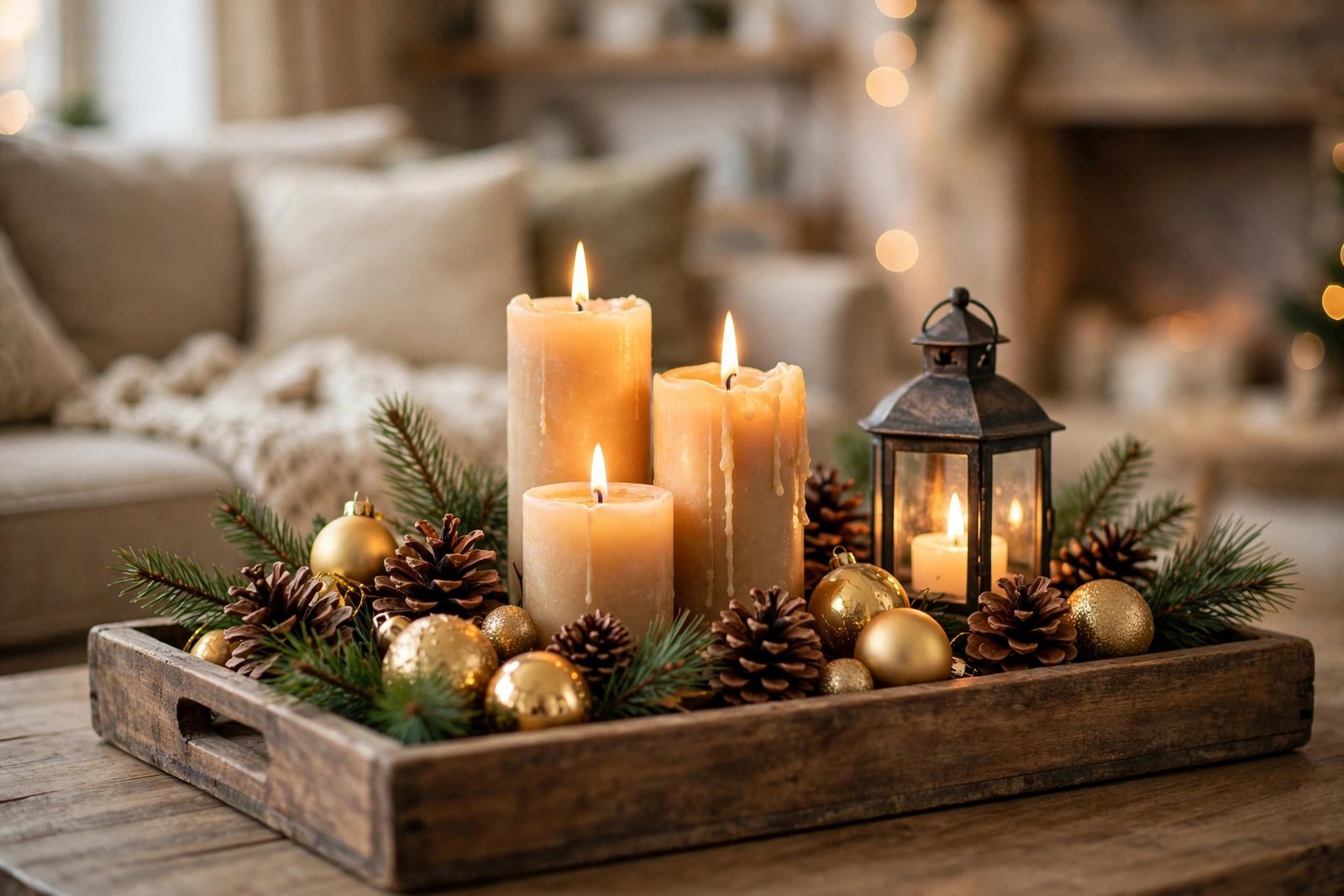
5. Style a Candlelit Coffee Table
Your coffee table is where guests’ eyes land when they sit down, so style it like a centerpiece. Start with a wooden tray to contain the look, then add pillar candles in varying heights, a few pinecones, fresh pine sprigs, and one or two gold ornaments. A small lantern with a flickering candle adds instant warmth. Keep one side of the tray clear for mugs — a centerpiece that leaves no room for cocoa is a centerpiece nobody enjoys. Flameless candles work just as well if you have little ones or pets running around.
6. Frame the Windows With Light
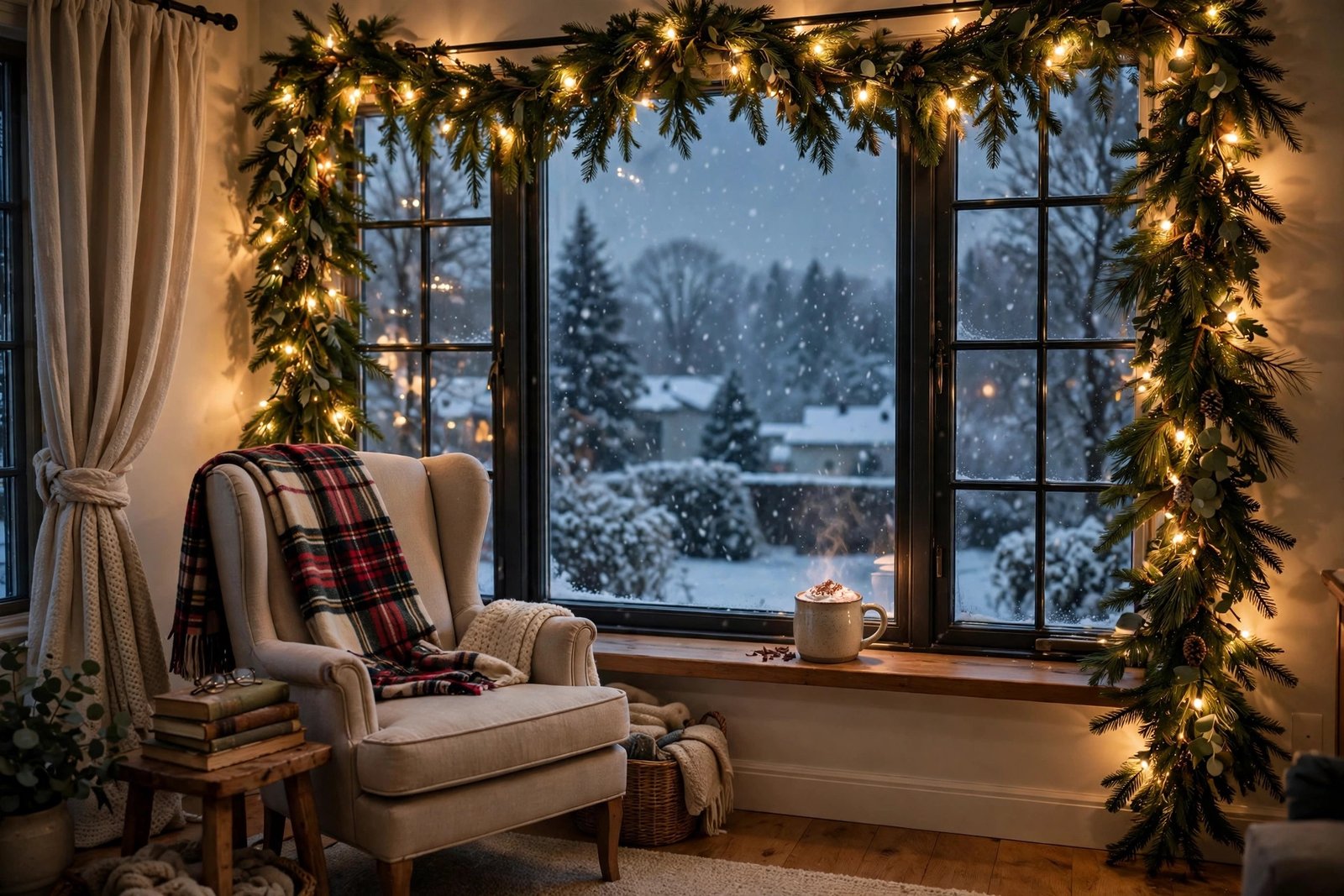
Windows are often forgotten at Christmas, but they frame the whole room from both inside and out. Drape a simple evergreen garland along the top of the frame and weave in warm fairy lights, letting a few strands fall softly at the corners. From the street, your home glows; from the sofa, the window becomes part of the decor instead of a dark hole. Add a plaid throw to the chair beside the window and a mug of cocoa on the sill, and you have the coziest seat in the house.
7. Create a Nostalgic Village Display
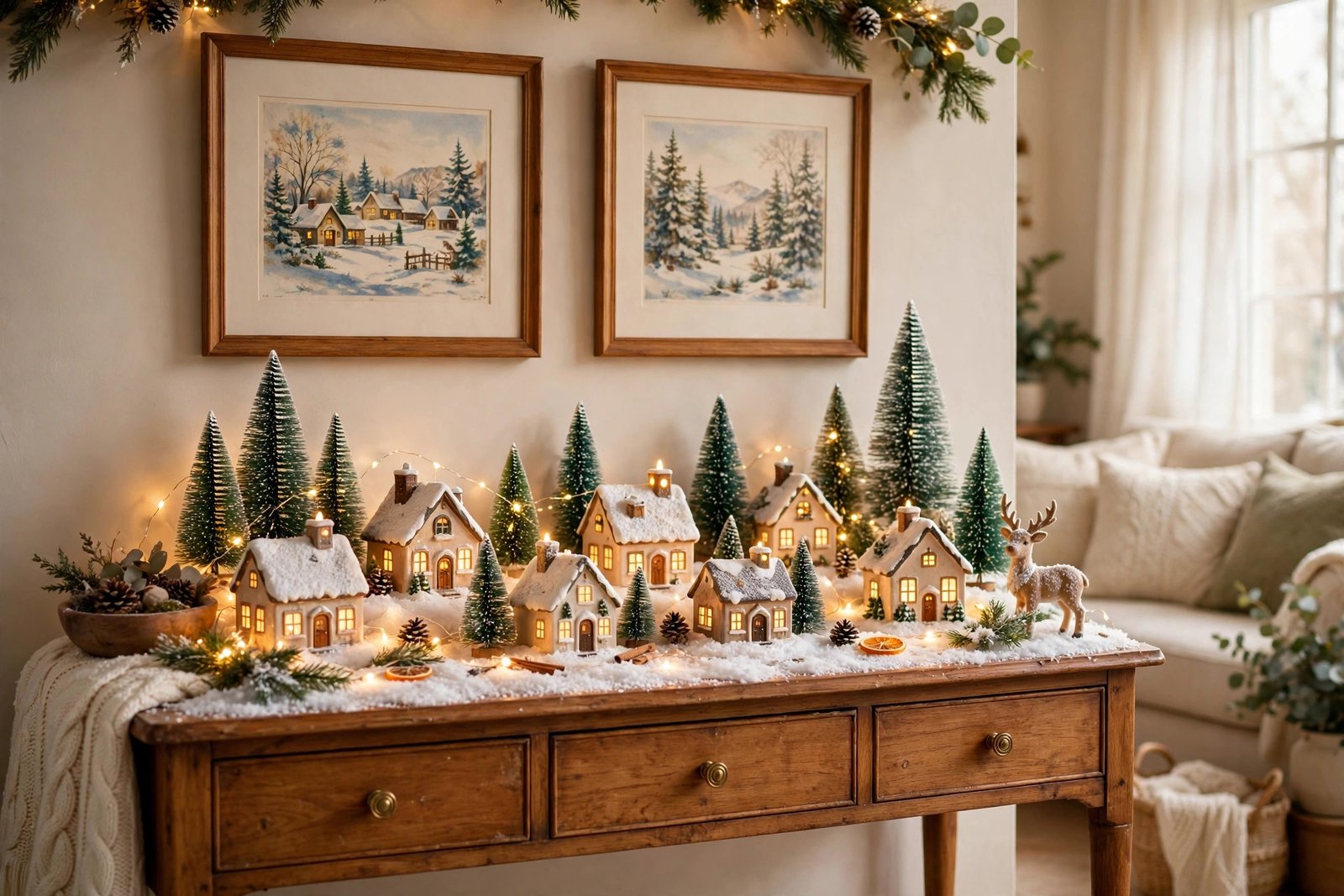
Nothing says nostalgic Christmas quite like a miniature village. Dedicate a console table or sideboard to a cluster of tiny lit ceramic houses, bottle-brush trees, and a dusting of fake snow. Battery-operated fairy lights tucked between the houses make the whole scene glow after dark. This is a wonderful place to display pieces collected over the years — the charm is in the mix, not in matching sets. Keep the backdrop simple, with one framed print above, so the little village gets all the attention.
8. Build a Reading Nook for Slow Evenings
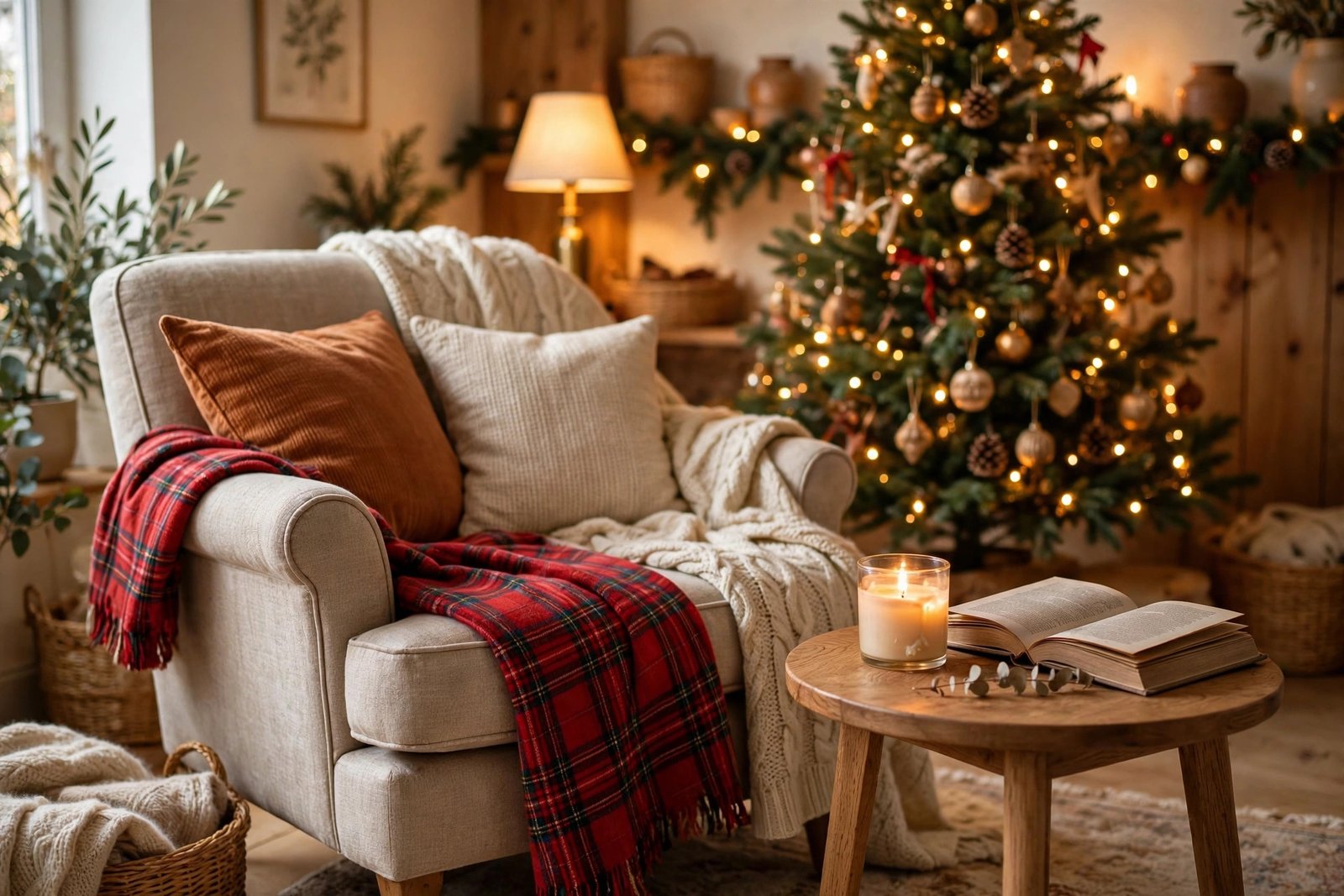
Christmas is made for slow evenings, so carve out one corner purely for comfort. An armchair with a plaid blanket and a knit throw, a small side table for a candle and a book, and a lamp with a warm bulb are all you need. Position it near the tree if you can, so the lights are part of the view. This little nook becomes the spot for morning coffee, evening reading, and long conversations — the kind of corner that makes a house feel like home through the whole season.

9. Mix Ornament Finishes for Depth
A tree decorated entirely in shiny baubles can look flat. The trick is mixing finishes: matte velvet ornaments, shiny gold baubles, frosted glass, and natural wood or dried orange slices. Plum and champagne pair beautifully here, with burgundy ribbon tying the whole look together. The variety catches the light differently at every angle, so the tree looks richer and more interesting up close. Aim for a base of classic baubles, then add a handful of special, textured pieces as the stars.
10. Layer Rugs and Warm Lighting
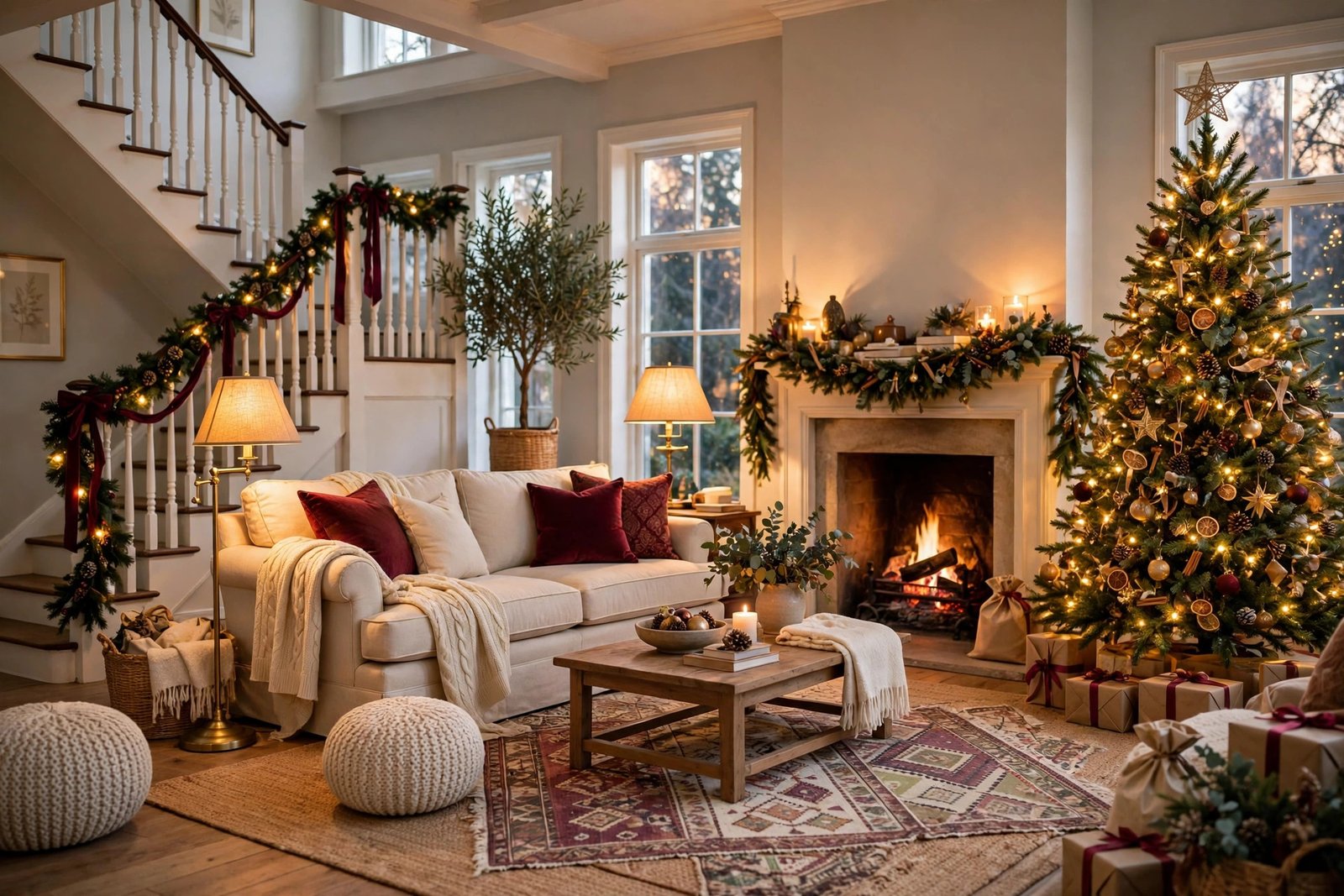
Warmth is not just a color — it is a feeling, and layered lighting creates it. Swap cool-white bulbs for warm ones, add a floor lamp beside the sofa, and let the tree lights and candles do the rest. Layering a smaller patterned rug over a larger neutral one adds softness underfoot and pulls the seating area together. When the overhead lights go off and the room glows from lamps and fairy lights alone, you will understand why lighting matters more than any single decoration.
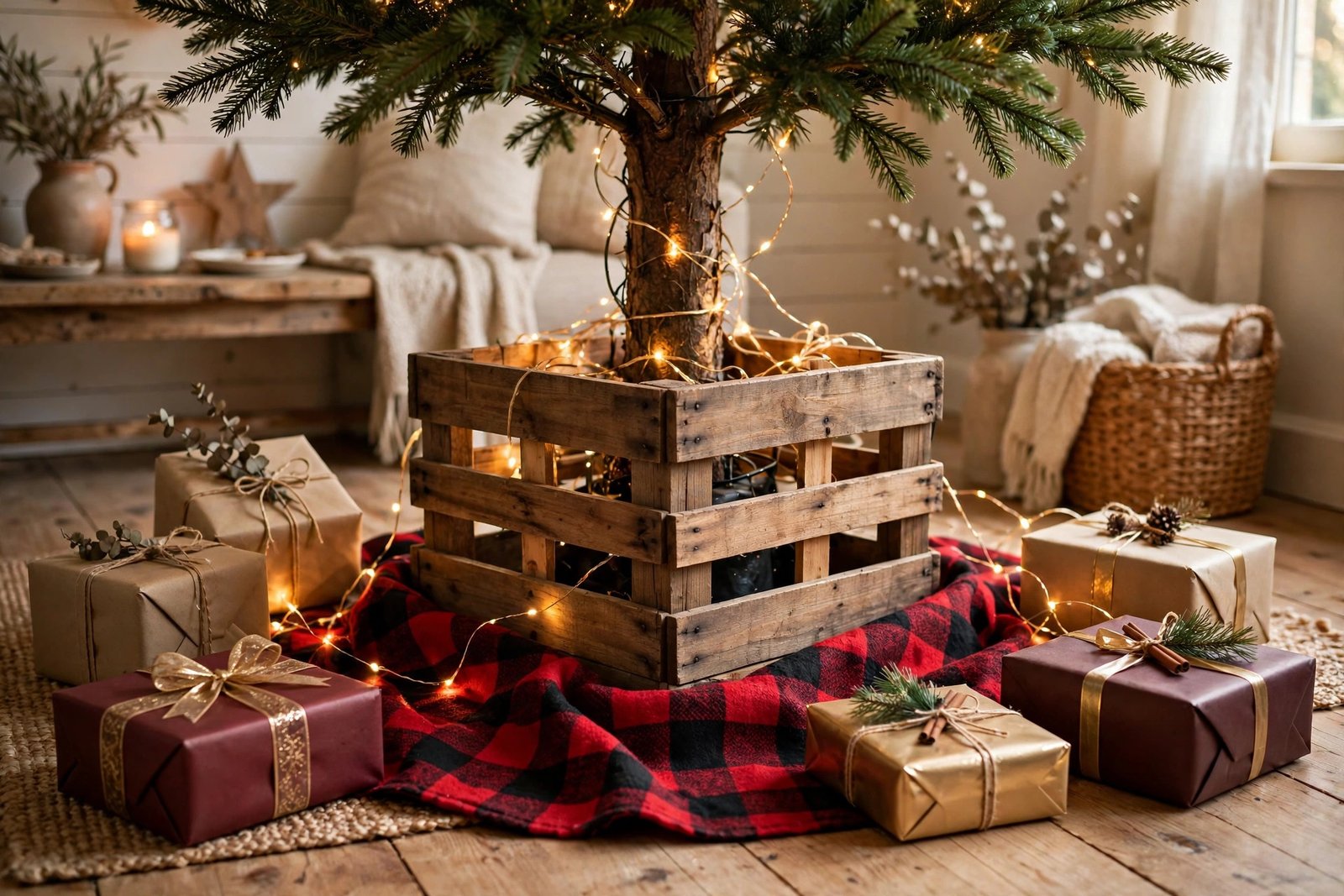
11. Style the Tree Base, Not Just the Tree
The bottom of the tree is often an afterthought, but it is right at eye level when you are sitting down. A rustic wooden crate collar, a thick plaid tree skirt, or a woven basket hides the stand beautifully and gives you a surface for presents. Wrap gifts early in your palette — burgundy, gold, and kraft paper with simple ribbon — and the presents themselves become part of the decor. Just remember to leave a little space to actually sit and enjoy the view.
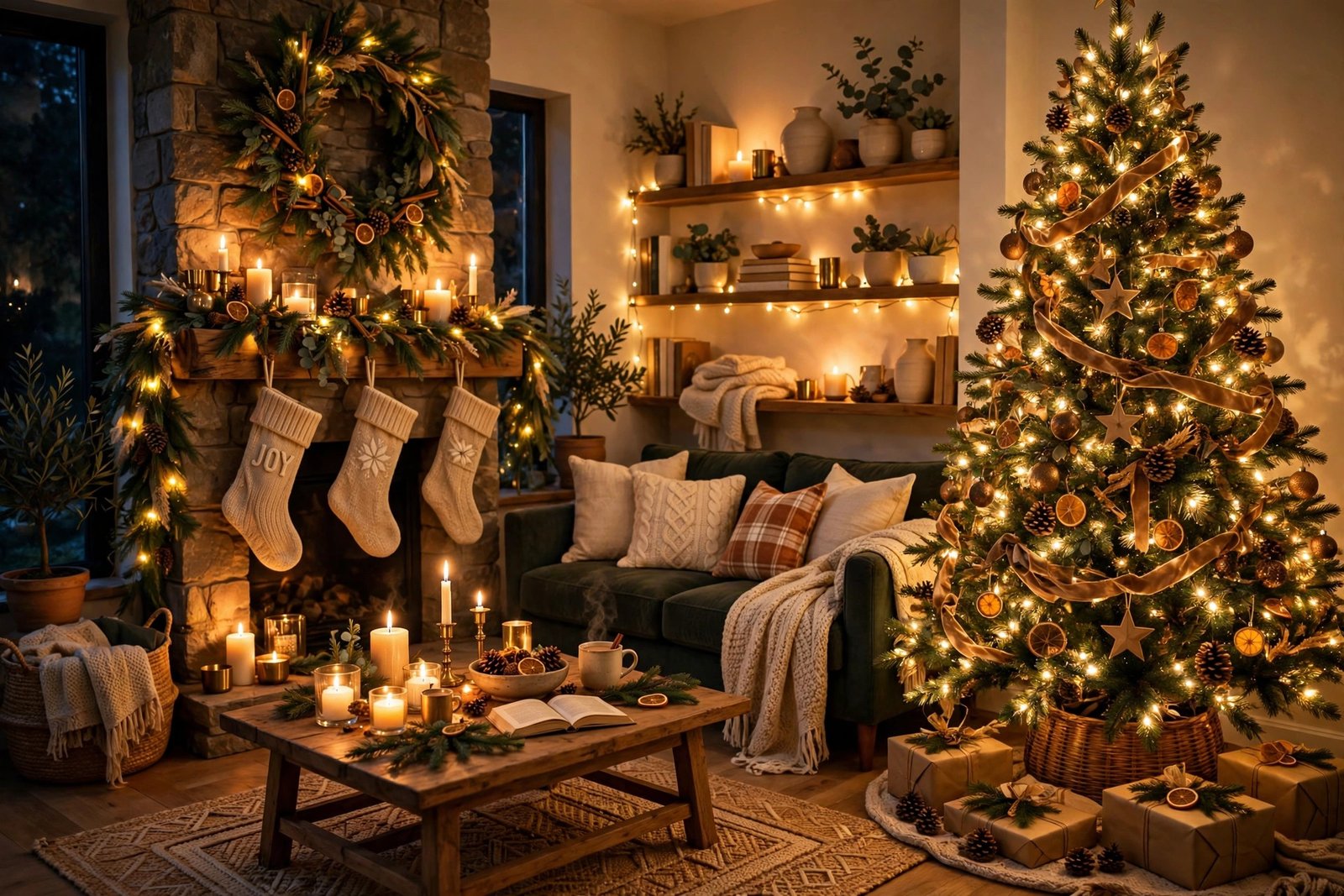
12. Add Garland to Unexpected Places
Once the mantel and tree are done, carry the greenery further. A garland along the staircase banister, draped over a bookshelf, or swagged above a doorway ties the whole room together and makes the decor feel intentional. Keep it light: a slim garland with a few lights and ornaments is plenty for a shelf or banister. The goal is a thread of green running through the room, connecting each decorated spot to the next, so the room reads as one festive whole.
13. Bring in Natural, Nostalgic Touches
Some of the most charming Christmas decor costs almost nothing. Bowls of pinecones, dried orange slices on the tree, cinnamon sticks tied with twine, and sprigs of fresh pine on shelves all bring scent and nostalgia into the room. These natural touches soften the sparkle of ornaments and make the space feel gathered rather than bought. If you love baking, a plate of gingerbread on the coffee table doubles as decor — at least until someone eats it.
14. Keep One Calm Corner
It is tempting to decorate every surface, but a room that is festive everywhere can feel overwhelming. Leave one corner — a side table, a single chair, or a stretch of wall — mostly undecorated, with just a candle or a small plant. That breathing space makes the decorated areas stand out more, and it gives the eye somewhere to rest. Restraint is what separates a room that feels curated from one that feels cluttered, especially in a smaller living room.
15. Finish With Scent and Sound
The final layer of Christmas decor is invisible: scent and sound. A simmering pot of orange, cinnamon, and cloves on the stove, a pine-scented candle, or a bowl of spiced potpourri makes the room smell like the season the moment someone walks in. Pair it with a quiet playlist of classic carols playing in the background. When the room looks festive, smells festive, and sounds festive, you have not just decorated a living room — you have created the feeling of Christmas itself.
Try This: The One-Hour Christmas Living Room Refresh
Short on time? You can transform your living room in a single hour. First, swap your cushions and throws for velvet and plaid (10 minutes). Next, drape a lit garland on the mantel and hang the stockings (15 minutes). Then style the coffee table with a tray, candles, and pine sprigs (10 minutes). Wrap the tree lights and add your favorite ornaments (20 minutes). Finally, dim the overhead lights, light the candles, and put on a Christmas playlist (5 minutes). Step back and enjoy — the room will feel completely different, and you did not buy a thing beyond the garland.
Christmas Living Room Decor on a Budget
A festive living room does not need a big budget — it needs a plan. Start by shopping your own home: last year’s ornaments, blankets, candles, and ribbon can all be reused in a new palette, and rearranging what you already own often looks fresher than buying new. Fresh garlands and pine sprigs are often cheaper than faux ones and smell wonderful, and a single strand of warm-white fairy lights can transform a mantel, a window, and a bookshelf if you move it around the room. Hit the thrift store for brass candlesticks, glass ornaments, and velvet ribbon — secondhand finds often look more authentic than new ones anyway. Wrap presents in kraft paper with twine and a sprig of pine for a look that costs almost nothing and photographs beautifully. Spend your money where it shows most: one good garland, one set of velvet cushion covers, and warm bulbs for your lamps. Everything else can be gathered, borrowed, or made. If you do buy new, buy after Christmas, when decorations go on deep clearance, and store them carefully for next year. Set a limit before you shop, buy the big pieces first, and let the small touches come from nature and things you already own. A room decorated with intention always looks more expensive than one decorated with a credit card.
Putting It All Together: Your Decorating Order
Decorating in the right order saves time and avoids rework. Start with the tree, since it is the biggest piece and everything else plays off it. Next, hang the mantel garland and stockings, then dress the windows and any banisters. After the big greenery is in place, swap the textiles — cushions, throws, and the rug layer — so the color palette settles. Then style the small surfaces: the coffee table tray, the console village, and the reading nook. Finally, add the lights last, dim the overheads, and walk the room as a guest would, from the doorway. Anything that looks crowded or out of place will jump out at you from that angle. Adjust, light the candles, and you are done. Working in this order means you never have to move a styled coffee table to make room for a tree, and the room comes together in an afternoon rather than a weekend.
Common Mistakes to Avoid
Using cool-white lights. Cool light makes jewel tones look harsh and the room feel clinical. Warm-white lights are the single easiest upgrade you can make, and they cost the same as cool ones.
Decorating every surface. When everything is decorated, nothing stands out. Choose your focal points — tree, mantel, coffee table — and leave the rest calm. A bare side table is not a failure; it is breathing room.
Mixing too many colors. A tree in red, gold, silver, blue, and green reads as chaos. Pick three tones and repeat them through the room, from the tree to the cushions to the wrapping paper.
Forgetting the tree base. A bare metal stand ruins the illusion. A basket, crate collar, or tree skirt finishes the look for very little money and makes the whole tree look intentional.
Buying everything new each year. The most charming Christmas rooms are built over time. Reuse, rearrange, and add one or two new pieces a year instead of starting from scratch — your room will gain character annually.
Ignoring scale. Tiny ornaments on a huge tree — or a giant tree crammed into a small room — both look off. Match your decor to the size of your space, and let a smaller tree shine rather than forcing a big one.
Skipping scent. A room can look perfect and still feel flat. Without a candle, simmering spices, or fresh pine, half the Christmas atmosphere is missing.
Frequently Asked Questions
What colors are trending for Christmas living room decor in 2026?
Jewel tones are leading the way: burgundy, emerald, plum, and champagne gold, paired with warm cream and natural evergreen. The look is rich and nostalgic rather than bright and novelty-driven, and it pairs perfectly with warm-white lighting.
How do I decorate a small living room for Christmas without clutter?
Choose a smaller tree or a tabletop tree, focus on two focal points instead of five, and use vertical decor like garlands and window lights rather than floor pieces. Keep one corner calm, and let textiles — cushions, throws — do most of the work.
Should Christmas lights be warm white or multicolor?
For a warm, elegant living room, warm white wins. It flatters jewel tones, wood, and candlelight, and it makes the room glow rather than flash. Save multicolor lights for a playroom or a kids’ tree if you love them.
How early should I decorate my living room for Christmas?
Most people start in late November, but if you love the season, there is no rule against decorating earlier — especially with a slow, layered approach. Just keep fresh garlands for the final two weeks so they stay green through Christmas Day.
How can I decorate my living room for Christmas on a budget?
Reuse last year’s pieces in a new color palette, use natural touches like pinecones and dried oranges, wrap gifts in kraft paper, and spend on high-impact items only: warm lights, one good garland, and velvet cushion covers.
What is the easiest way to make a living room feel cozy at Christmas?
Lighting. Swap to warm bulbs, turn off the overhead lights, and let the tree lights, candles, and lamps do the work. Add a soft throw and a lit candle, and the room will feel cozy before you add a single ornament.
However you choose to decorate, remember that the best Christmas living rooms are the ones people actually live in — a little imperfect, full of light, and made for gathering. Pick the ideas that fit your home, start with the tree and the lights, and let the rest grow from there. If you only do three things this year, make them these: choose your three jewel tones and repeat them, switch every bulb and light strand to warm white, and add one soft, touchable texture to every seat. Those three moves alone will carry the whole season. Then, year after year, add one new piece you truly love — a handmade ornament, a vintage candlestick, a velvet cushion in just the right shade — and watch your Christmas room gain the kind of character that cannot be bought in a single shopping trip. Merry decorating, and may your living room glow all season long. For more inspiration, explore our cozy living room ideas, Christmas bedroom decor ideas, aesthetic room ideas on a budget, and small living room ideas — and if you are curious about the history behind the holiday, read about Christmas on Wikipedia.