
December has a way of filling every surface in the house — one more ornament, one more garland, one more box of decorations that seemed like a good idea in the shop. These minimalist christmas decor ideas take the opposite approach, and the result is often the calmest, most beautiful room you will have all year. Minimalist Christmas decorating is not about having no decorations at all. It is about choosing a few pieces you truly love, giving each one room to breathe, and letting warm light and natural greenery do most of the work. The rooms below feel festive the moment you walk in, yet they are easy to live with, easy to clean around, and easy to put away in January.
The secret is restraint with intention. Instead of decorating every wall, shelf, and windowsill, pick one or two focal points — usually the tree and the mantel — and keep the rest of the room almost bare. A limited palette of greens, creams, whites, and natural wood ties everything together, so even a handful of decorations looks deliberate rather than sparse. If you are starting from a fuller, more traditional look, you may enjoy our christmas tree decor ideas for the classic tree itself, then use the ideas here to simplify everything around it. Now, let us begin with the single most important decision.
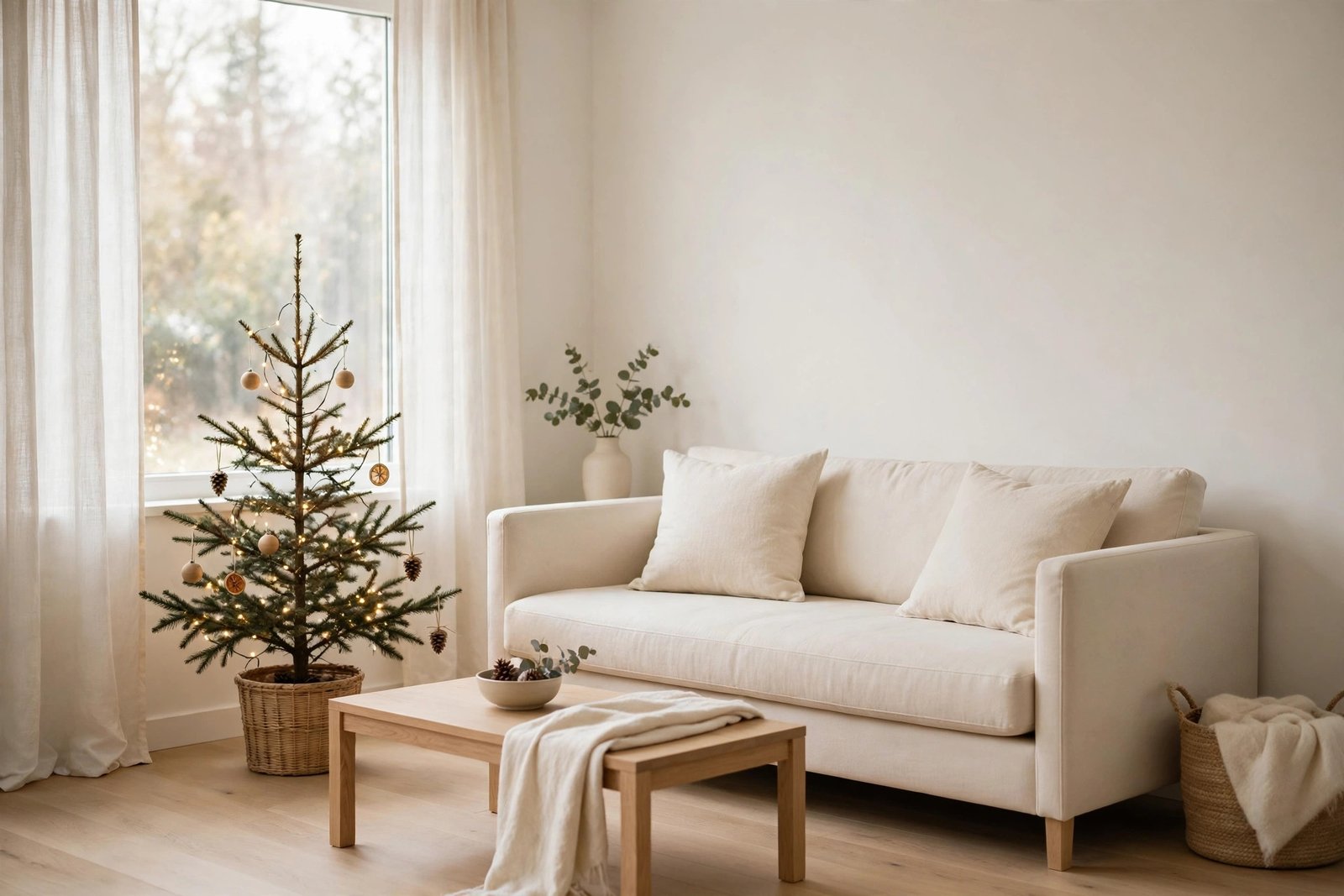
1. Choose One Small, Simple Tree
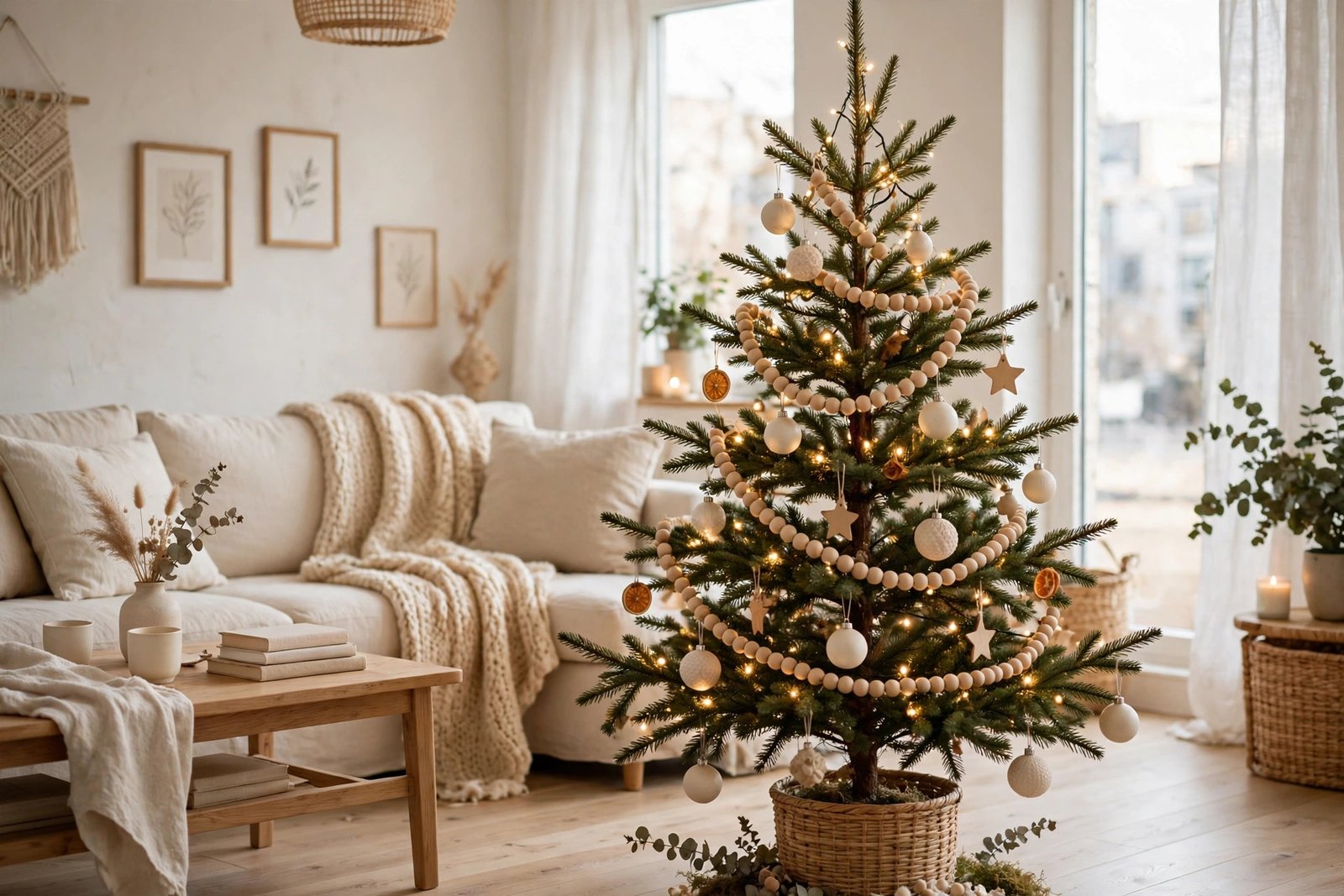
A minimalist Christmas starts with the tree, and smaller is almost always better. Choose a slim or sparsely branched tree that fits your room without swallowing it, or go for a tabletop tree if your space is tight. A modest tree needs fewer ornaments to look finished, costs less to decorate, and leaves the rest of the room feeling open. Place it where it gets natural light during the day and becomes a gentle glow in the evening, rather than cramming it into a corner behind furniture. If you are working with a compact home, our christmas decor ideas for small spaces have more slim-tree and tabletop options that keep the magic without crowding the room. One well-chosen tree beats three competing displays every time.
2. Dress the Mantel With a Single Garland
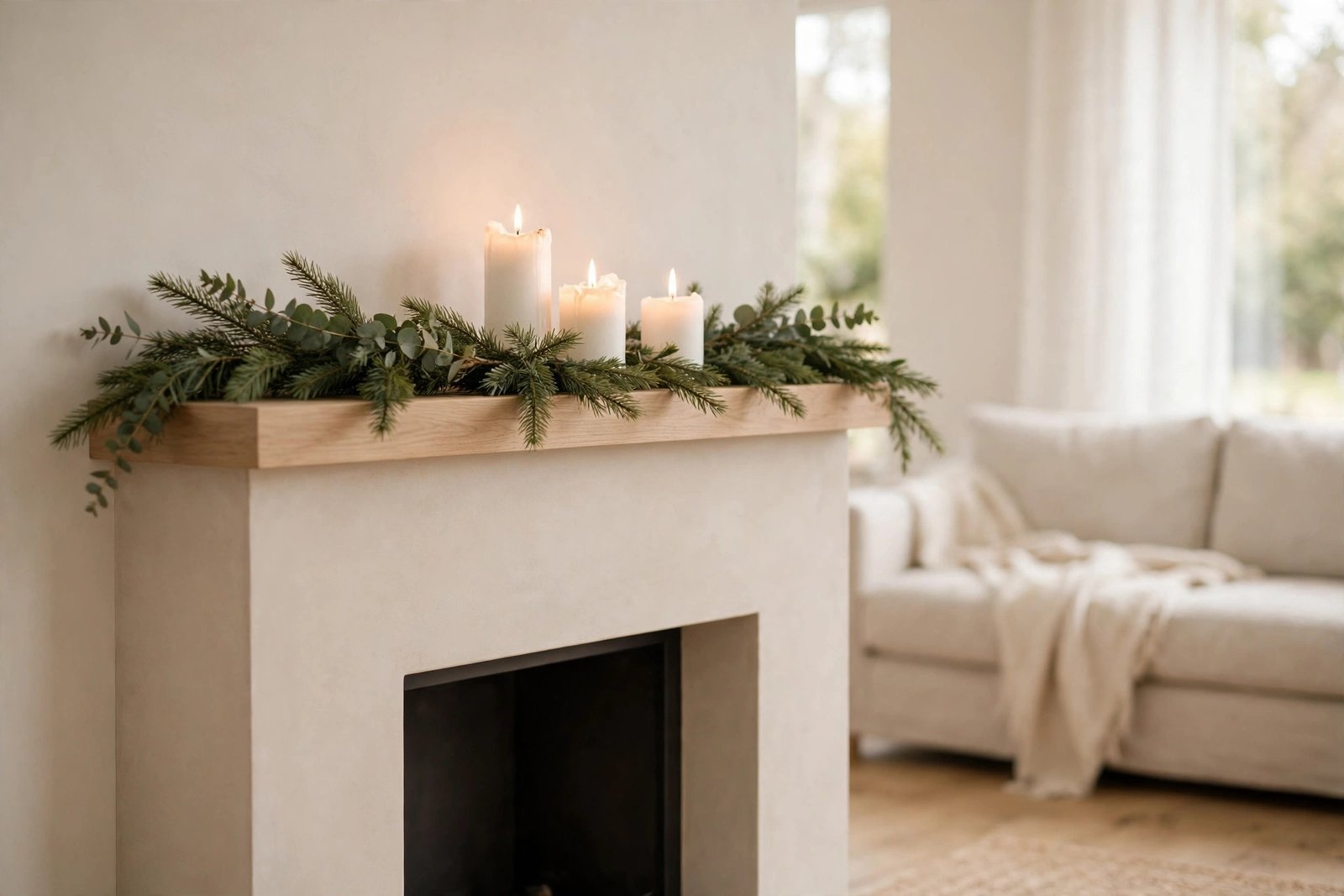
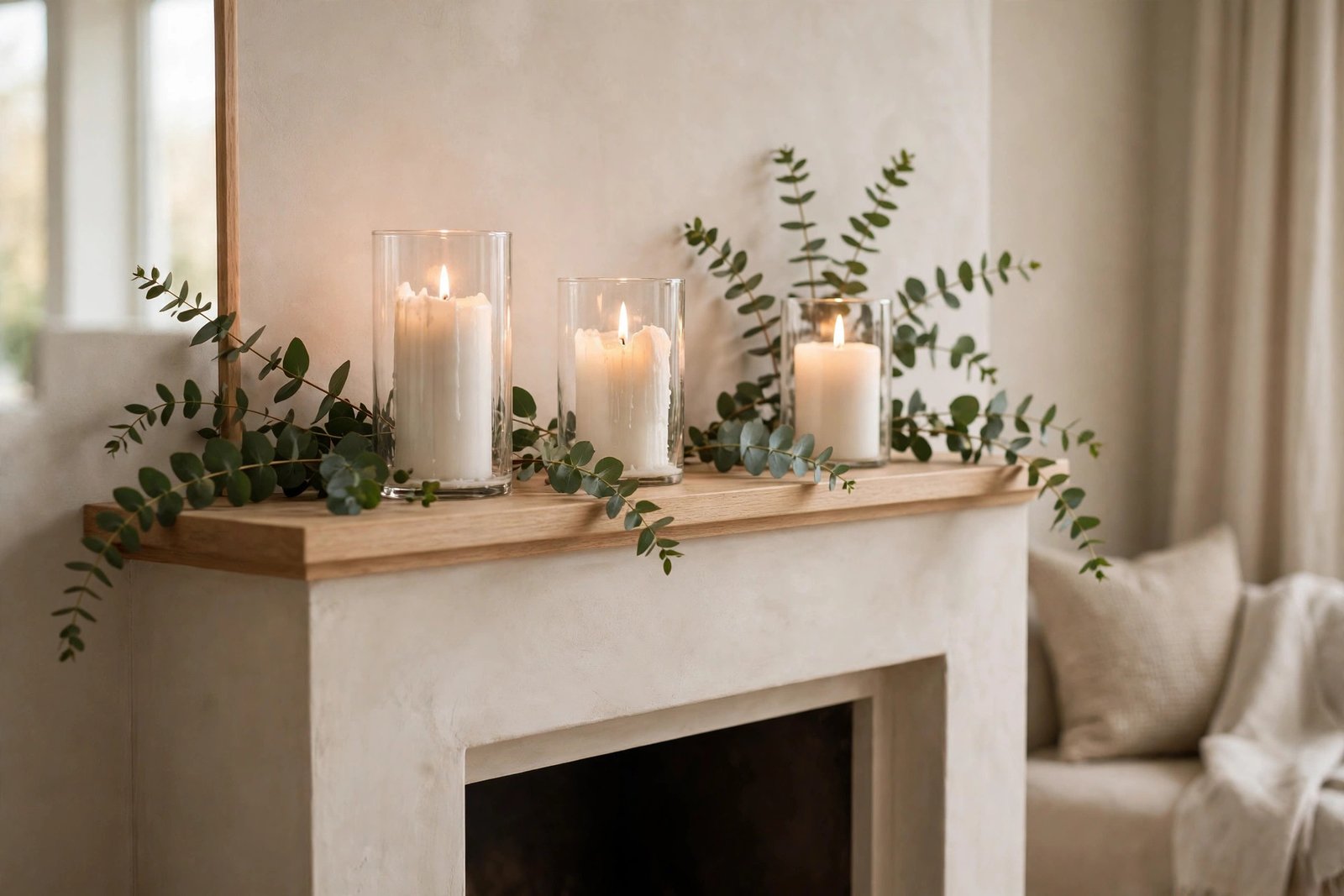
The mantel is the easiest place to overdo it, so give it one job: a single, simple evergreen garland. Choose a fresh or high-quality faux garland, drape it loosely along the mantel with a gentle swoop in the middle, and then stop. Add nothing else except, at most, two or three white pillar candles at one end. The greenery brings the scent and colour of Christmas, the candles bring the warmth, and the empty space around them is what makes the display feel calm rather than cluttered. If your garland looks thin, tuck in a few extra sprigs of eucalyptus or pine rather than adding baubles, bows, and figurines. Less on the mantel means the firelight — and the garland — can actually be seen.
3. Let Warm White Lights Do the Work
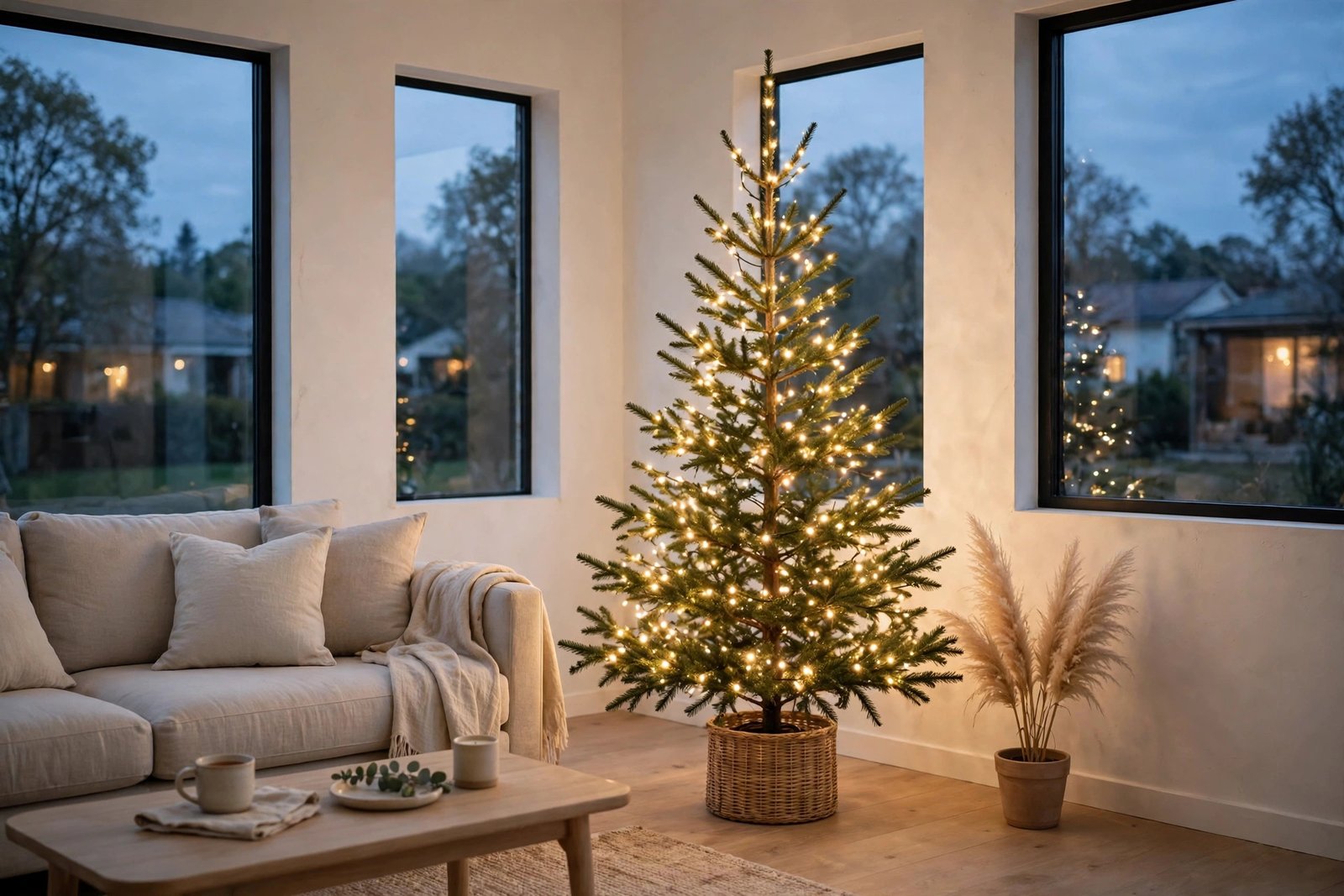
If you buy nothing else this Christmas, buy good warm white lights. A tree dressed only in warm white fairy lights looks effortlessly elegant, especially in the evening when the rest of the room is dim. The trick is to weave the lights from the trunk outward, in and out of the branches, so the glow comes from inside the tree rather than sitting on its surface. Use one consistent colour temperature throughout the house — mixing warm white and cool white is the fastest way to make a calm scheme feel jarring. The same lights work beautifully wound around a banister, draped along a shelf, or coiled inside a glass jar on the table. Light, more than any ornament, is what makes a room feel like Christmas.
4. Stick to a Neutral Palette
A neutral palette is the backbone of minimalist Christmas decor. Build your scheme around greens, creams, whites, soft gold, and natural wood, and resist the urge to add a splash of red, blue, or pink “just for fun” — that one addition is usually what tips a calm room into a busy one. Neutral does not mean boring: mix textures instead of colours, pairing matte ceramic with soft linen, rough wood with smooth glass, and fresh greenery with warm candlelight. Because everything matches, decorations from different years blend together easily, and you can reuse the same pieces season after season. A neutral scheme also photographs beautifully and suits almost any interior, from a bright modern flat to a cosy cottage.
5. Hang Paper Stars and Natural Ornaments
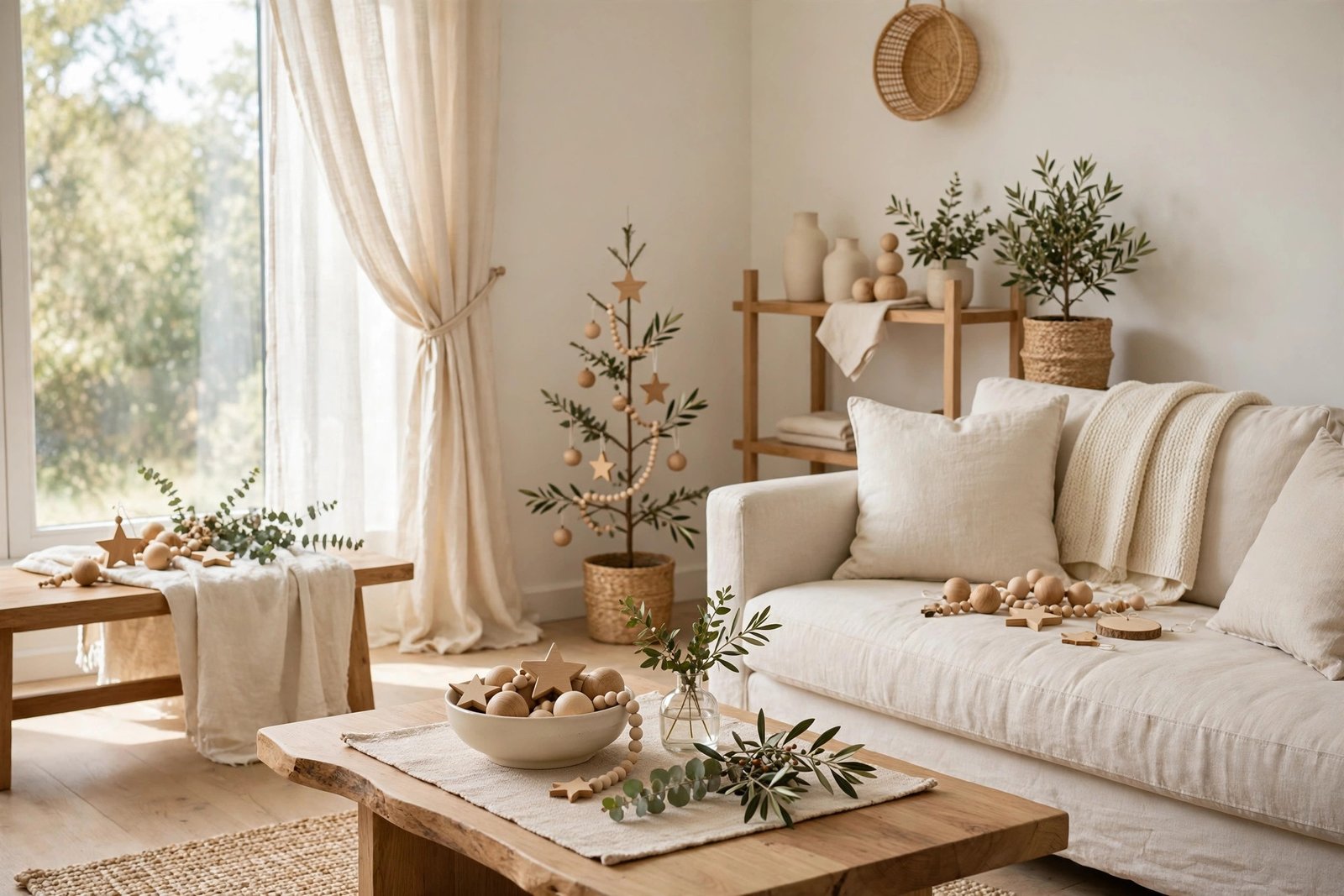
Paper stars, wooden beads, dried orange slices, and pinecones are the ornaments minimalist decorating was made for. They are light, inexpensive, and quietly beautiful, and they suit a simple tree far better than glittering plastic baubles. Hang a dozen or so, spaced generously so each one can be seen, rather than covering every branch. White or cream paper stars catch the light beautifully, while natural wood ornaments add warmth and texture. Children can help make paper stars, which turns decorating into a family activity rather than a shopping trip. Best of all, these ornaments pack away flat, cost almost nothing to replace, and never fight with the rest of your decor.

6. Hang One Beautiful Wreath — and Stop There
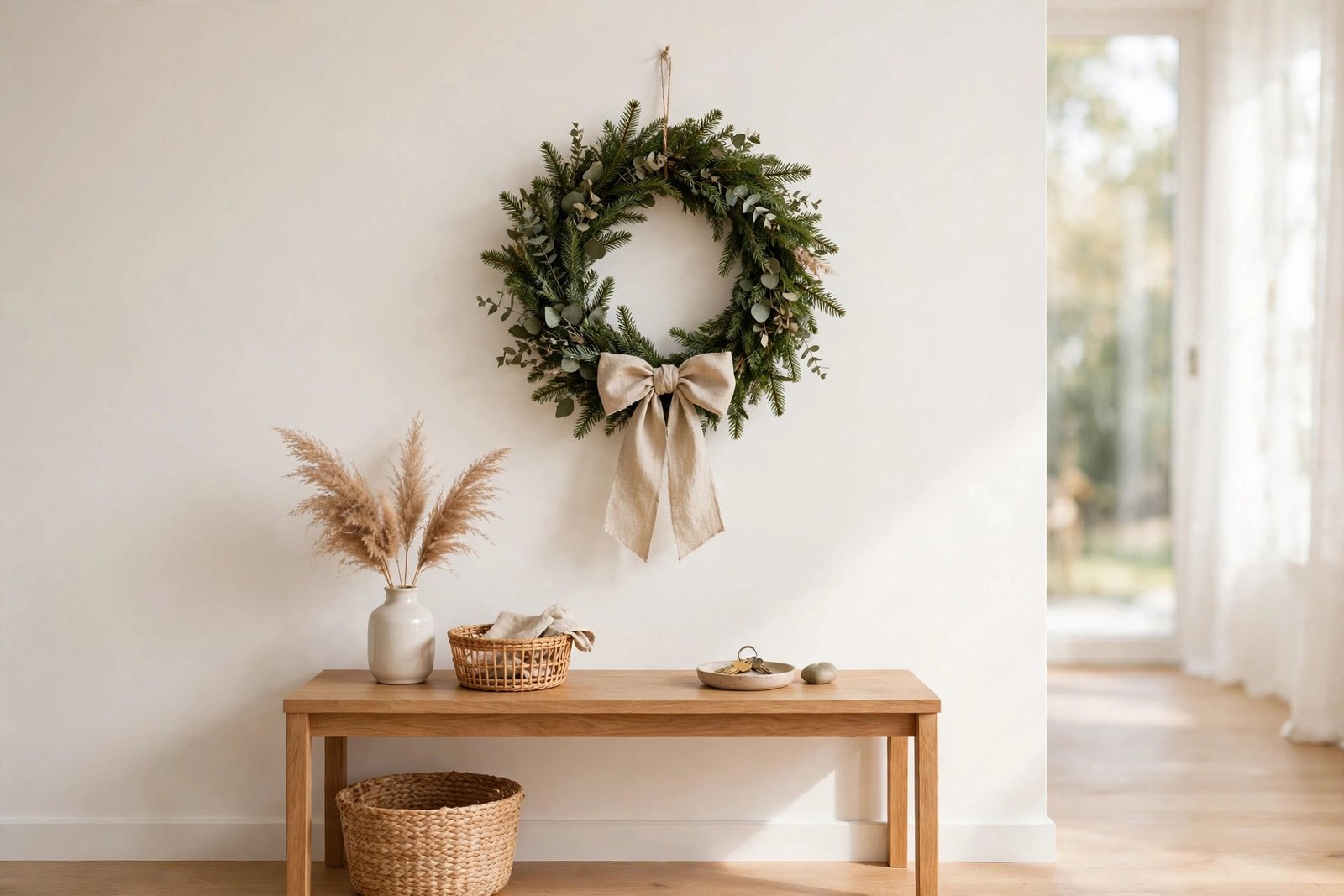
One beautiful wreath on the front door, or above the mantel, is all the wall decor a minimalist Christmas needs. Choose a simple evergreen wreath with no added baubles, berries, or glitter — just good foliage, a pleasing shape, and perhaps a single linen bow. Hang it at eye level where it can be appreciated, and leave the surrounding wall completely bare. The temptation is to add a matching wreath to every door and window, but repetition is what makes a scheme feel busy. A single wreath says Christmas clearly and calmly, and it gives guests one lovely thing to notice instead of ten competing ones. If you make your own, fresh greenery from the garden costs nothing and smells wonderful.
7. Style Bare Branches in a Vase
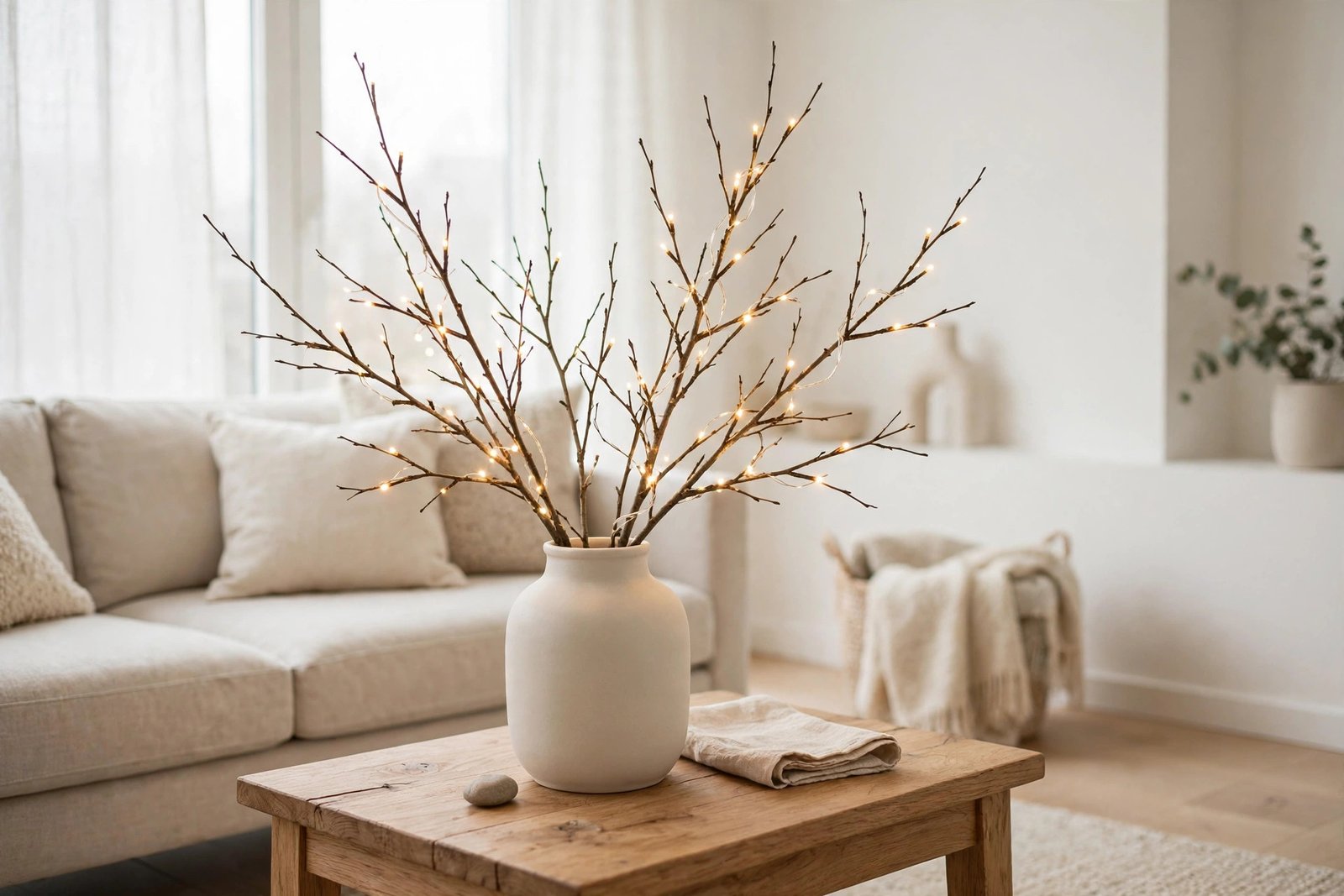
Bare winter branches are one of the most elegant — and cheapest — minimalist decorations you can make. Gather a few straight branches from the garden, trim them to different heights, and stand them in a simple ceramic or glass vase. Add a single strand of warm white fairy lights, or hang two or three small ornaments, and leave the rest bare. The sculptural lines of the branches look striking against a plain wall, and the arrangement suits hallways, side tables, and dining tables where a full tree would be too much. It is also wonderfully forgiving: there is no right way to arrange branches, and the display lasts all winter. Replace the lights with nothing at all and it still looks intentional.
8. Clear Surfaces Before You Decorate
Minimalist decorating starts with subtraction, not addition. Before you hang a single decoration, clear the surfaces you plan to use: remove the everyday clutter from the mantel, the sideboard, and the coffee table, and put away anything that does not belong to the season. A single candle on an empty sideboard looks deliberate; the same candle lost among books, remotes, and mail looks like clutter. This step costs nothing and takes ten minutes, yet it transforms how every decoration you do add will look. Think of it as giving Christmas a clean stage. Once the surfaces are clear, you will often find you need far fewer decorations than you expected — and the room will feel calmer before you have spent a penny.
9. Light Candles Instead of Adding Clutter
Candles are the minimalist decorator’s best friend because they add atmosphere without adding visual noise. A group of white pillar candles in plain glass holders on the mantel, a few taper candles on the dining table, and a single lantern by the door will make a home feel festive with almost no objects at all. Candlelight flatters everything: greenery looks richer, wood looks warmer, and the whole room glows. Keep the candles unscented or in a single subtle scent like pine or cedar, so the fragrance stays calm rather than competing. Always place candles on a stable, heatproof surface away from greenery and curtains, and never leave them burning unattended. Fewer objects, more glow — that is the minimalist formula.
10. Use a Wooden Bead Garland
A wooden bead garland is the quiet alternative to tinsel and shiny garlands. Drape one loosely around the tree, along the mantel, or across a doorway, and let its natural texture do the talking. Wooden beads suit neutral schemes perfectly, they never shed glitter, and they can be reused for years without looking dated. For a slightly festive touch, alternate plain wood beads with a few painted in cream or soft gold, but keep the colours muted. A bead garland also works beautifully wound around a banister or laid along the dining table as part of a centrepiece. It adds just enough interest to a simple tree without hiding the branches or competing with the lights — exactly what minimalist decorating aims for.
11. Keep the Table Centrepiece Simple
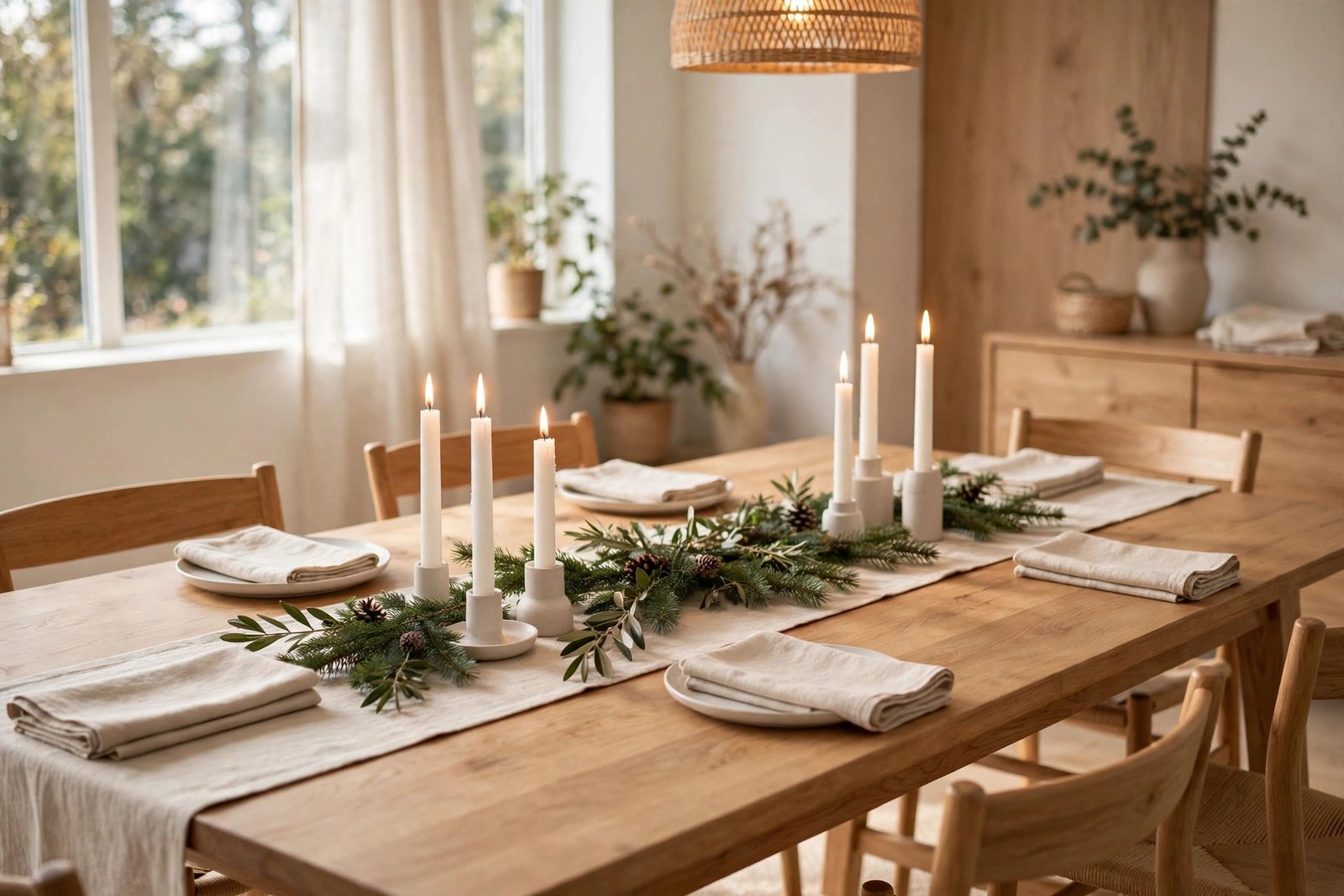
A minimalist Christmas table needs one centrepiece, not five. Lay a simple runner of fresh greenery down the middle of the table — eucalyptus, pine, or olive branches all work — and add a few white taper candles in plain holders. That is the whole centrepiece. Skip the baubles scattered on the table, the glitter, and the themed place settings; plain linen napkins, simple crockery, and one sprig of greenery at each place look far more elegant. Guests need room for plates, glasses, and elbows, and a low centrepiece keeps conversation flowing across the table. If you are styling the wider room too, our christmas living room decor ideas show how the same calm approach carries through the whole house. Simple tables feel generous, not empty.
12. Go Monochrome With Ornaments
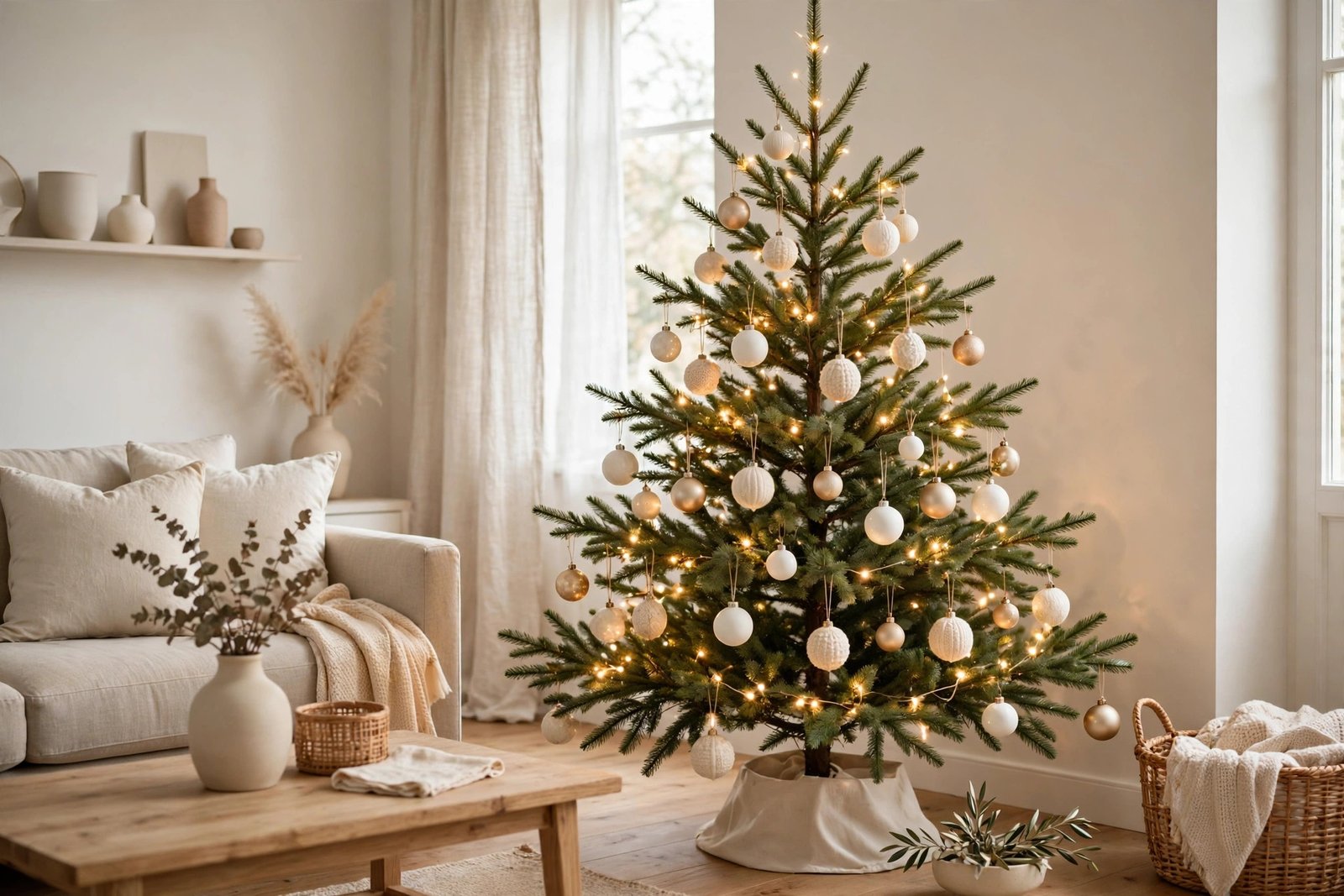
Choosing ornaments in a single colour family is the fastest way to make a tree look considered. White, cream, and soft gold is the classic minimalist combination: it glows beautifully with warm white lights and suits any room. Buy plain baubles in mixed finishes — matte, glossy, and a touch of metallic — rather than patterned or novelty shapes, so the tree has texture without visual noise. Hang them sparingly, with breathing room between each one, and step back often to check the overall balance. A monochrome tree looks expensive, photographs well, and never clashes with your furniture. If you already own colourful ornaments, simply set them aside for one year and try the monochrome look — you may never go back.
13. Create a Quiet Windowsill Scene
A windowsill is a perfect small stage for minimalist Christmas decor because it frames the display naturally. Place two or three items and nothing more: a small potted pine, a candle in a glass lantern, and perhaps a single paper star hanging in the window. From outside, the glow looks magical; from inside, the scene feels calm rather than crowded. Keep the rest of the window bare so daylight still floods the room during the day. This idea works especially well in bedrooms and kitchens, where a full tree would be impractical. A quiet windowsill scene brings Christmas into rooms that usually get forgotten, without a single box of decorations. It is proof that small, thoughtful touches beat a house full of clutter.
14. Wrap Gifts in Kraft Paper and Twine
Minimalist gift wrapping is beautiful, cheap, and sustainable: plain kraft paper, simple twine, and a single sprig of greenery or a dried orange slice on top. The presents themselves become part of the decor, stacked neatly under the tree or arranged in a basket by the door. Skip the shiny paper, the plastic bows, and the patterned tape — kraft paper suits a neutral scheme perfectly and looks intentional rather than plain. Add a handwritten tag in brown ink for a personal touch, and keep the wrapping consistent so the pile of gifts reads as one calm display. If you enjoy making things by hand, our diy christmas decor ideas include more simple, natural projects in the same spirit. Beautiful wrapping costs almost nothing.
15. Leave Intentional Empty Space
The final minimalist idea is also the hardest: leave some space deliberately empty. Not every shelf needs a decoration, not every window needs a star, and not every corner needs a tree. Empty space is what lets the pieces you did choose shine, and it is what makes a minimalist home feel peaceful rather than unfinished. When you finish decorating, walk through the house and remove one thing from each room — you will be surprised how often the room looks better. This is the difference between a home that feels styled and a home that feels stuffed. A calm Christmas is not about having less joy; it is about giving the joy room to be noticed. Leave the space, light the candles, and enjoy it.
Try This: The One-Hour Minimalist Christmas
If your house is still undecorated and guests arrive tomorrow, here is a one-hour plan. First, spend ten minutes clearing the mantel, the sideboard, and the coffee table. Next, put up the tree and dress it with warm white lights and a dozen plain ornaments in one colour — twenty minutes, no more. Then drape a single garland on the mantel with two pillar candles, and hang one wreath on the door. Finally, lay a greenery runner on the dining table with taper candles, and wrap any visible gifts in kraft paper. One hour, a handful of pieces, and the whole house will feel calm, warm, and ready for Christmas.
Budget-Friendly Minimalist Decorating
Minimalist Christmas decorating is naturally budget-friendly, because the whole approach is about buying less. Start with what you already own: plain candles, glass jars, linen napkins, and any neutral ornaments from previous years. Greenery is often free — pine, eucalyptus, and bare branches from the garden cost nothing and look better than most shop-bought decorations. Paper stars, dried orange slices, and kraft-paper wrapping are all projects that cost a few pounds or dollars at most. If you do spend money, spend it on quality lights and one beautiful wreath, since those are the pieces you will see every day and reuse every year. Avoid the bargain bin of glittery extras: a box of decorations you do not love is not a bargain, however cheap it was. The most elegant minimalist rooms are often the cheapest to create, because restraint costs nothing.
Common Mistakes to Avoid
The most common minimalist mistake is confusing minimal with bare: a room with a single sad ornament and no light feels empty, not calm. Minimalism needs warmth — lights, candles, and greenery — to feel festive. Another frequent error is mixing colour temperatures, hanging warm white lights on the tree and cool white lights in the window, which makes the whole scheme feel unsettled. Avoid adding “just one more” decoration to every surface; the moment a mantel holds five things instead of two, the calm is gone. Do not mix too many ornament styles at once, either — novelty baubles beside paper stars beside glittery figurines reads as clutter, not collection. Finally, do not decorate rooms nobody uses while neglecting the ones you live in: one beautifully calm living room beats a whole house of half-finished displays.
Frequently Asked Questions
What is minimalist Christmas decor?
Minimalist Christmas decor uses a few carefully chosen pieces — simple greenery, warm white lights, candles, and neutral ornaments — with plenty of empty space around them. The goal is a calm, festive home rather than a house covered in decorations. It suits small spaces, neutral interiors, and anyone who finds traditional Christmas decorating overwhelming.
How do I decorate for Christmas without clutter?
Pick one or two focal points, usually the tree and the mantel, and keep other surfaces mostly clear. Stick to one neutral palette, use one style of ornament, and stop decorating while the room still feels airy. Clearing everyday clutter before you start makes every decoration look more intentional.
What colours work best for minimalist Christmas decor?
Greens, creams, whites, soft gold, and natural wood are the classic minimalist palette. These colours work together effortlessly, suit almost any interior, and let warm lighting and fresh greenery provide the festive feeling. Avoid adding bright accent colours, which quickly break the calm.
Can a minimalist Christmas tree still look festive?
Absolutely — warm white lights, a simple garland, and a dozen well-chosen ornaments make a tree glow beautifully. Festive feeling comes from light, scent, and greenery as much as from ornaments, so a simply dressed tree in a candlelit room often feels more Christmassy than a tree buried under decorations.
How can I decorate for Christmas on a small budget?
Use free greenery from the garden, make paper stars and dried orange slices, wrap gifts in kraft paper, and invest only in good warm white lights. Minimalist decorating is naturally cheap because it uses fewer pieces, and most of the materials — branches, candles, and plain paper — cost very little.
When should I put up minimalist Christmas decorations?
Most people decorate from late November to early December. Fresh greenery lasts about three to four weeks indoors, so put garlands and wreaths up in early December for the best fragrance and colour through Christmas Day. Artificial greenery and lights can go up whenever you like.
A calm Christmas is not a lesser Christmas. Choose a few pieces you love, light them warmly, give them room to breathe, and let the season speak quietly for itself. The story behind the holiday itself is worth a look too — see the Christmas article on Wikipedia for its history and traditions. Happy decorating, and may your home feel peaceful all season long.