
Every home has that one room that looks fine in photographs yet never quite invites you to sit down. The sofa is new, the walls are a sensible color — and still, something feels flat and a little cold. Learning how to create a cozy living room is not about buying more things or following a passing trend. It is about building the room in layers, the same way you would dress for a cold day, so that warmth, softness and shelter accumulate until the space holds you.
The good news is that cozy is a method, not a mystery. Once you understand the principles underneath it, you can apply them in a large family room, a small apartment, or a rental you are not allowed to paint. This guide walks through each layer in order — layout, textiles, lighting, color and the finishing sensory details — with practical steps, honest budget guidance and the mistakes that quietly undo the effect.
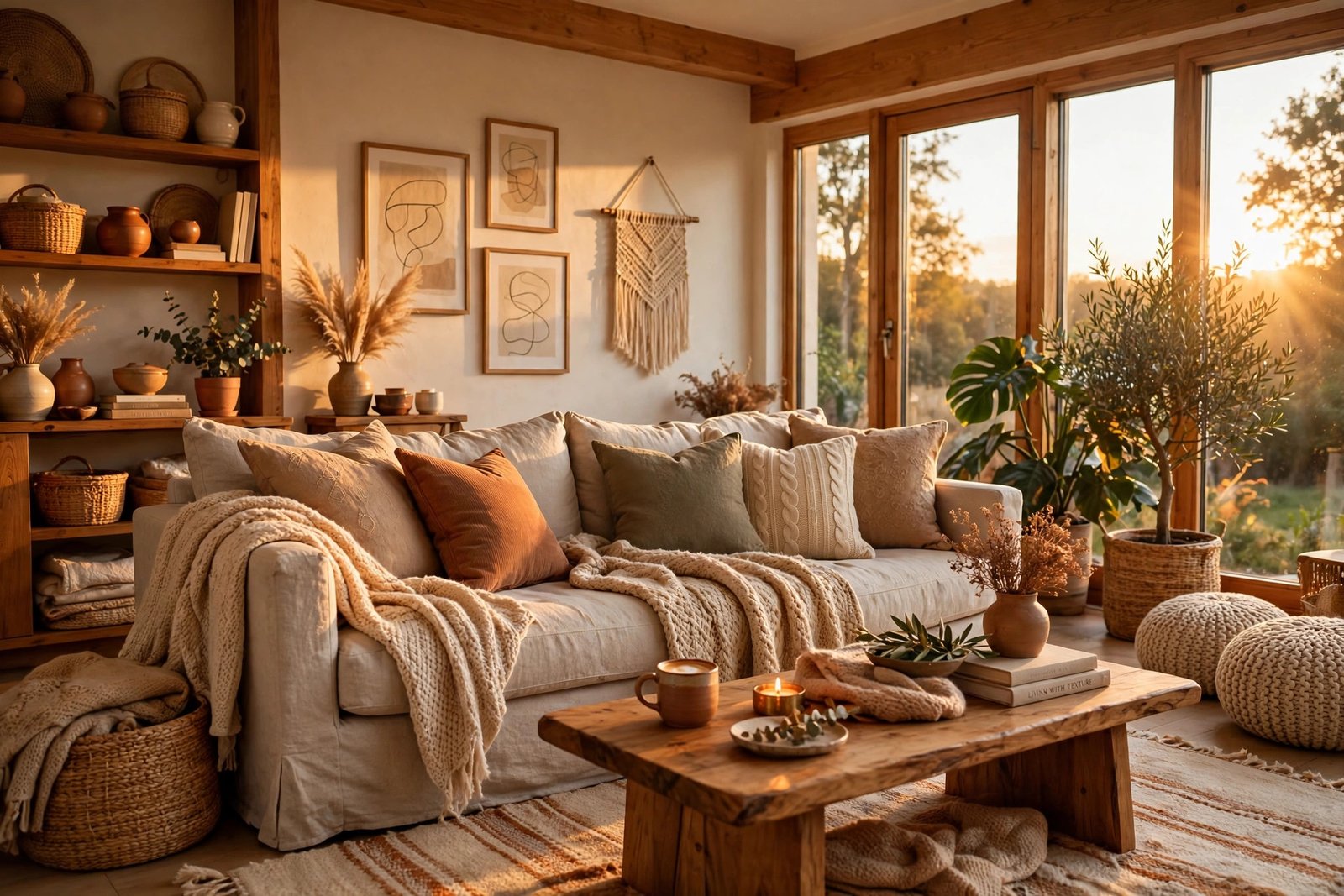
What “Cozy” Actually Means: The Four Principles
Before touching a single cushion, know what you are building. Cozy is not a style, like farmhouse or Scandinavian. It is a physical and emotional response to four conditions: warmth, enclosure, softness and low, gentle light. When all four are present, people call a room cozy without knowing why; when one is missing, the room feels “off” in a way that is hard to name.
Warmth is both literal and visual. A room can be heated to a comfortable temperature and still feel cold if everything in it is smooth, glossy and blue-grey; warmth also comes from warm colors, warm light and materials like wood and wool. Enclosure is the feeling of being held by the space — furniture grouped close enough for conversation, a rug defining a territory. Open-plan rooms often fail here, their seating floating in a large expanse. Softness is about what your body and eyes touch — upholstery, textiles, rounded edges, matte finishes. Hard, reflective surfaces bounce light and sound around, which reads as alert rather than restful. Low light completes the picture: cozy rooms glow in pools at sitting height, the way firelight and candlelight do.
The Danes have a word for this whole cluster of feelings: hygge — a quality of coziness and contentment found in simple, sheltering moments. Hygge reminds us that cozy is an experience, not a purchase. A room becomes cozy when it slows you down, when the chair, the light and the blanket conspire to make leaving feel like a small loss. Keep the four principles as a checklist: if an arrangement does not add warmth, enclosure, softness or gentle light, it is decoration rather than coziness.
Layer 1: Layout and Enclosure — Give the Room a Center
The first layer costs nothing, because it is about arrangement rather than shopping. Start by pulling your seating off the walls. In many living rooms the sofa and chairs hug the perimeter, leaving a wide empty middle that feels like a waiting room. Instead, group the seating around a focal point — a fireplace if you have one, a coffee table and rug arrangement if you do not — close enough that people can talk without raising their voices. The front legs of sofas and chairs should sit on the rug, and no seat should be more than about eight feet from the one opposite.
Next, define the territory. A rug large enough to anchor the grouping tells your body “this is the nest”; if it only fits under the coffee table, the grouping will always feel temporary. Add enclosure from above and behind, too: a floor lamp arcing over a chair, a tall bookcase, curtains softening a wall of glass. Layered curtains — sheers for the day, heavier panels for the evening — let you literally close the room in at night, which is when cozy matters most.
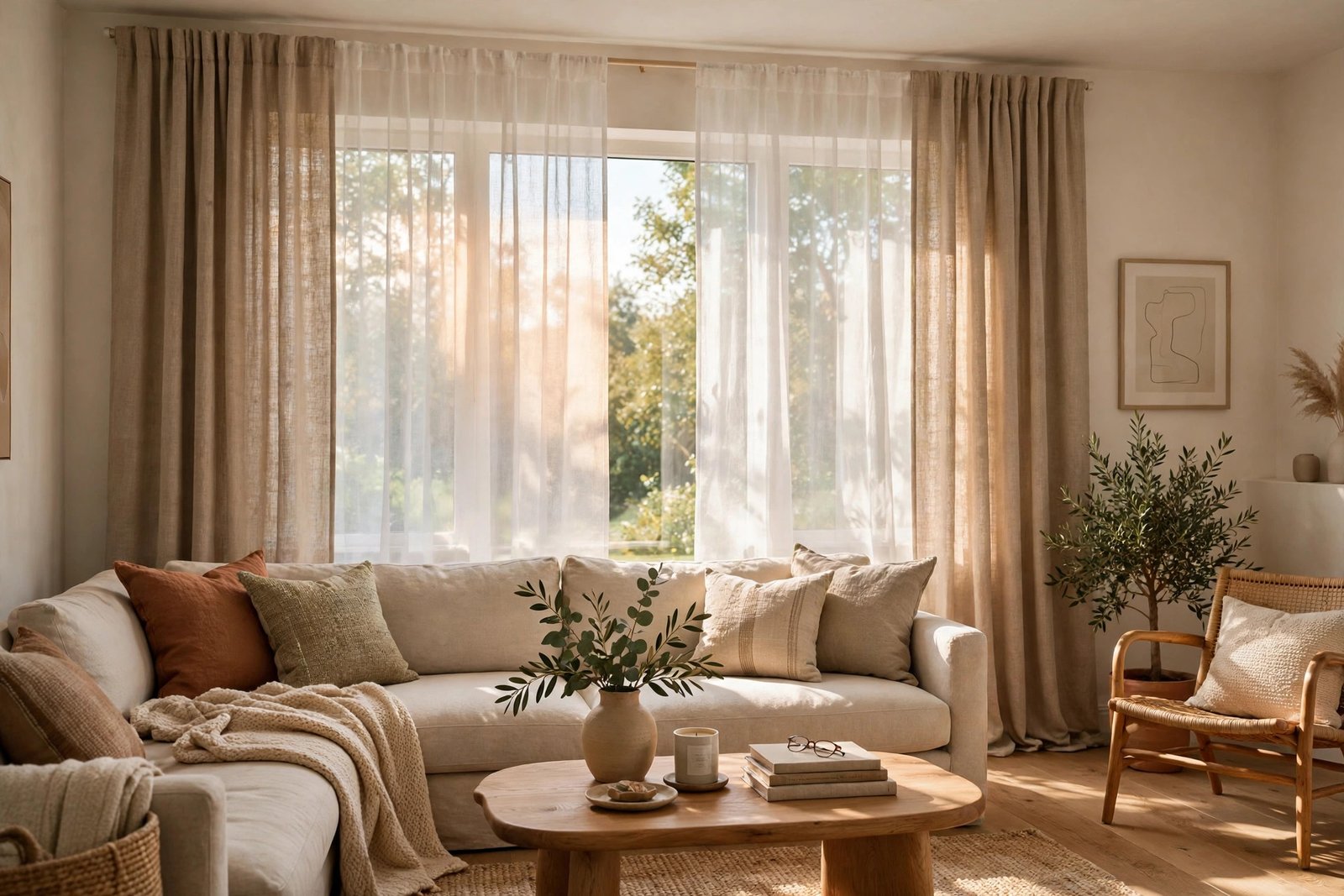
Finally, create one small destination inside the room: a reading chair angled toward the light, a window seat, a chaise end on the sofa — a spot that belongs to one person and a book. For more inspiration, our collection of cozy living room ideas shows this same close-grouping principle in rooms of very different shapes.
Layer 2: Textiles — The Softness Layer
If layout is the skeleton of cozy, textiles are its flesh. This is the layer most people picture first, and the one where restraint matters: softness works when it is layered deliberately, not when cushions are simply multiplied. Aim for a mix of textures rather than identical items — chunky knit against smooth linen, velvet against woven cotton, a wool throw over a leather chair. Contrast in texture reads as richness, and richness reads as comfort.
Start with the rug, because it does the most work per dollar. Choose the largest size your grouping can take, with a texture you can feel — a low wool pile, a woven jute-and-wool blend, or a soft vintage-style rug over a felt pad. Then dress the sofa: cushions in two or three sizes with covers in natural fibers, one folded throw over an arm rather than spread flat, and — if the sofa is deep — a lumbar cushion that lets you sit back fully supported. Add a basket of rolled blankets beside the seating; it is one of the most reliable cozy signals there is, because it promises warmth within reach.

Do not forget the hard surfaces. A cloth on a side table, upholstered stools instead of wooden ones, and fabric lamp shades all subtract echo and glare. Curtains deserve a second mention here: floor-length linen panels soften the biggest hard surface in most rooms — the window wall — and muffle sound in a way blinds never will. The test for this layer is simple: stand in the doorway, count the hard, shiny surfaces you can see, and soften each one you can with something woven, knitted or upholstered.
Layer 3: Lighting — Warmth You Can See
More living rooms are ruined by lighting than by any other single factor. A bright ceiling fixture with a cool white bulb flattens every textile and warm color you have added, which is why this layer replaces one harsh source with several gentle ones. The target is pools of light at sitting height, in a warm color temperature — bulbs labeled 2700K or lower. Swapping 4000K “daylight” bulbs for them is the cheapest transformation in this entire guide.
Build three kinds of light. Ambient light is the soft overall glow, best from shaded lamps or a dimmed ceiling fixture. Task light is the focused pool where you read — a floor lamp beside the reading chair, a table lamp at the end of the sofa. Accent light is the sparkle: candles, a small lamp on a bookshelf, fairy lights along a mantel, or the fire itself. A room with all three, at modest brightness, feels dramatically warmer than one lit twice as brightly from the ceiling alone. Evening test: sit in each seat and check there is a warm light within arm’s reach and no bare bulb in your line of sight.
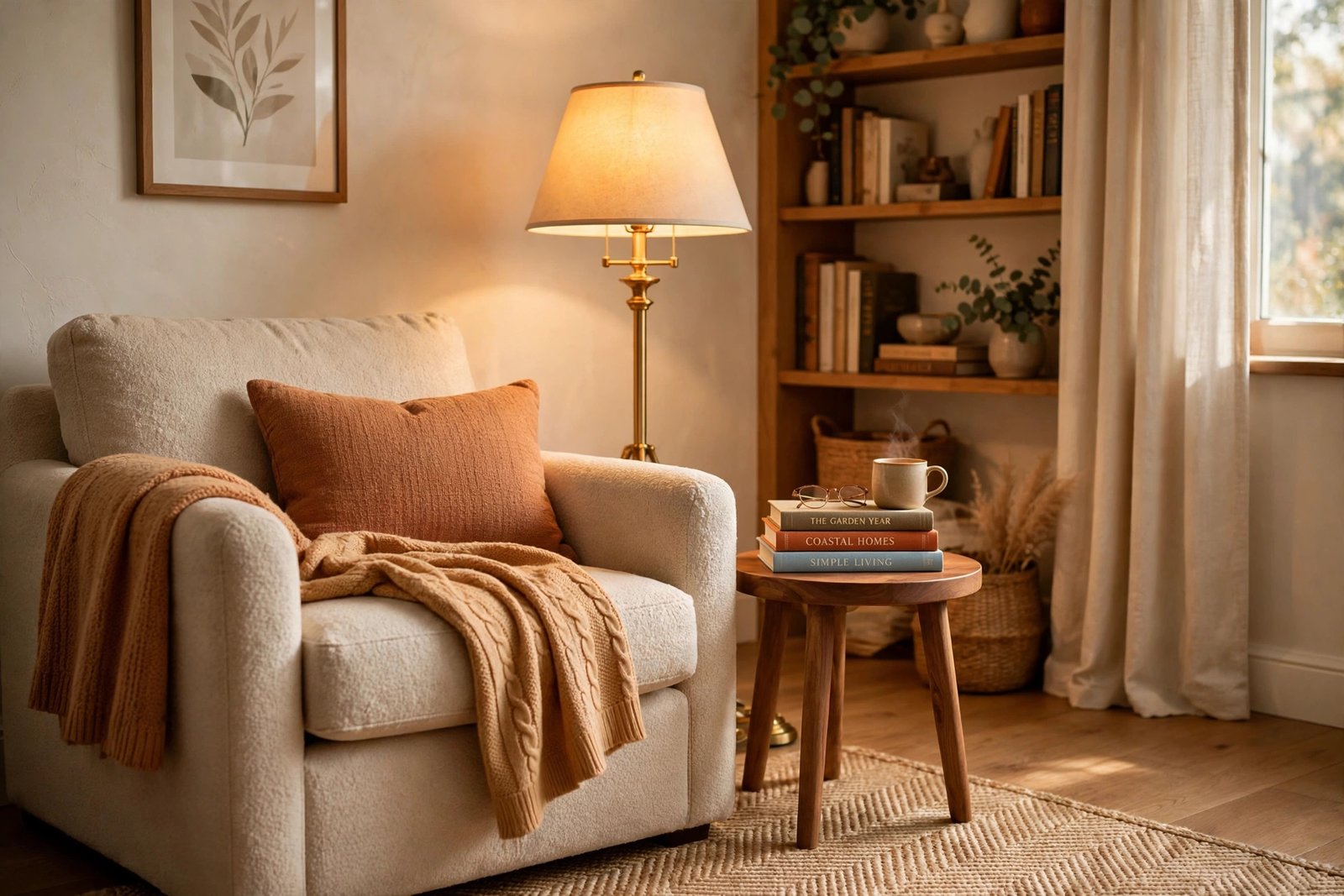
Dimmers deserve special emphasis. If you rent and cannot change switches, plug-in dimmers and smart bulbs give the same control for a few dollars, and warm-to-dim bulbs that shift amber as they lower are the closest artificial light gets to firelight. In the evening, lower everything, light the candles, and notice how the room’s edges fall away — that gentle darkness at the perimeter is enclosure working through light. For a calmer, pared-back version of this effect, our guide to a warm minimalist living room shows how fewer, warmer light sources can still feel deeply inviting.
Layer 4: Color and Wood — The Warmth of the Palette
Color sets the room’s temperature before a single cushion lands. Cozy palettes lean warm: creams rather than bright whites, camel, rust, olive, warm taupe, deep green and soft terracotta — not icy greys and blue-whites. This does not mean the room must be dark: a light room can be thoroughly cozy if its whites are warm and its neutrals have yellow, pink or brown undertones. Simple test for paint or fabric — hold the swatch next to printer paper. Creamy beside it means warm in the room; grey-blue means cooler than you expect.
Wood is the second half of this layer, because wood tones carry warmth even in small doses. Mid-tone and darker woods — walnut, warm oak, teak — read cozier than pale ash or grey-washed finishes, and matte or oiled surfaces cozier than high gloss. You do not need to replace furniture: a wooden side stool, picture frames in a warm stain, a rattan basket, even a stack of firewood all inject the same signal. Aim for two or three wood tones that rhyme rather than match; identical stain everywhere feels staged, while slight variation feels collected and lived in.
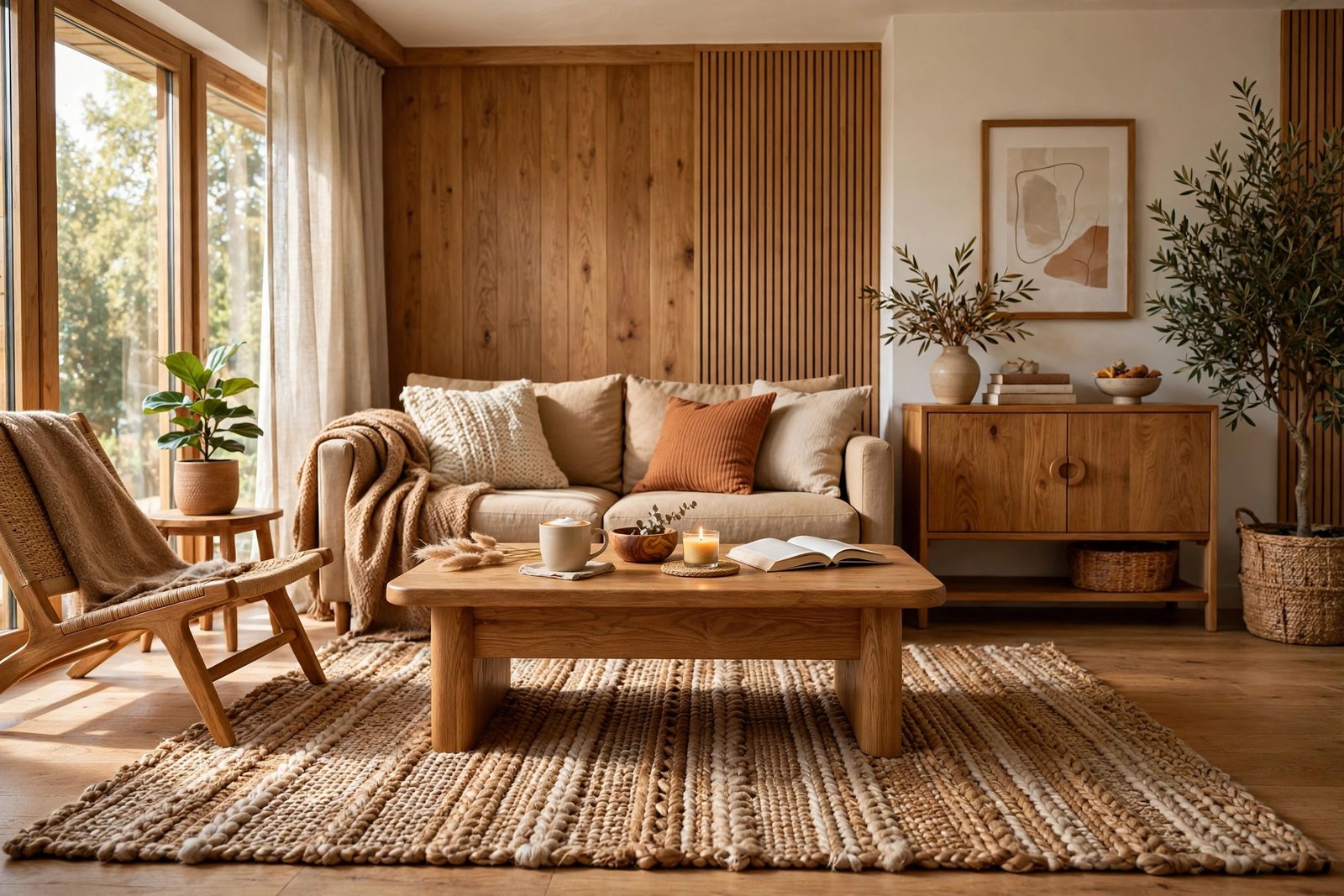
If your walls are a cool grey you cannot change, work against them with contrast: warm textiles, bulbs and wood will overpower a cool wall color in the evening, when the room is mostly used. Metals follow the same logic — brushed brass, bronze and blackened iron sit comfortably in a cozy scheme, while polished chrome pulls a room back toward crisp and cool.
Layer 5: Scent, Sound and Personal Objects — The Layer You Feel
The final layer is invisible in photographs, which is exactly why it separates rooms that look cozy from rooms that are cozy. Scent is the fastest signal of shelter the brain has. A beeswax or wood-wick candle, a simmering pot of orange peel and cloves in winter, cedar or sandalwood in a diffuser — choose one signature scent family and keep it subtle and consistent, so that coming home has a smell. Candles used for scent give you their flickering accent light as a bonus, too.
Sound matters too. Hard rooms are loud rooms: voices bounce, and the space feels alert. The textiles from Layer 2 soften the acoustics, and you can complete the effect with a low background layer — a record player, a radio murmuring in the corner, or the crackle of a fire. Cozy is partly the absence of startling noise, and partly the presence of a gentle one.
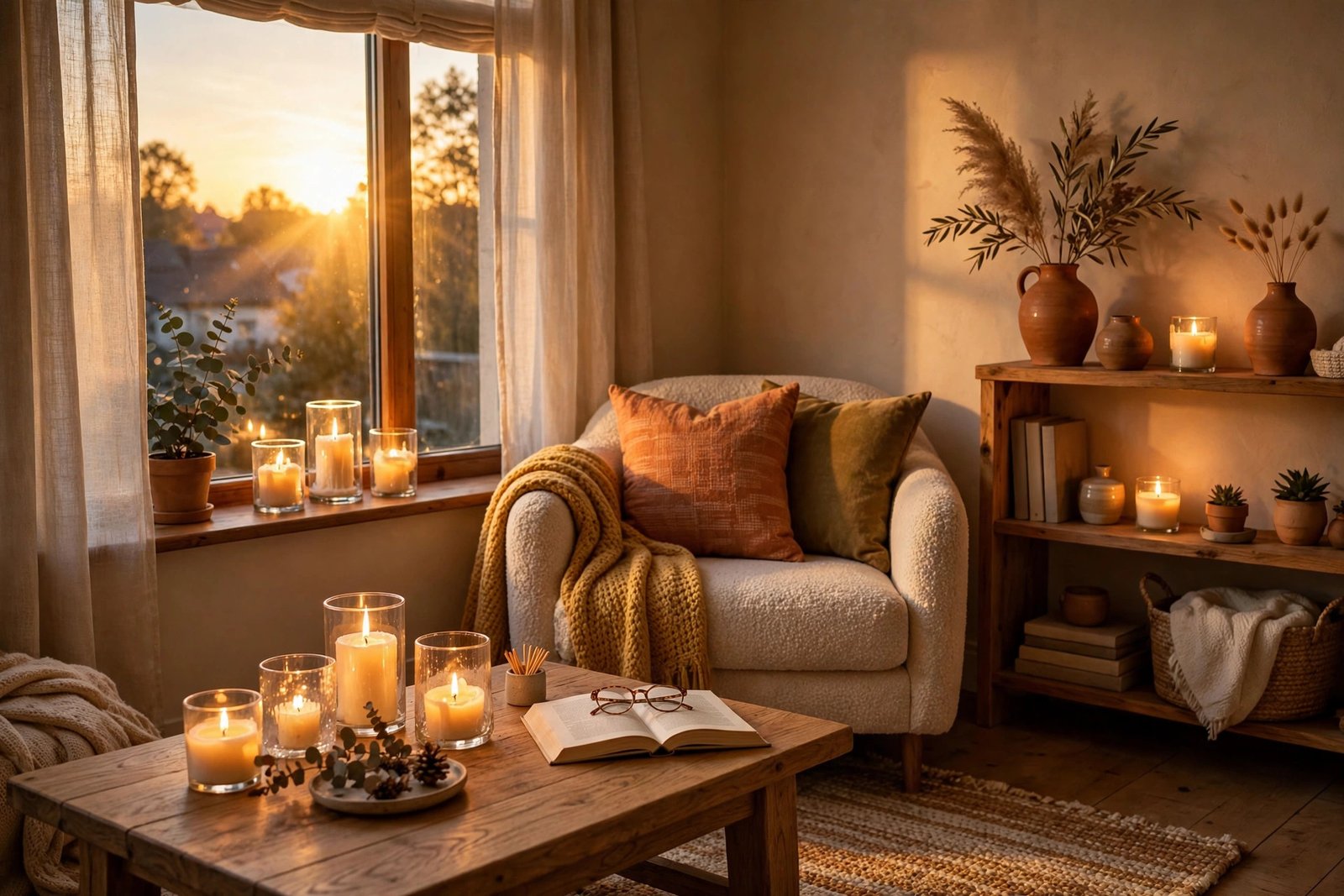
Last, the personal objects. A room decorated entirely from one store’s catalog can hit every layer above and still feel like a showroom, because nothing in it is loved. Display the evidence of your actual life instead: the books you are really reading, photographs in warm frames, a handmade or inherited object given a place of honor, the blanket from the trip rather than the one bought to match. Keep surfaces edited — a few meaningful things, not a crowd — but make sure the room tells at least one true story about the people who live in it. That is what guests respond to when they say a home “has soul,” and it costs nothing.
How to Create a Cozy Living Room in a Rental
Renters often assume cozy requires paint, built-ins and new flooring. It does not — four of the five layers are fully portable. Layout and enclosure come from furniture placement, a large rug (which also protects the landlord’s floor), curtains on tension rods over existing blinds, and tall bookcases that need no wall fixings. Textiles and lighting travel with you entirely; plug-in dimmers and smart bulbs need no electrician. For color, lean on warm fabrics and one oversized piece of warm-toned art on a removable hook. Buy the rug, curtains and throws in quality you will keep, and your cozy layers become an asset you carry to the next home rather than money left behind.
How to Create a Cozy Living Room in a Small Room
Small rooms have a head start — enclosure is built in — but they punish clutter, so every layer must be chosen with a lighter hand. Keep the grouping tight and furniture raised on legs so the floor shows through. Use one generous rug rather than several small ones, running slightly under every seat. Choose two textile textures and repeat them instead of introducing five; repetition reads as calm, variety as busy, at small scale. A window seat or a deep chair with a floor lamp behind it makes the single-person destination small rooms often lack, and our ideas for a cozy corner in a small home are full of arrangements that borrow only a few square feet.
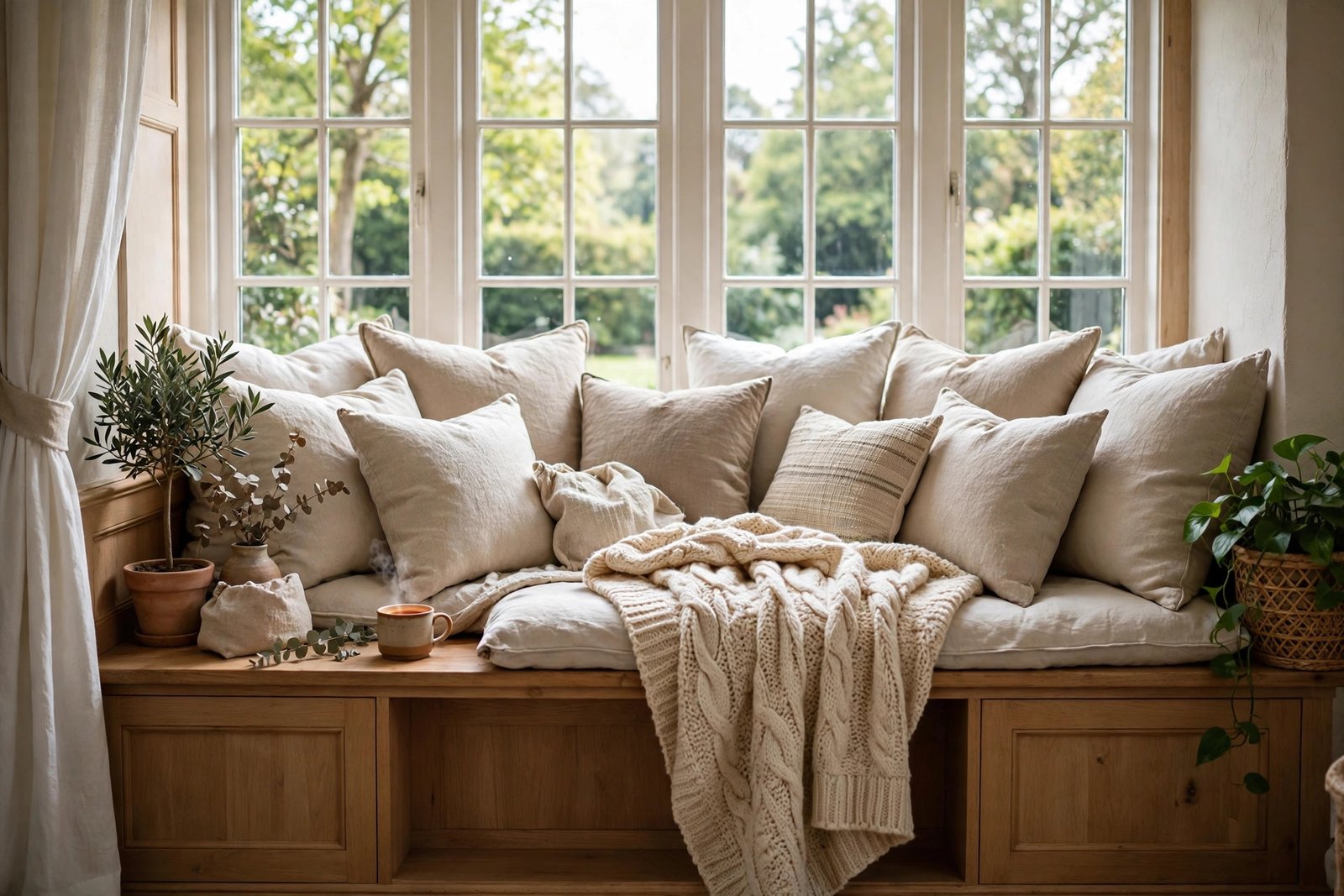
For lighting, small rooms need fewer sources, closer together: one table lamp, one floor lamp, candles. If you use a mirror, place it to reflect lamplight rather than daylight — opposite a lamp, it doubles your pool of warm light after dark. Finally, edit ruthlessly: everything visible should be soft, warm or loved, and the storage ottoman and lidded basket earn their place by hiding the rest.
A Worked Example: One Room, Layer by Layer
Consider a typical problem room: a 14-by-18-foot living room with a grey-blue wall color the owners did not choose, a sofa and two chairs pushed against opposite walls, a small rug under a glass coffee table, and one bright ceiling light. Clean, modern — and completely uninviting. Here is the same room after a weekend of layering.
Layer 1 moved first: the sofa came off the wall onto a new 8-by-10-foot wool-blend rug, chairs angled in at its corners, front legs on the rug, and the glass table replaced with a warm oak one. Layer 2 added a chunky knit throw, two linen cushions, a basket of rolled blankets, and floor-length linen curtains over the blinds. Layer 3 swapped the ceiling bulbs for 2700K, added a table lamp and an arc floor lamp behind the reading chair, and put the room on dimmers. Layer 4 could not touch the walls, so it worked through the oak, walnut frames and rust-and-cream textiles, which overpowered the cool paint after dark. Layer 5 finished it: a cedar candle, a small record player, family photographs and the owners’ actual books. The rug, curtains and lamps were the only significant purchases — yet visitors now make for the reading chair the way cats make for a sunbeam.
What Each Layer Costs: A Budget Breakdown
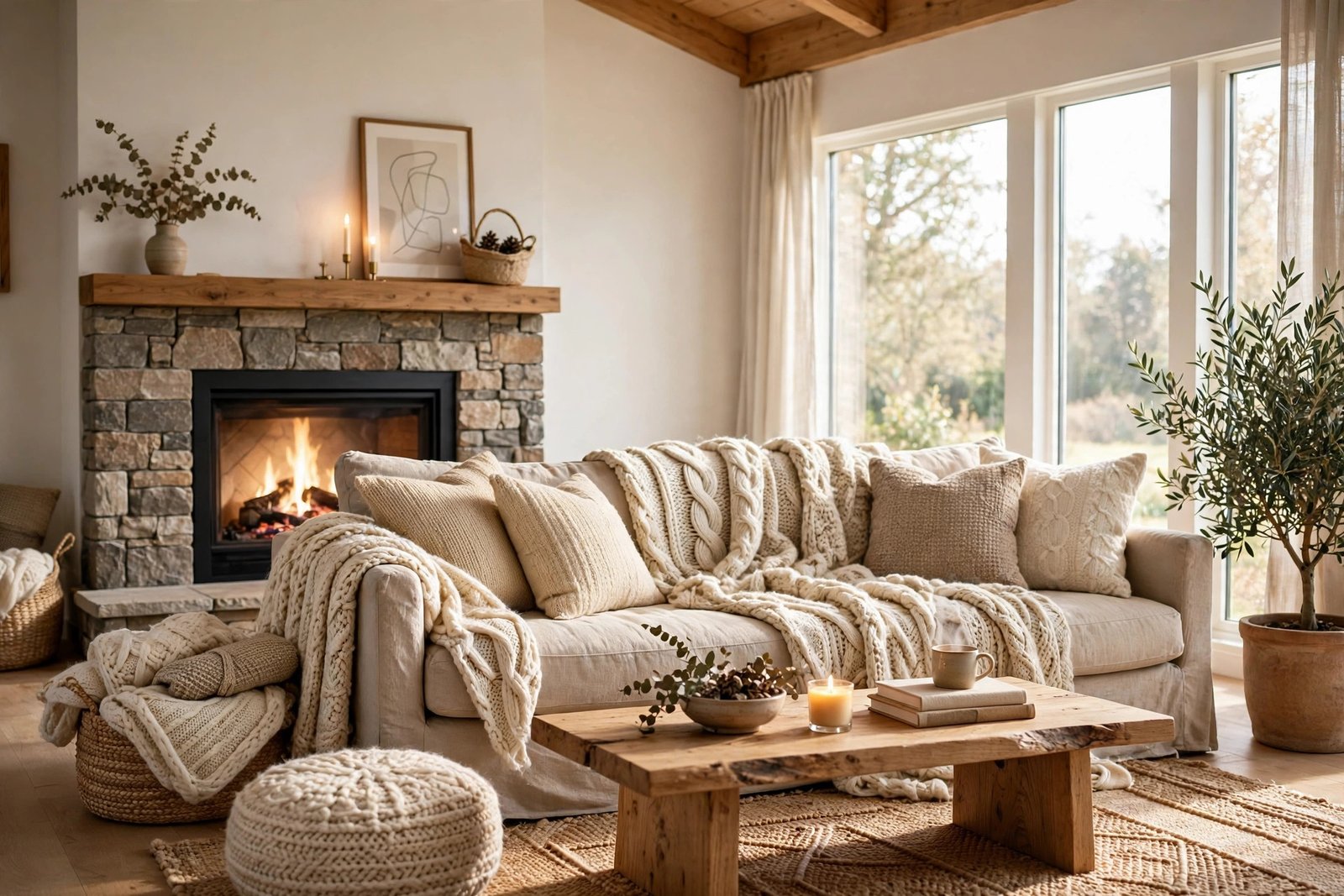
Cozy is unusually kind to budgets: the highest-impact layer — layout — is free, and the next ones reward secondhand finds, since worn natural fibers often look better than new synthetics. Per layer: Layout, $0 (an afternoon of rearranging; perhaps $20–40 for furniture pads and a curtain rod). Textiles, $100–400 — the rug is the splurge at $100–250 for a wool blend in a useful size; throws and cushion covers run $15–40 each. Lighting, $50–200 — warm bulbs are a few dollars each; a solid table lamp or floor lamp is $40–90 secondhand; plug-in dimmers about $15. Color and wood, $30–150 — frames, a side stool, a basket; paint, if allowed, is the best value in this guide at roughly $40 a gallon. Scent, sound and personal objects, $20–60 — candles and frames, mostly things you already own. A complete transformation is realistic at $250–500 spread over a few months, and a meaningful one — bulbs, one throw, one lamp, rearranged furniture — at under $100.
Common Mistakes to Avoid
Lighting the room from the ceiling only. One bright overhead source undoes every other layer. Change this first: lamps at sitting height, warm bulbs, dimmers if you can.
Pushing all the furniture against the walls. It feels tidier, but it destroys enclosure and conversation. Float the grouping on a rug; let the walls hold books, art and lamps instead.
Buying a matching set of everything. Identical cushions, throws and wood stain read as showroom, not shelter. Mix textures and let pieces look collected over time.
Choosing a rug that is too small. A postage-stamp rug makes the grouping look stranded. Size up until the front legs of every seat rest on it.
Confusing dark with cozy. A dim, cluttered room is not cozy; it is gloomy. Cozy needs warmth and soft light, not the absence of light.
Skipping the personal layer. If nothing in the room is loved or true, it will photograph beautifully and feel like a hotel. Add the books, photographs and the inherited oddity.
Frequently Asked Questions
How can I make my living room cozy on a small budget?
Start with the free and cheap layers: rearrange the furniture into a close grouping on the largest rug you have, swap cool bulbs for 2700K warm ones, and add one good throw and a lamp at sitting height. That combination delivers most of the effect for under $100; build the remaining layers slowly.
What colors make a living room feel cozy?
Warm-based colors: creamy whites, camel, warm taupe, rust, terracotta, olive and deep green, with mid-tone woods like walnut and warm oak. Undertone matters more than depth — a pale warm cream feels cozier than a dark blue-grey.
How do I make a large, open-plan living room feel cozy?
Stop treating it as one room. Create a defined territory with a large rug, group the seating closely around a focal point, and add enclosure with bookcases, an arc lamp or a console behind the sofa. Lower, warmer light around your zone — not the whole space — completes the sense of a room within a room.
Can a minimalist living room still be cozy?
Yes — minimalism removes objects, not warmth. Keep the count low but choose warm versions of everything: a warm white instead of a stark one, one beautiful wool throw instead of five cushions, a single sculptural lamp with a warm bulb, as our warm minimalist living room ideas show.
What is the fastest way to make a living room feel cozier tonight?
Turn off the ceiling light. Switch on two lamps with the warmest bulbs you have, light candles, pull the seating a little closer together, and put a throw over the sofa arm. Ten minutes, no shopping — and the room will already feel different.
Do I need a fireplace for a cozy living room?
No. A fireplace bundles warmth, flickering light and a focal point into one feature — but each can be supplied separately: a focal grouping for the center, lamps and candles for the flicker and glow, textiles and warm color for the warmth. Many of the coziest rooms have no fireplace at all.
Final Thoughts
A cozy living room is not bought in a single trip or copied from a single photograph. It is assembled, layer by layer — a grouping that shelters, textiles that soften, light that glows instead of glares, colors and woods that warm, and small sensory details that make the room unmistakably yours. Start with the layer your room lacks most, live with it for a week, then add the next. Before long you will notice the real sign of success: people linger, conversations run long, and nobody wants to be the first to leave. That is cozy — and now you know exactly how it is built.