
February 14th is nearly here, and if you are planning a romantic dinner at home, the table is where the magic happens. These valentine centerpiece ideas are about turning an ordinary dining table into the prettiest spot in the house — roses and candlelight, soft blush and deep red, and little touches that make the whole meal feel special. You do not need a florist’s budget or a formal dining room. A few candles, a bunch of roses, and a low arrangement you can see over will do most of the work.
A centerpiece is the heart of a Valentine table, because it is the one thing both people see all evening. The trick is to keep it low enough that you can talk across it, and generous enough that the table feels dressed rather than bare. February is the perfect moment for it, too. The palette is naturally romantic — blush pink, deep red, cream, and soft gold — and the materials do half the work for you: roses, velvet, brass, and glass all look better in candlelight than they do in bright daylight. If you are styling the whole table as well, our valentine table decor ideas will help you carry the same warm feeling from the centerpiece to the place settings.
Below you will find 15 practical ideas that work on real dining tables, not just in photos. They cover low rose runners and candle clusters, velvet ribbon and dried flowers, heart cakes and floating candles, plus a budget plan and the mistakes that make a Valentine centerpiece feel cluttered instead of romantic. If you are planning the wider room as well, our valentine decor ideas will help you carry the same warm feeling across the whole space.
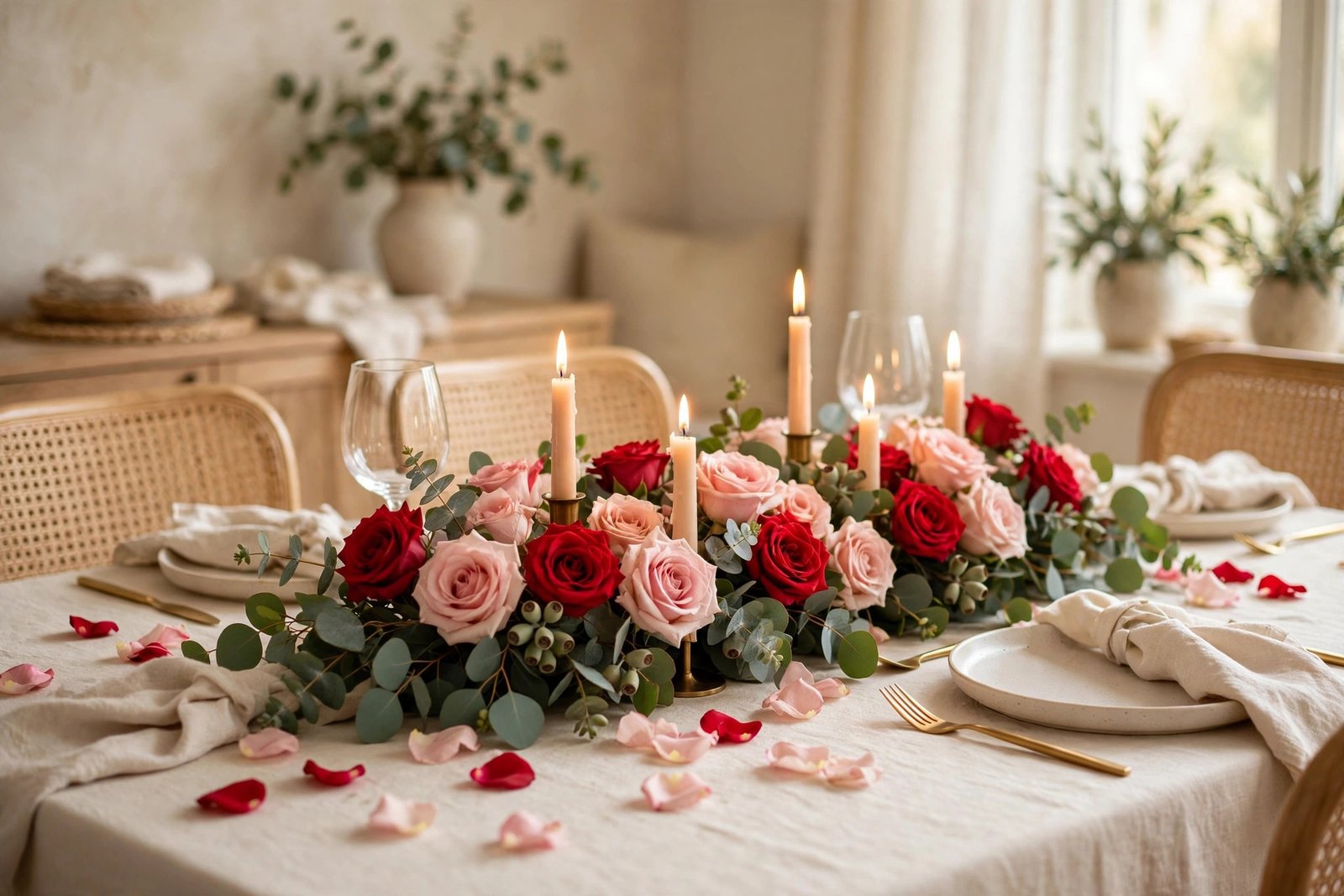
1. Lay a Low Rose Runner That Keeps Sightlines Open
The best Valentine centerpiece is one you can see over, and a low rose runner does exactly that. Lay a line of red and blush roses flat along the middle of the table, stems tucked into a long low trough or a row of small bud vases, so the flowers sit just above the plates and never block anyone’s face. Keep the arrangement to a hand’s width deep and no taller than a wine glass, and let a few loose petals drift onto the tablecloth. The effect is generous and romantic without ever getting in the way of the conversation. Add a few sprigs of eucalyptus between the roses, and the runner will smell as good as it looks.
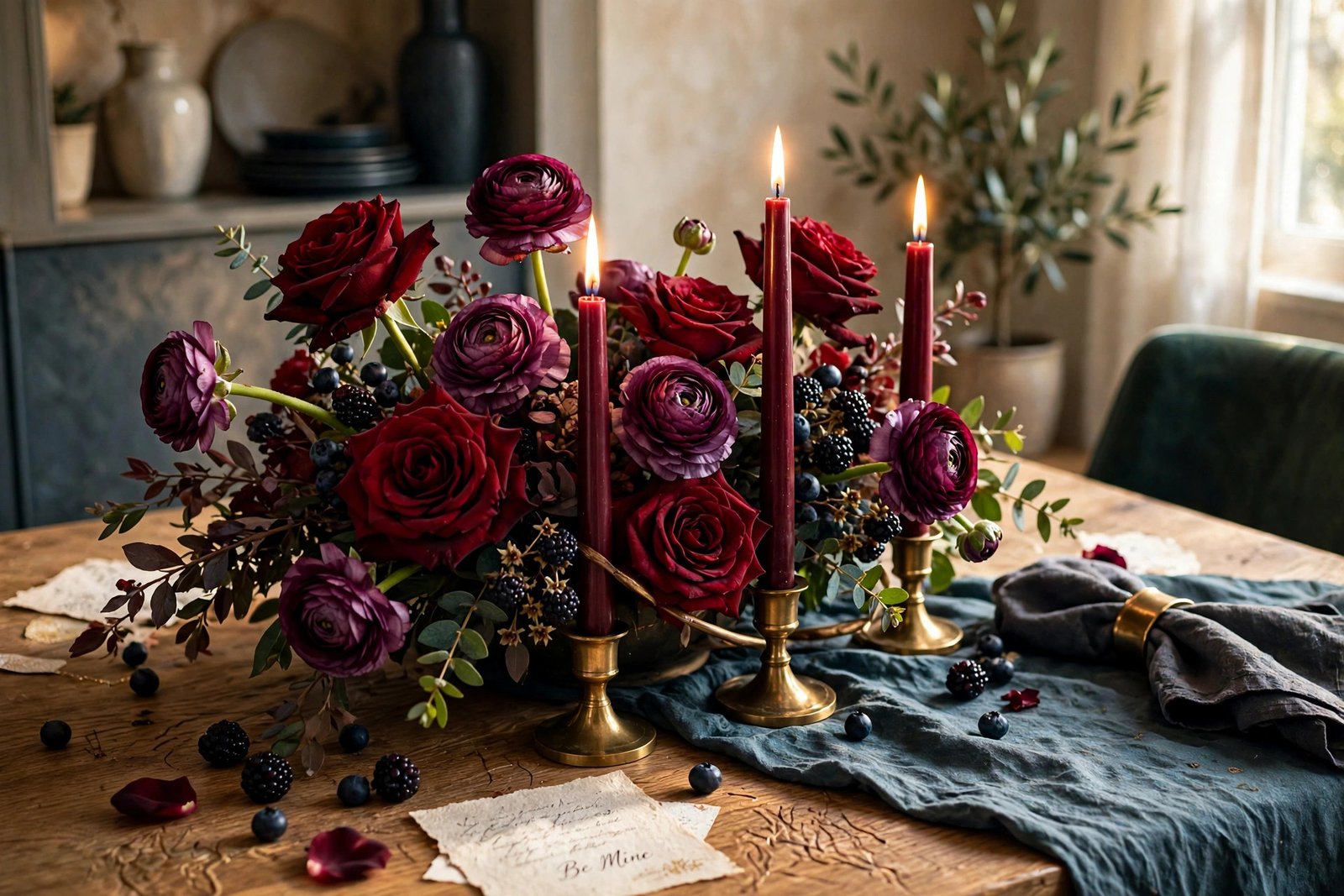
2. Cluster Candles and Red Roses in Moody Jewel Tones
For a rich, modern Valentine look, swap the pale pinks for moody jewel tones. Deep burgundy roses, plum ranunculus, and dark red taper candles in brass holders create a centrepiece that feels dramatic and grown-up rather than sweet. Group the candles at different heights in the middle of the table, tuck the flowers in low around their bases, and let a few dark berries or a sprig of dark greenery fill the gaps. The candlelight catches the jewel tones and throws a warm glow across the whole table. This is the arrangement to choose for a candlelit dinner for two, when the room is dark and the table is the only light.
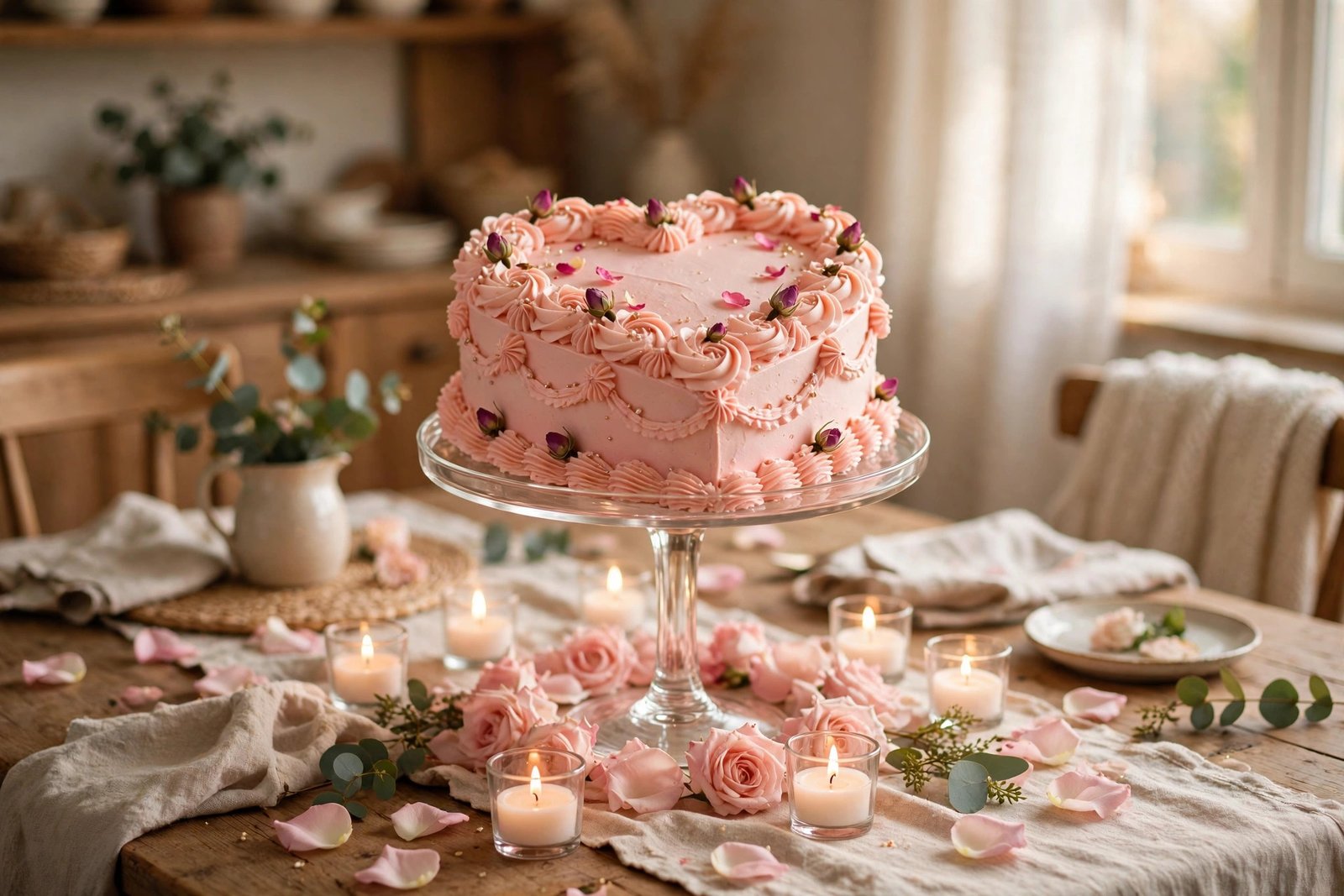
3. Put a Heart Cake on a Stand as the Centrepiece
The prettiest centrepiece on this list is one you can eat. Bake or buy a small heart-shaped cake, frost it in blush pink or deep red, and set it on a tall cake stand in the middle of the table. The stand gives the cake height without blocking anyone’s view, and the cake itself becomes the decoration, the dessert, and the talking point. Scatter a few rose petals and a couple of small candles around the base of the stand, and keep the cake simple — a dusting of dried rose petals or a single fresh rose on top is enough. When dinner is done, the centrepiece is dessert.
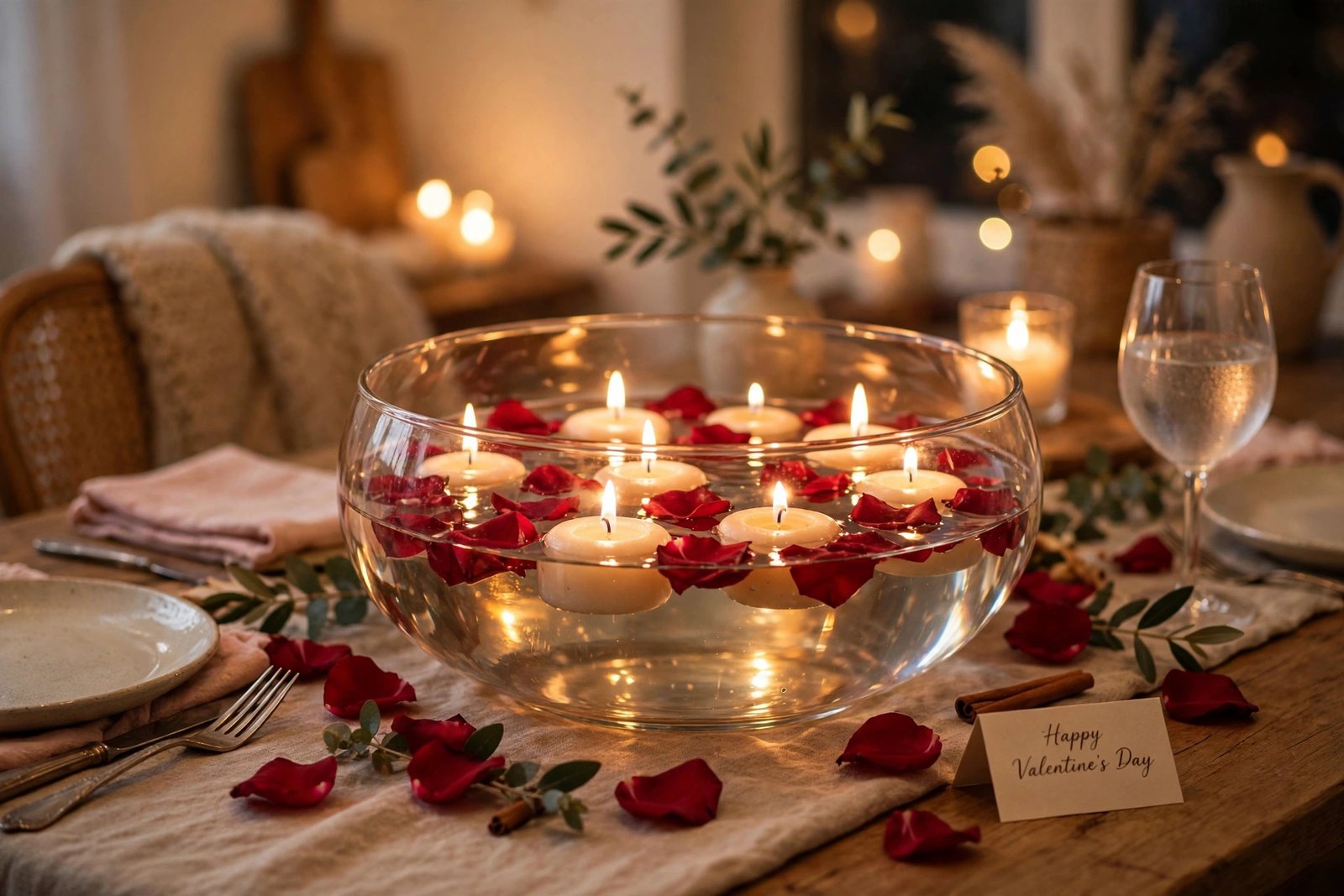
4. Float Candles and Rose Petals in Glass Bowls
Floating candles are Valentine decorating at its simplest, and they look far more expensive than they are. Fill a wide glass bowl or a hurricane vase with water, scatter red and blush rose petals across the surface, and set two or three floating candles on top. The petals drift gently, the candle flames reflect in the water, and the whole bowl glows from within. Use one large bowl for a table for two, or three smaller bowls spaced down a longer table for a group dinner. Keep the water level a finger below the rim, and light the candles just before guests sit down so the effect is at its best.
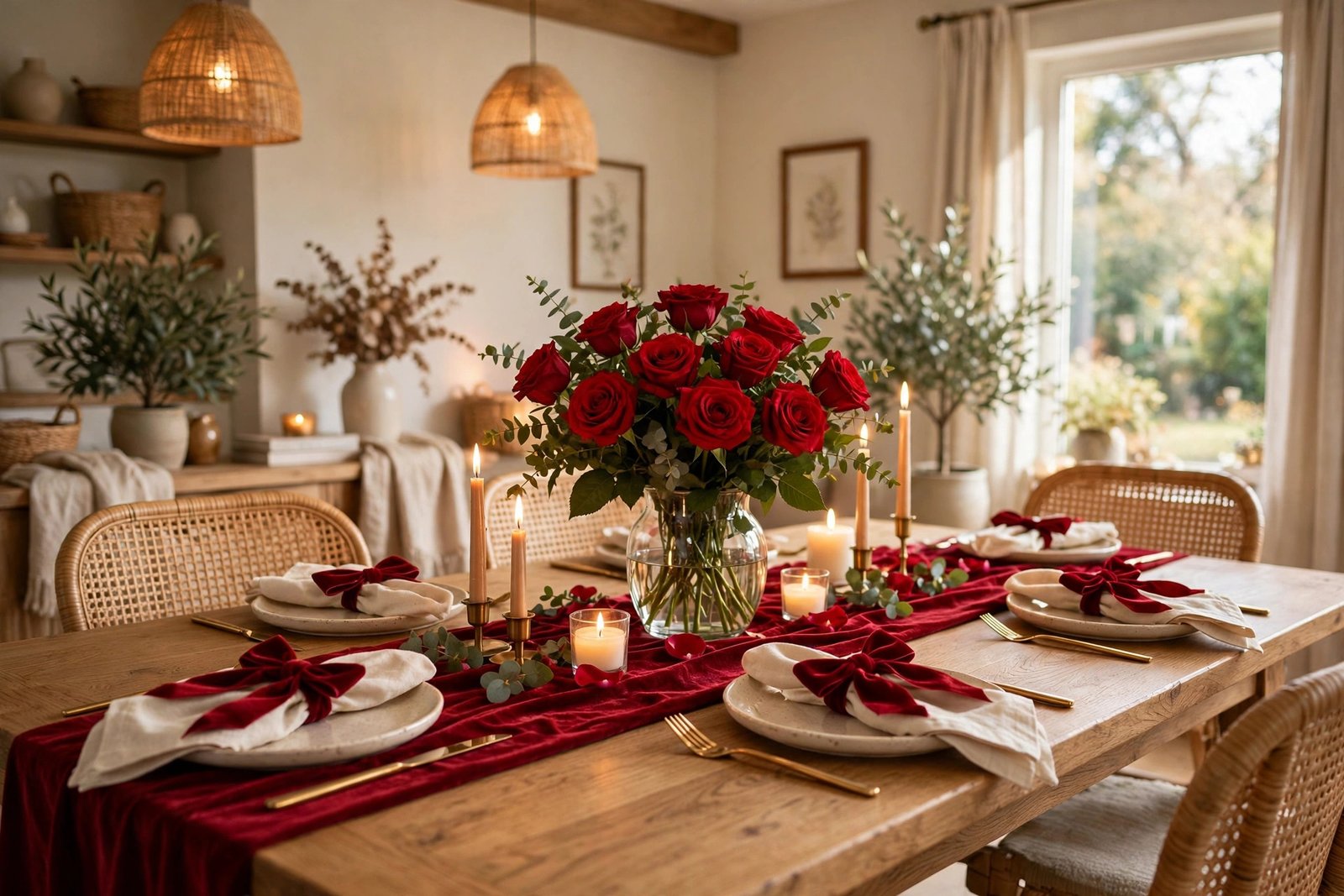
5. Tie Everything Together With Velvet Ribbon
Velvet is the texture of Valentine’s Day in 2026, and a wide velvet ribbon is the easiest way to bring it to the table. Run a deep red or dusty rose velvet ribbon down the centre of the table as a runner, tie small velvet bows around the napkins, and wrap a ribbon around the vase holding your roses. The soft, matte texture catches the candlelight beautifully and makes even a simple arrangement feel considered and luxurious. Choose one shade of velvet and repeat it in three places — the runner, the napkins, and the vase — so the table reads as one planned look. A metre of ribbon costs very little and can be reused all year.
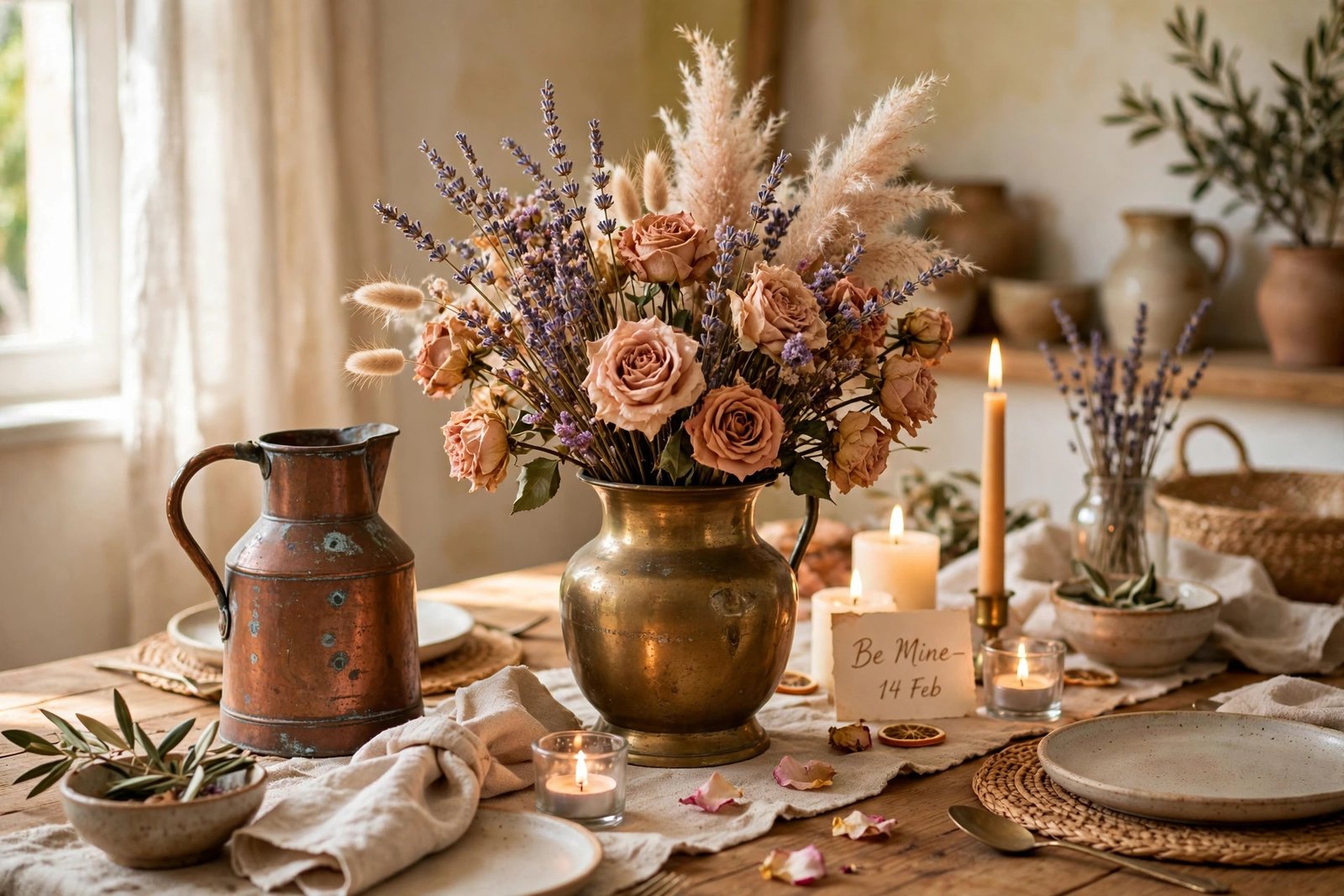
6. Mix Dried Flowers With Thrifted Brass
A sustainable Valentine centrepiece can be the most beautiful one on the table. Dried roses, dried lavender, and a plume of pampas grass in a thrifted brass vase or a second-hand copper jug bring a soft, romantic texture that fresh flowers cannot, and they last far beyond February. Look for the vase first — charity shops and thrift stores are full of brass candlesticks, small pitchers, and vintage glass that cost almost nothing and look wonderful in candlelight. Keep the dried arrangement low and airy, so it never blocks the view across the table. When the evening is over, the vase goes back on the shelf and the flowers are ready for next year.
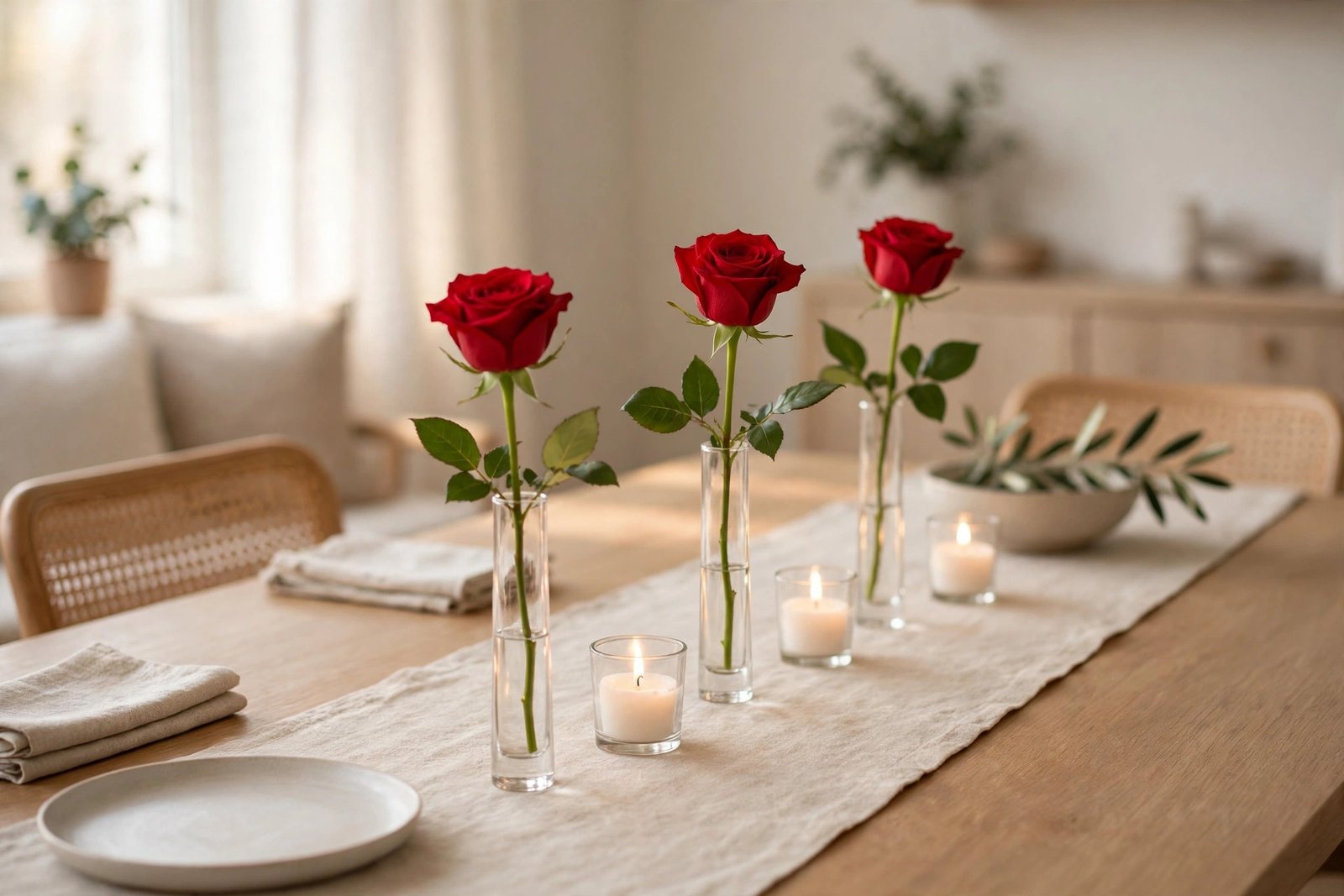
7. Keep It Minimal With a Single Stem in a Bud Vase
Sometimes the most romantic centrepiece is the smallest one. A single perfect red rose in a slim bud vase, repeated three times down the centre of the table, is minimalist elegance at its best — quiet, confident, and impossible to get wrong. Choose vases that match — clear glass, cream ceramic, or small brass — and keep the stems short so the blooms sit just above the table. Add one small votive candle beside each vase, and the table is done. This is the arrangement for a small table, a first Valentine’s dinner, or anyone who thinks less is more. Three roses and three candles can say more than a crowded arrangement ever will.
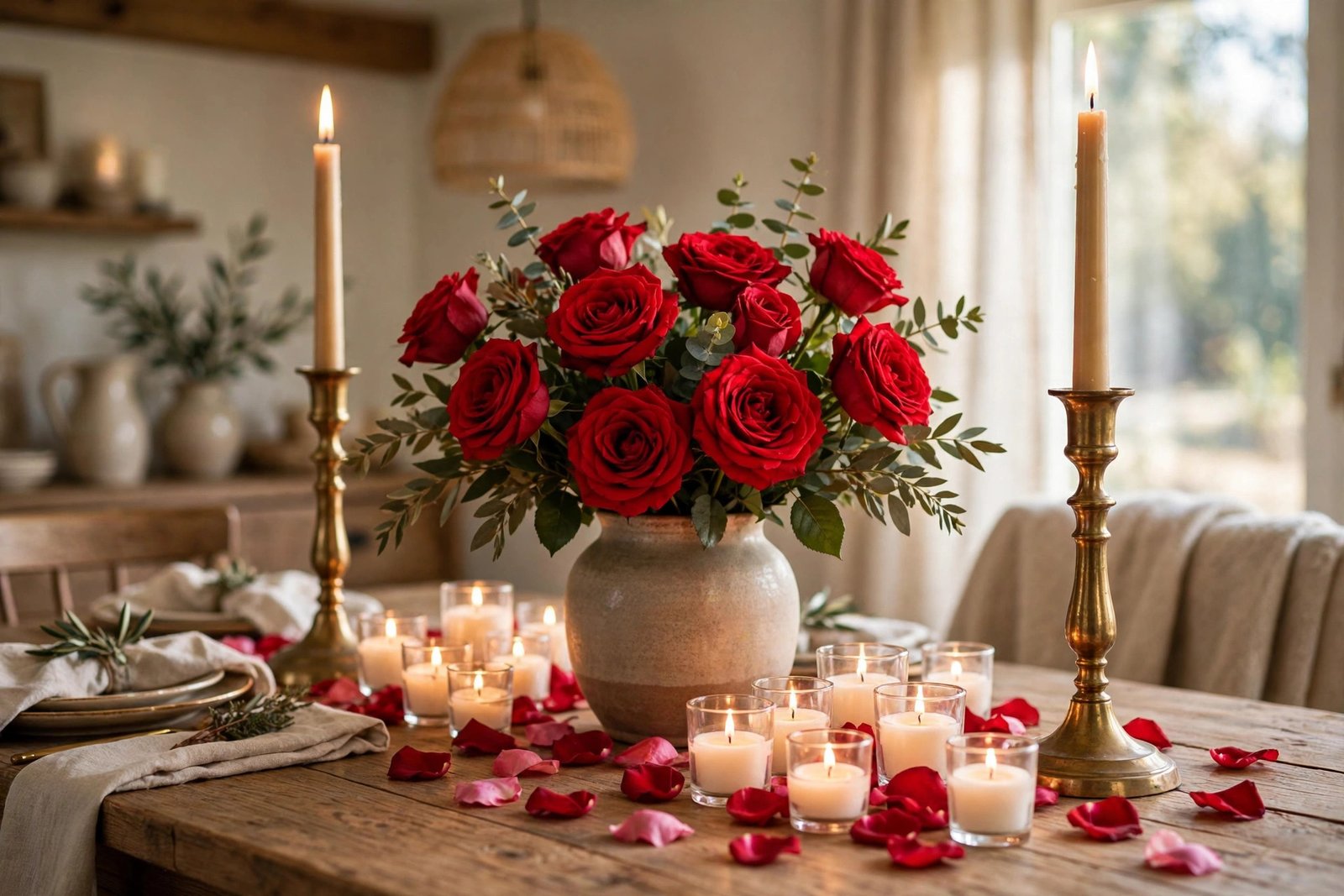
8. Layer Heights With Cake Stands and Candlesticks
Layering is the secret to a centrepiece that looks styled rather than placed. Build your arrangement in three heights: a tall candlestick or a cake stand at the back, a medium vase of roses in the middle, and low votives and scattered petals at the front. The different levels catch the eye and make the table feel full without crowding it, and the tallest piece never needs to rise above a wine glass. Use the tallest piece sparingly — one cake stand or one pair of candlesticks is enough — and keep everything else low. If you are styling for a group, repeat the same three heights in smaller clusters down the table so every guest has something pretty in front of them.
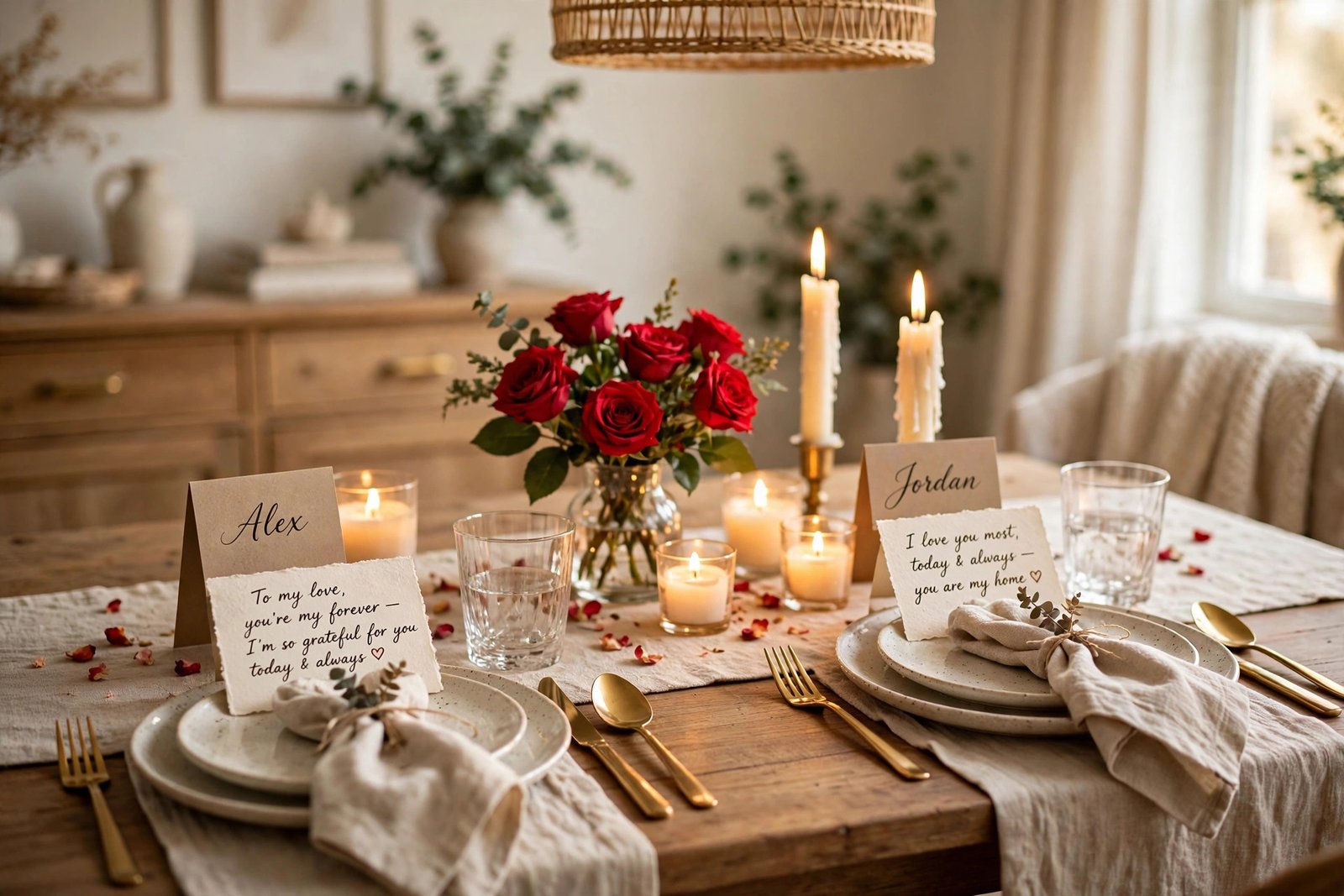
9. Add Handwritten Notes and Initials for a Personal Touch
Personalisation is what turns a pretty table into a memorable one. Write a short handwritten note for each person at the table — a line you love, a memory, a reason you are glad they are here — and fold it into a place card, or tuck it under a rose at each setting. Add your initials to the centrepiece itself: wooden letters tied with ribbon, a small monogrammed tag on the vase, or a heart-shaped card leaning against the candle. The notes cost nothing and take ten minutes, but they are the part of the evening people keep. If the dinner is for two, one note each, exchanged over dessert, is the whole idea.
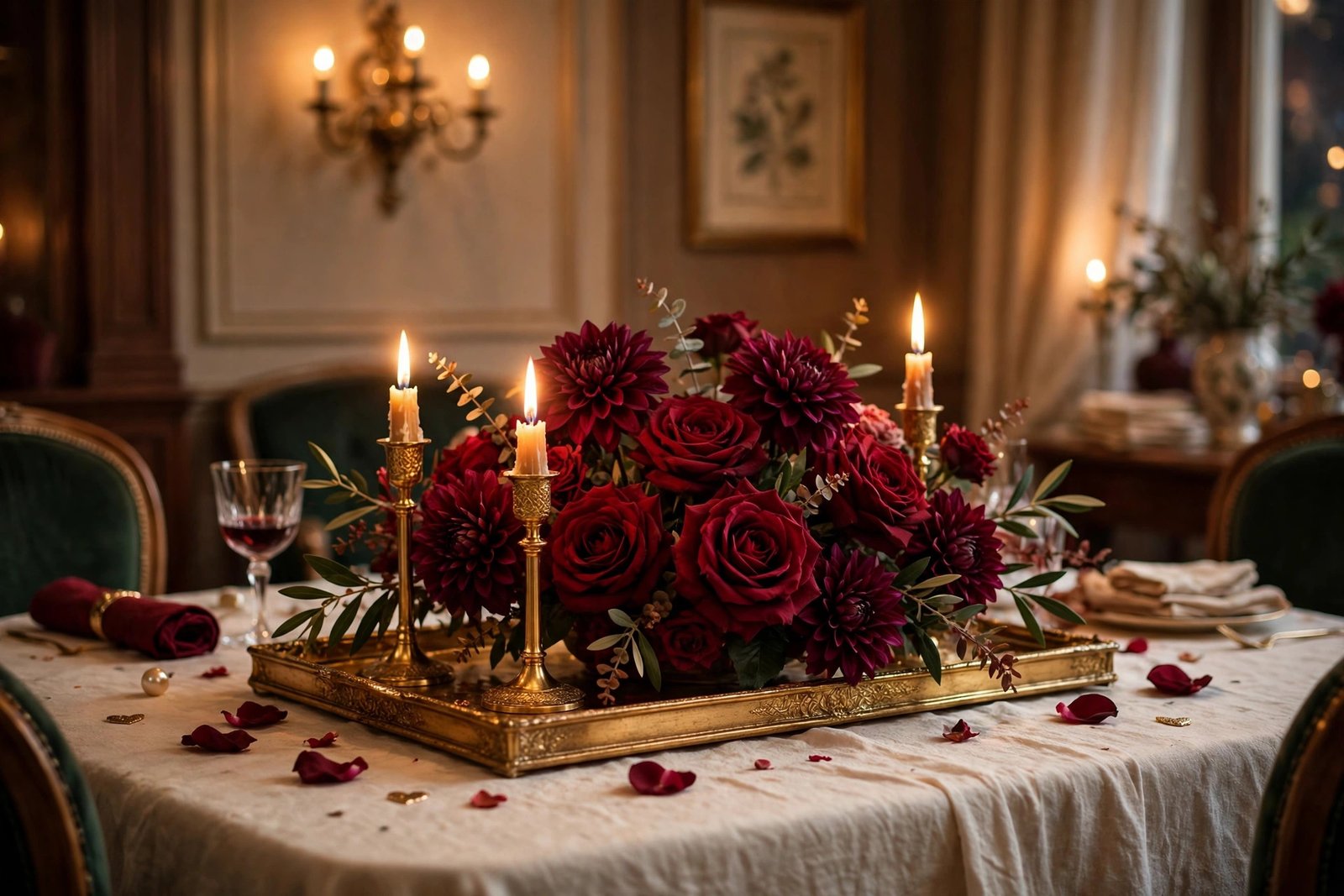
10. Go Bold With a Deep Burgundy and Gold Centrepiece
If pale pink is not your style, go bold. A deep burgundy and gold centrepiece — dark red roses, burgundy dahlias, gold candlesticks, and a gold tray or charger under the arrangement — feels rich, warm, and a little bit dramatic. The gold catches the candlelight and throws it back across the table, while the dark flowers give the arrangement depth and weight. Keep the tablecloth simple — cream or ivory — so the dark colours have something calm to sit against, and repeat the gold in one or two other places, like the napkin rings or the cutlery. This is the look for a grown-up Valentine dinner, and it photographs beautifully.
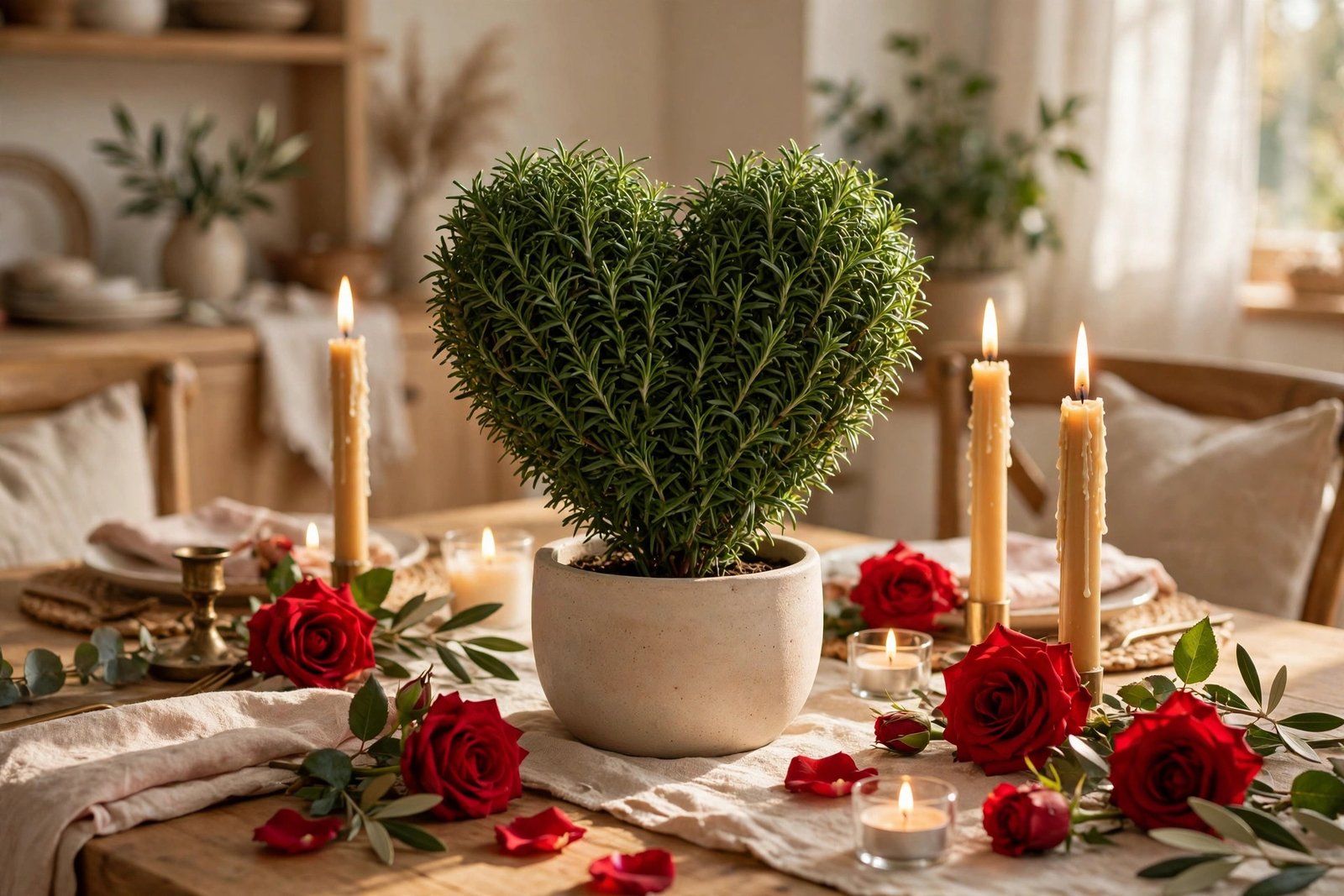
11. Style a Heart-Shaped Topiary or Rosemary Hearts
A heart-shaped topiary is the sweetest centrepiece on this list, and it is easier than it looks. Buy a small heart topiary or shape a rosemary plant into a heart with garden wire, and set it in a simple pot in the middle of the table. The greenery is a lovely contrast to all the red and pink, and rosemary smells wonderful all evening. If a topiary feels too much, cut small heart shapes from rosemary sprigs and lay them along the table runner, or tuck a sprig of rosemary into each napkin. The plant is the gift, too — after dinner, it goes to a sunny windowsill and keeps growing long after Valentine’s Day is over.
12. Set Lanterns and Greenery Down the Table
Lanterns bring a soft, sheltered glow that open candles cannot, and they are the safest choice when children or pets are around the table. Place two or three glass lanterns down the centre of the table, each with a pillar candle inside, and weave eucalyptus or olive branches between them so the greenery connects the lanterns into one long arrangement. The branches can be cut from the garden or bought cheaply, and the lanterns can be reused for every season. Keep the lanterns low and the greenery flat, so the arrangement never rises above eye level. When the candles are lit, the whole table glows like a little street of lanterns.
13. Mix Vintage Vases You Already Own
The most charming Valentine centrepieces are rarely bought as a set. Gather every small vase you own — a jam jar, a milk bottle, a charity-shop find, a vase from a bunch of flowers long ago — and fill each one with a few stems of roses, carnations, or whatever is in season. Line them down the centre of the table in a loose row, mixing heights and shapes — our christmas centerpiece ideas show the same gathered look at its best. Carnations in the same colours as your roses give you the same full look for far less money, and the odd shapes keep the table feeling collected rather than staged. This is the arrangement that costs almost nothing and looks like it took hours.
14. Keep It Intimate for a Dinner for Two
A table for two needs a different centrepiece from a table for eight, and smaller is better. One low bowl of roses, two taper candles, and a scattering of petals is all a two-person table needs — anything bigger will crowd the plates and block the view of the person across from you. Place the arrangement slightly to one side, so the two place settings feel connected rather than separated by a wall of flowers. Dim the overhead light, let the candles do the work, and keep the table clear of everything that is not part of the meal. For a dinner for two, the centrepiece should frame the conversation, not compete with it.
15. Repeat Small Clusters for a Group Table
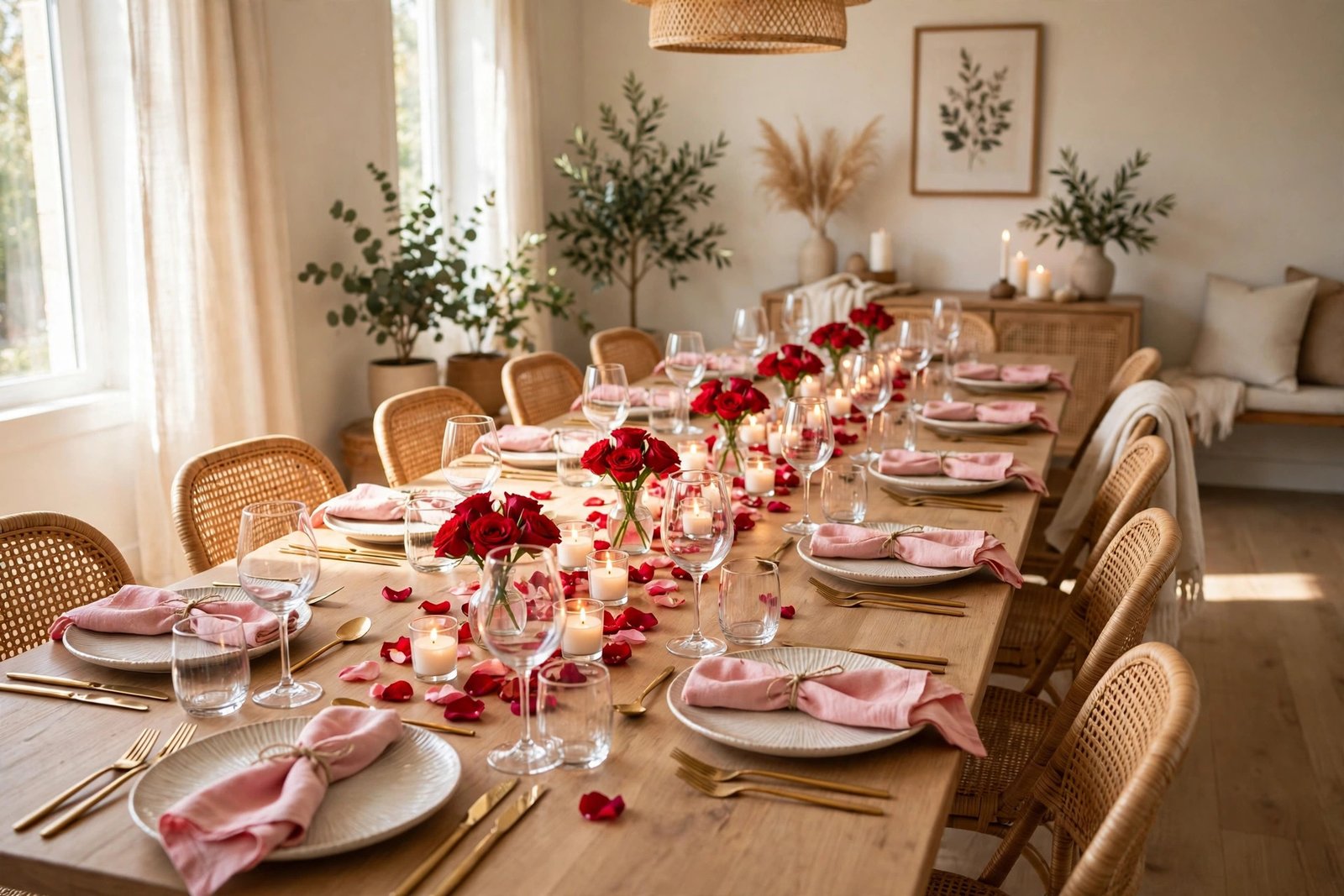
When the table is long and the guest list is bigger, one centrepiece in the middle leaves the ends of the table bare. Instead, repeat the same small cluster three or four times down the table: a bud vase with two or three roses, a votive candle, and a few petals at each spot. Every guest gets flowers in front of them, the table feels full from end to end, and the repetition makes the whole arrangement look planned rather than scattered. Keep each cluster identical, so the eye reads them as one long design, and leave enough space between them for the serving dishes. This is the arrangement that works for a Valentine’s Day dinner party, a Galentine’s night, or a family table.
Try This
Give yourself one quiet afternoon this week and do the Valentine centrepiece reset in three moves: first, clear the table completely and lay your runner — velvet ribbon, a low line of roses, or a row of bud vases — down the centre; second, set your candles at three heights and light one to check the glow before the evening; third, add the personal touch — handwritten notes at each place and a few petals scattered around the base. That is the whole job. Then set the table, pour two glasses of something cold, and sit down for ten minutes before deciding what, if anything, is still missing. If the rest of the room needs the same treatment, our cozy living room ideas will help you finish the space without starting over.
Valentine Centerpiece Ideas on a Budget
A romantic Valentine centrepiece does not need a big spend. In fact, most of these ideas are free or nearly free: a heart cake baked at home, handwritten notes, dried flowers from last year, and vases you already own. Candles are the best value in the whole list — a few pounds buys weeks of evening light. If you do spend, spend where you will feel it every evening. A good set of brass candlesticks or a thrifted brass vase is an investment you will reuse every February, and a bunch of market roses costs far less than a florist’s arrangement. Buy carnations alongside the roses to bulk out the display for less, and look for velvet ribbon and lanterns second-hand. The one thing to avoid is buying a whole new “Valentine look” in one go. Buy one piece, live with it for a week, and only then decide what is missing.
Common Mistakes to Avoid
Building the centrepiece too tall. A tall arrangement looks wonderful in a photo and terrible in real life, when it blocks the person sitting across from you. Keep the centrepiece below eye level when seated, so the conversation can flow over it.
Crowding the table. A centrepiece that leaves no room for plates, glasses, and serving dishes is a decoration, not a table setting. Keep the arrangement to a third of the table’s width and leave space for the meal.
Mixing too many colours. A Valentine table needs a calm palette — blush, one deep red, and a touch of gold. Five competing colours will fight each other and make the table feel busy instead of romantic.
Forgetting the scent. A table can look romantic and still feel flat if the room smells of nothing. One rose-scented candle or a few sprigs of eucalyptus is enough — but do not skip it entirely.
Decorating for a photo, not for dinner. If nobody can reach the bread without moving three objects, the centrepiece is styled for a picture, not a meal. Design for the way you actually eat at the table.
Frequently Asked Questions
What is the best centerpiece for a Valentine’s Day dinner?
A low arrangement of red and blush roses with candles is the classic choice, because it is romantic, simple, and never blocks the view across the table. Keep it below eye level when seated, add a few rose petals and a velvet ribbon runner, and you have a centrepiece that works for a dinner for two or a full table. A heart cake on a stand is a lovely alternative if you want the centrepiece to double as dessert.
How do you make a Valentine centerpiece on a budget?
Start with what costs nothing: vases you already own, handwritten notes, and dried flowers from last year. For a Valentine centrepiece, a few market roses, a bunch of carnations to bulk it out, and a set of candles will transform the table for very little. A velvet ribbon runner and a thrifted brass vase are the best small purchases — they pull the whole arrangement together and you will reuse them every February.
How tall should a Valentine centerpiece be?
Keep the centrepiece below eye level when you are seated — roughly no taller than a wine glass for the flowers, with candles the only exception. Tall arrangements block the view of the person across the table and make conversation awkward. If you want height, use a cake stand or a tall candlestick at one end of the table rather than in the middle.
What flowers should I use for a Valentine centerpiece?
Red and blush roses are the classic choice, and they are at their best in February. Ranunculus, dahlias, and carnations in the same colours give you the same romantic look for less money, and eucalyptus or olive branches add greenery and scent. Dried roses and lavender work beautifully too, and they last long after the evening is over.
Can I use a heart cake as a Valentine centerpiece?
Yes, and it is one of the prettiest ideas on this list. Set a small heart-shaped cake on a tall cake stand in the middle of the table, scatter a few rose petals and small candles around the base, and keep the decoration simple — a dusting of dried rose petals or a single fresh rose on top. When dinner is finished, the centrepiece becomes dessert, so nothing is wasted.
How do I keep a Valentine centerpiece from blocking conversation?
Keep the arrangement low and narrow — no taller than a wine glass and no wider than a third of the table. Use a low rose runner or a row of small bud vases instead of one big bouquet, and place any tall pieces, like candlesticks or a cake stand, to one side rather than in the middle. If you can see the person across the table clearly, the centrepiece is the right height.
Valentine’s Day does not ask for much. A lit candle, a vase of roses, a few petals on the table, and ten quiet minutes with someone you love will carry a dining table through the coldest weeks of February. Start with the roses, keep it low, and let the romance build from there.