
Your feed is not imagining it — japandi bedroom ideas are everywhere in 2026, and for good reason. This Japanese-Scandinavian hybrid promises something most trends forget: a bedroom that actually helps you sleep. Below are 15 ideas that break the look down into doable pieces, from the low platform bed that defines the style to the small swaps that make it work in a rental.
Japandi fuses Japanese minimalism with Scandinavian warmth — shoji screens and wabi-sabi ceramics meeting light oak, soft daylight, and hygge coziness. The palette stays pared-back: off-white, beige, soft gray, and natural wood tones. Instead of patterns or bright colors, the materials do the talking: linen, bamboo, stone, paper, and wool.
The magic is that it is genuinely calming to live with. Fewer things, better things, everything with a purpose. It is also one of the easiest aesthetics to pull off on a budget, because light wood, linen-look bedding, and paper lanterns are everywhere right now. Searches for the style have been climbing steadily through 2026 as people trade maximalist chaos for something quieter. If you want more visual inspiration first, our aesthetic room ideas guide pairs well with what follows.
The recipe is simple: keep furniture low, let natural materials lead, stick to warm neutrals, and leave plenty of breathing room. Every idea below follows that recipe, and most cost less than a weekend takeout budget. Start with two or three and let the room settle — Japandi rewards patience, not shopping sprees.
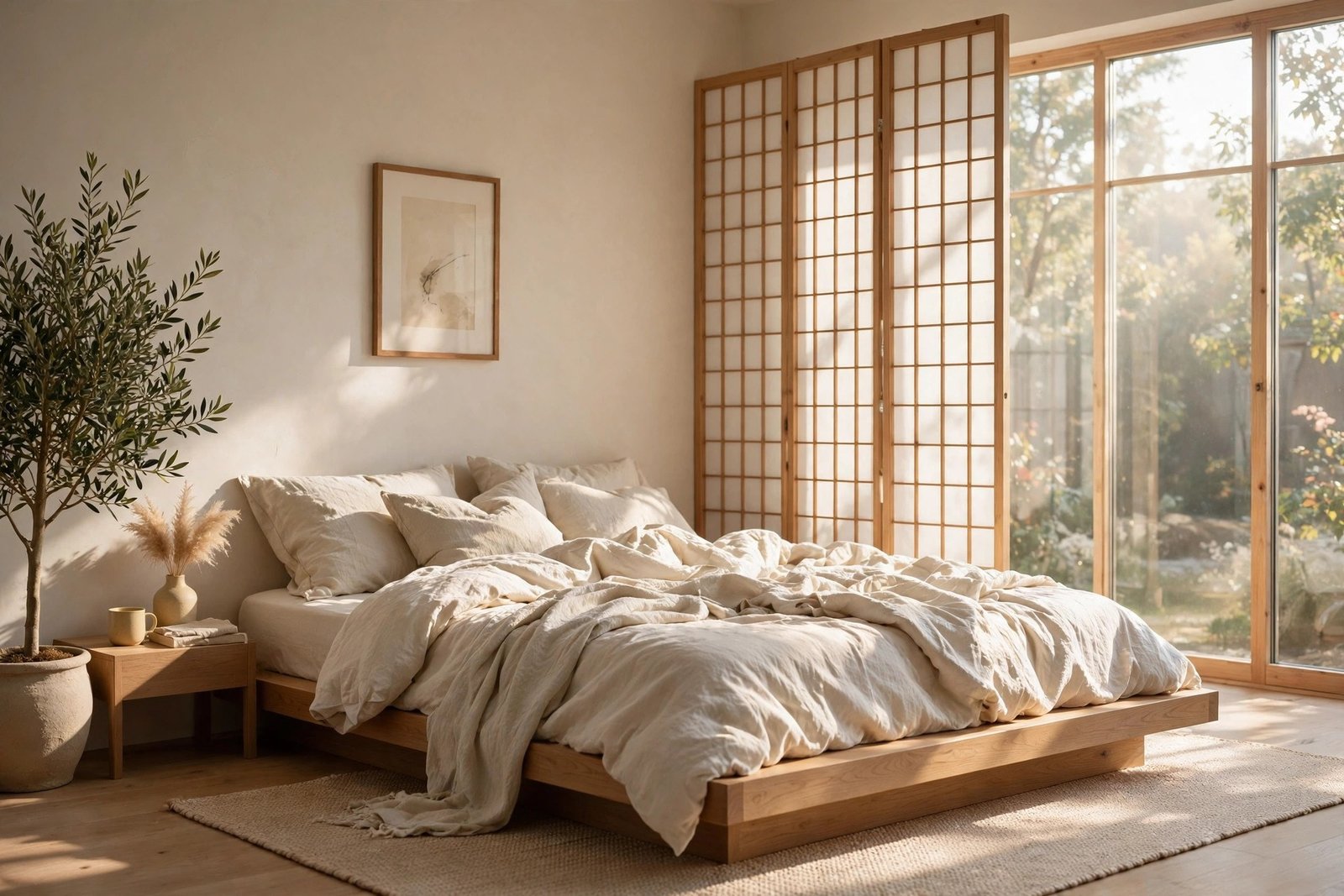
1. Start with a Low Platform Bed
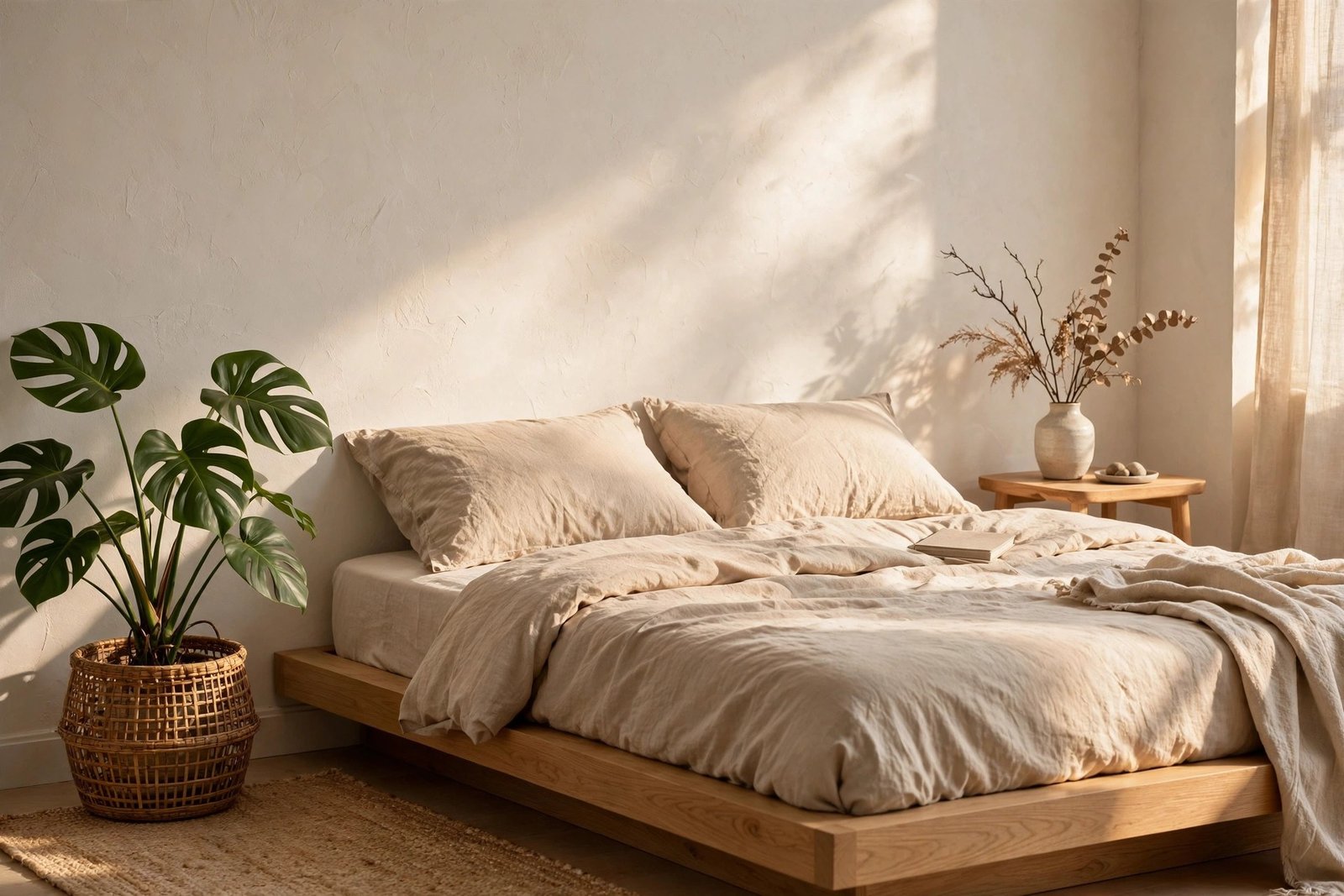
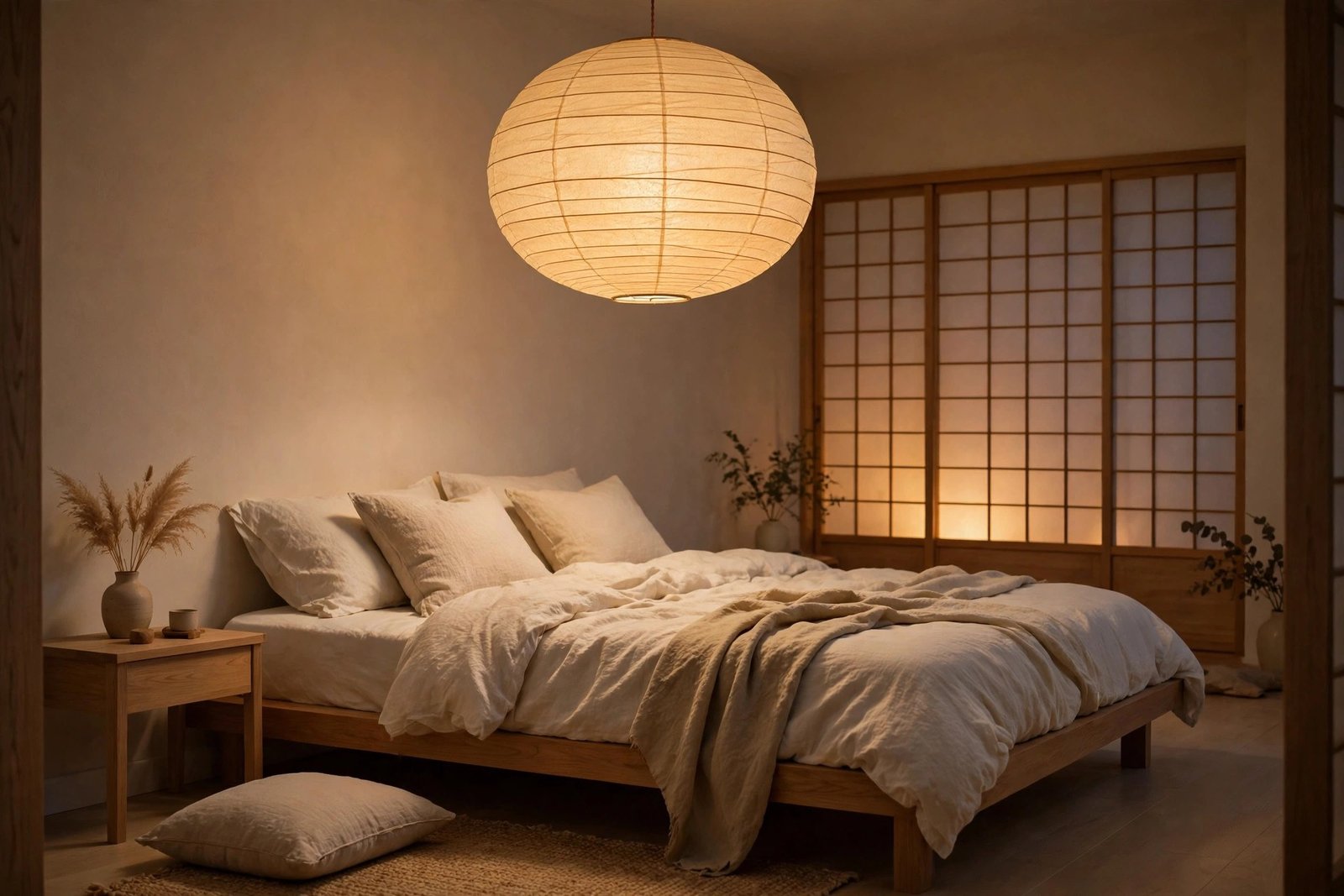
The low platform bed is the single most defining piece of the look. A frame in light oak or ash, barely a foot off the floor, immediately calms the whole room — and it makes ceilings feel higher, a gift in a small room. Skip the tall headboard and upholstered bulk; a simple slatted or solid panel frame is all you need. Dress it plainly at first: one duvet, two pillows, no more. Our small bedroom ideas show how a low bed opens up tight layouts. If a new frame is not in the budget, even removing a box spring and lowering your current bed changes the silhouette overnight.
2. Commit to a Warm Neutral Palette
Japandi runs on warm neutrals: off-white, oatmeal, sand, soft gray, and the pale gold of natural wood. Keep walls in warm off-white or pale beige rather than stark white, which reads cold next to the style’s natural materials. Bedding and curtains sit one or two shades deeper than the walls so the room has gentle layering instead of flat sameness. The Japandi style specifically avoids high contrast — no black-and-white checkerboards, no navy feature walls. One muted accent is plenty (see idea 15). Paint is the cheapest transformation in the book: a single tin of warm white paint can carry the entire palette before you buy a single piece of furniture.
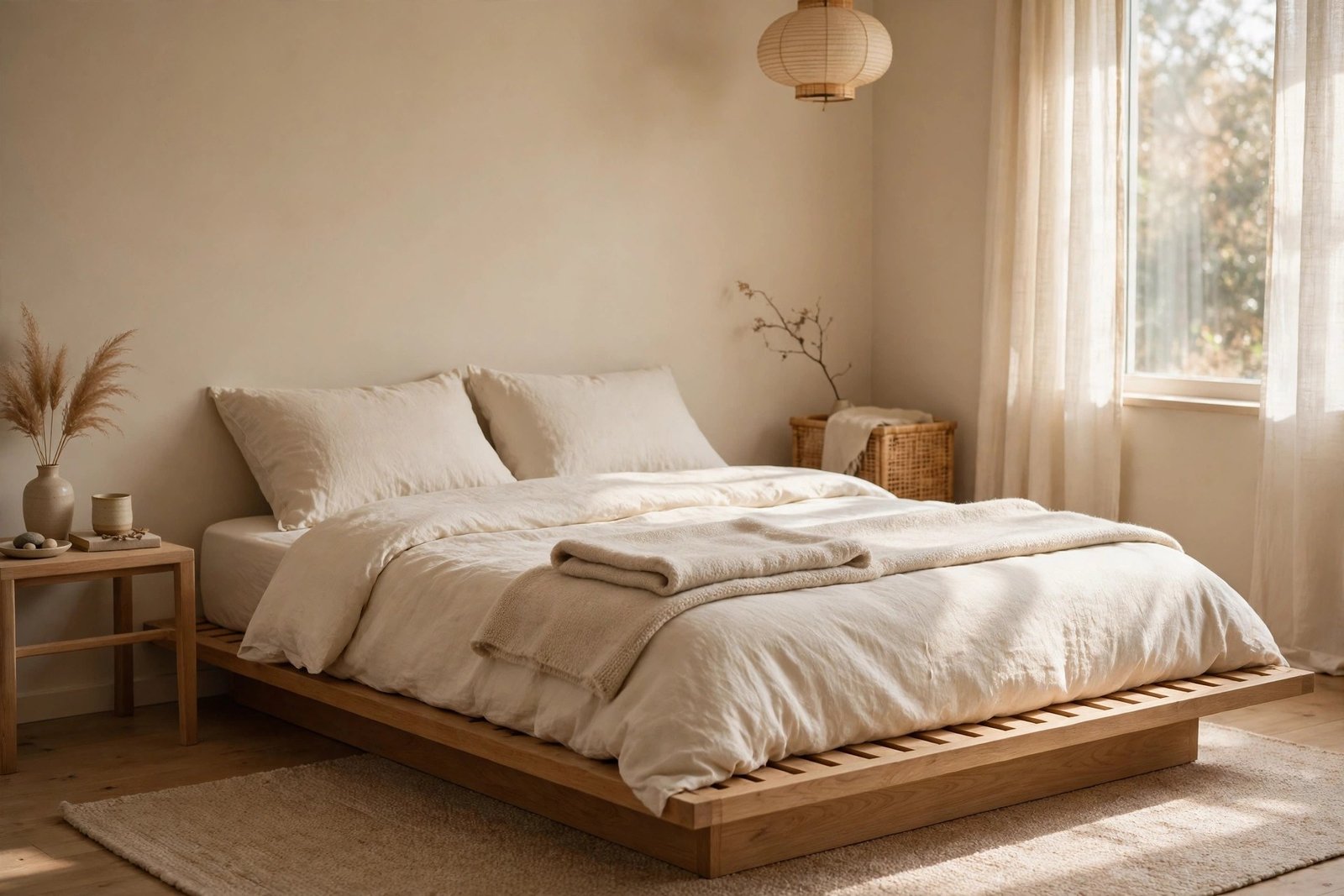
3. Let Light Oak Lead the Furniture
Natural wood with a visible grain is Japandi’s workhorse material, and light oak (or ash, beech, or pale bamboo) is the sweet spot. Choose nightstands, dressers, and shelving in unfinished or lightly oiled wood with clean, unfussy lines — nothing carved, glossy, or chunky. Mixing wood tones is fine as long as they stay in the light-to-medium range; one darker walnut accent piece can ground the room if everything else floats too pale. Keep furniture legs slim and visible so light passes under pieces and the room feels airy. Thrifted 1970s Scandinavian pieces are perfect for this and often cheaper than new flat-pack, plus the patina suits the wabi-sabi spirit.
4. Choose Linen (or Linen-Look) Bedding
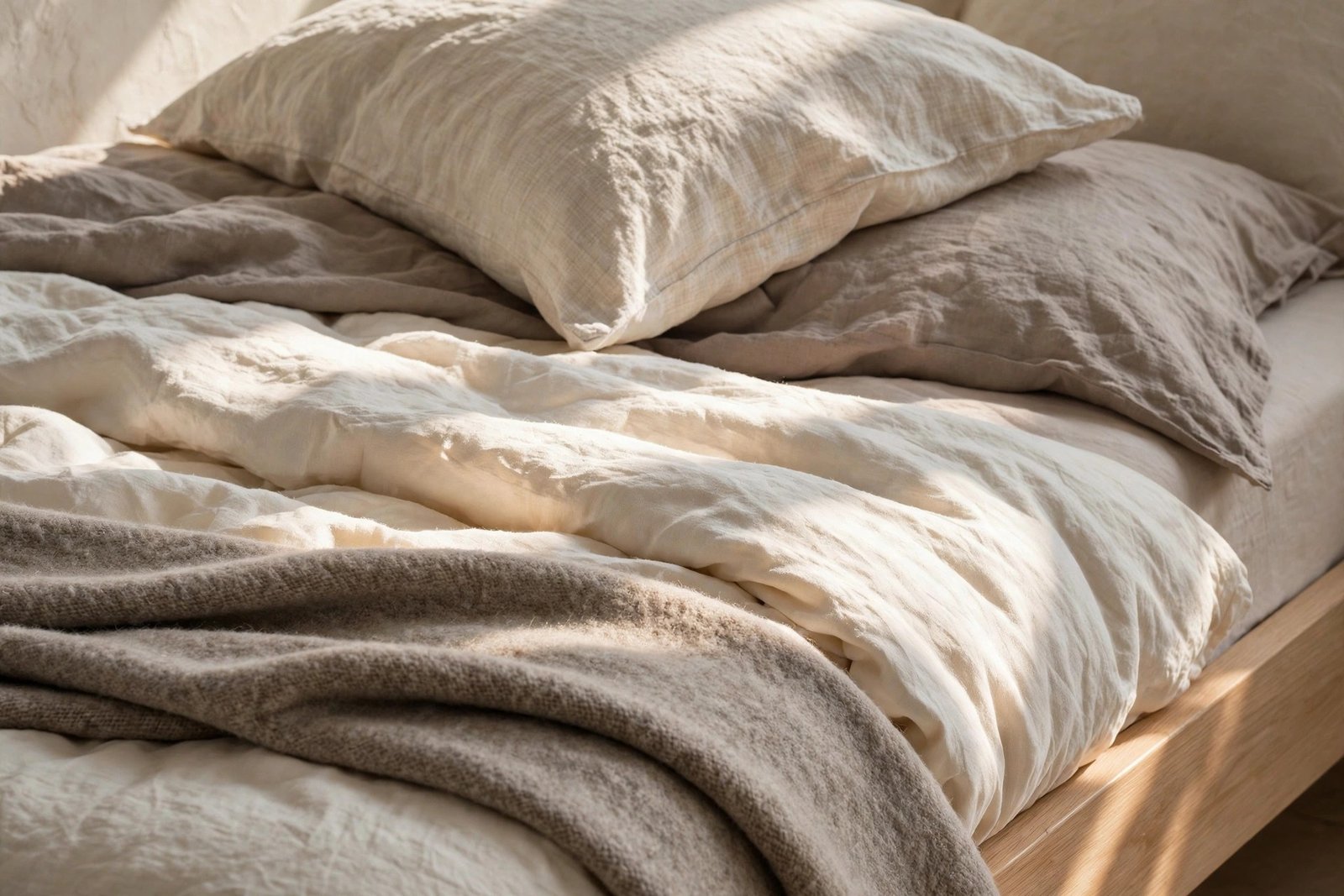
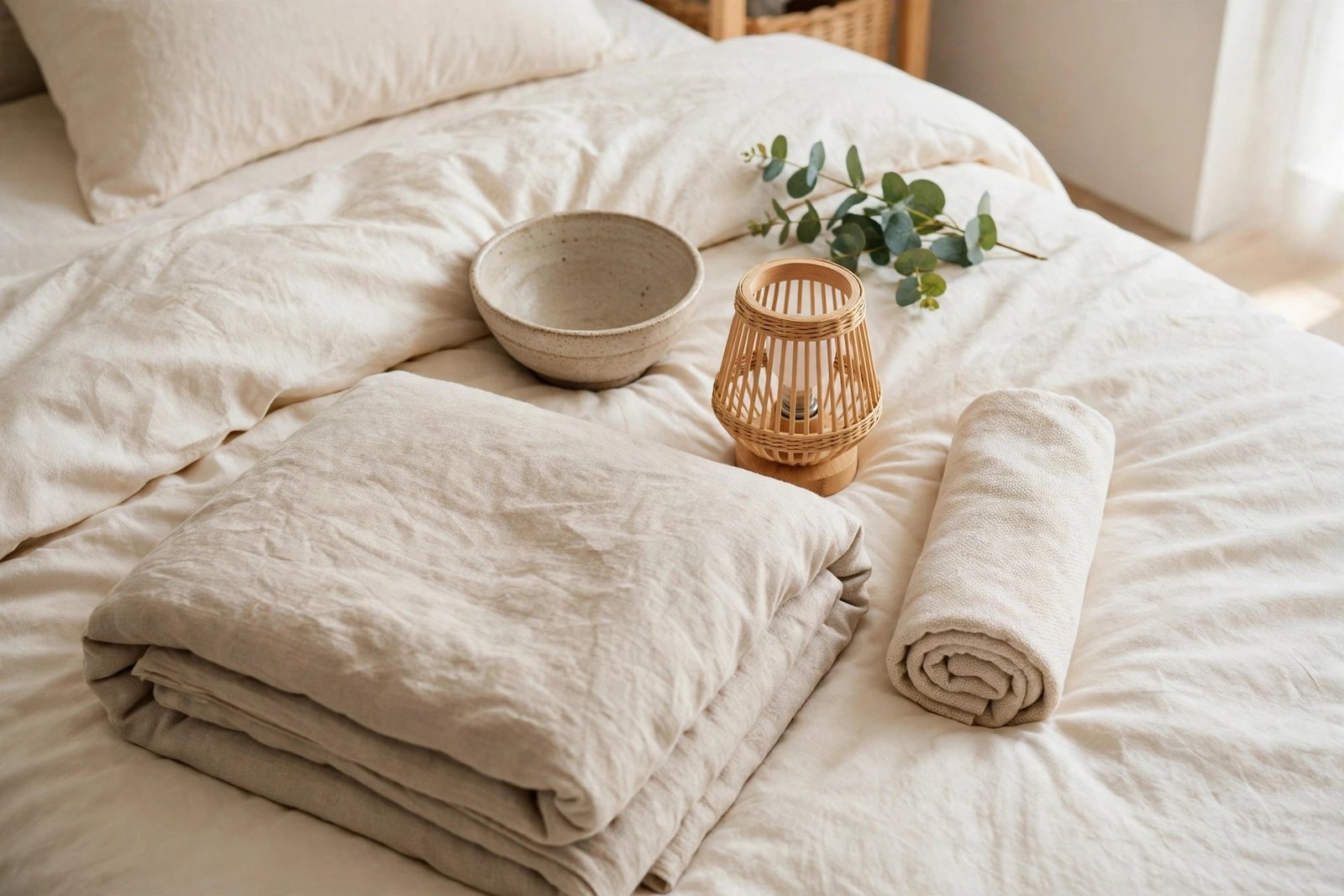
The bed is the biggest textile in the room, so the fabric matters more than the color. Real linen — or a convincing linen-look cotton — in cream, oatmeal, or soft taupe gives that slightly rumpled, lived-in texture that defines the style. Skip satin, velvet, and anything shiny; matte, breathable fibers only. Layer one duvet with a folded wool or cotton throw at the foot instead of a pile of decorative pillows — two sleeping pillows and one lumbar cushion is the whole setup. Wash linen weekly and never iron it; the wrinkles are the point. Linen duvet sets are the one item worth spending a little more on, because cheap versions pill and shine after a few washes.
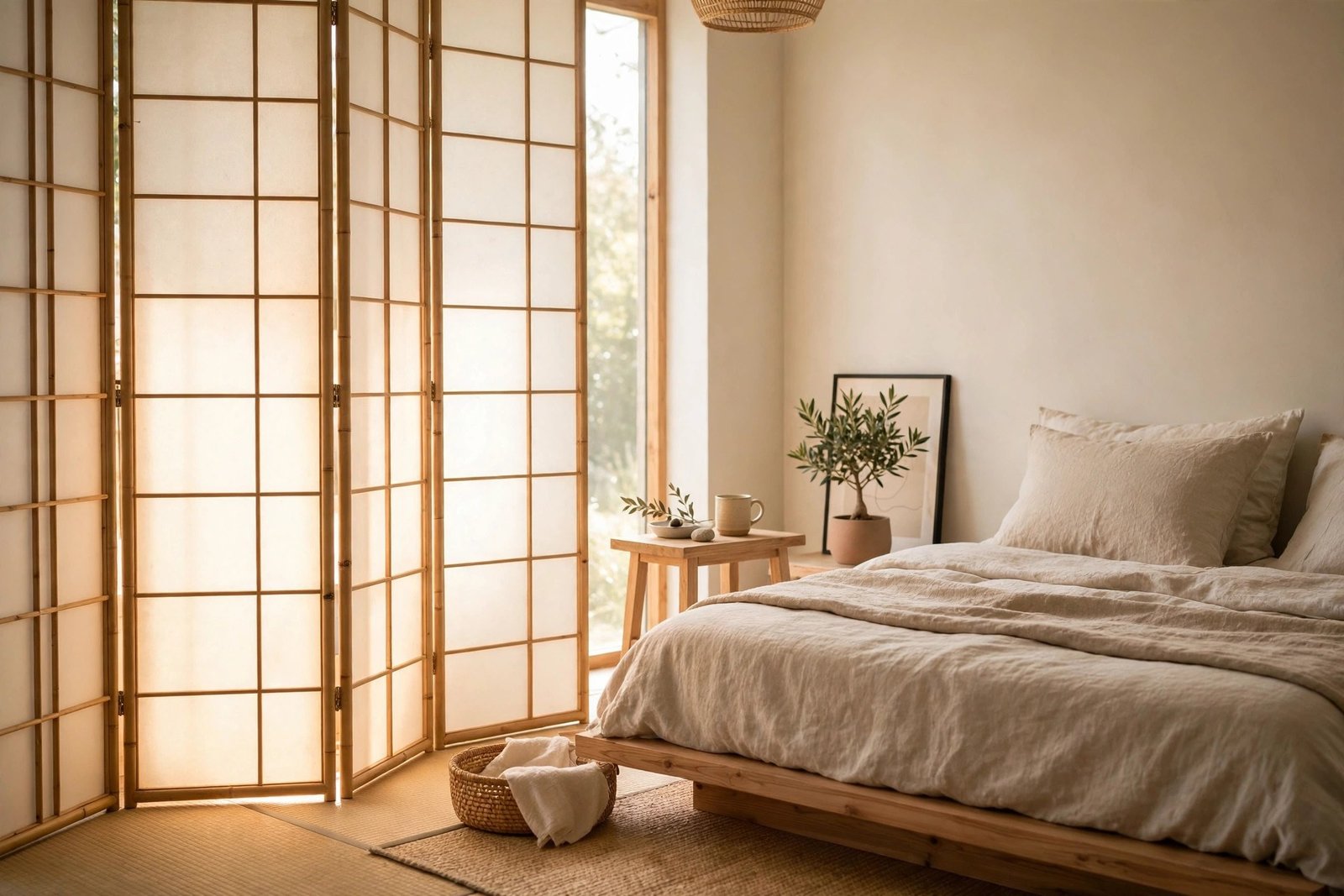
5. Add a Shoji Screen or Room Divider
Nothing signals the Japanese half of the equation faster than a shoji-style screen. A freestanding bamboo-and-rice-paper panel softens light beautifully and can hide a cluttered corner, a laundry pile, or a workspace you do not want staring at you at bedtime. True shoji is delicate, so modern versions with wooden frames and reinforced paper panels are the practical pick for a real bedroom. Use it as a headboard alternative, a window filter, or a divider that carves a dressing corner out of a studio layout. When the sun hits the paper panels, the whole room glows — it is the cheapest “lighting fixture” in this list and one of the most atmospheric.
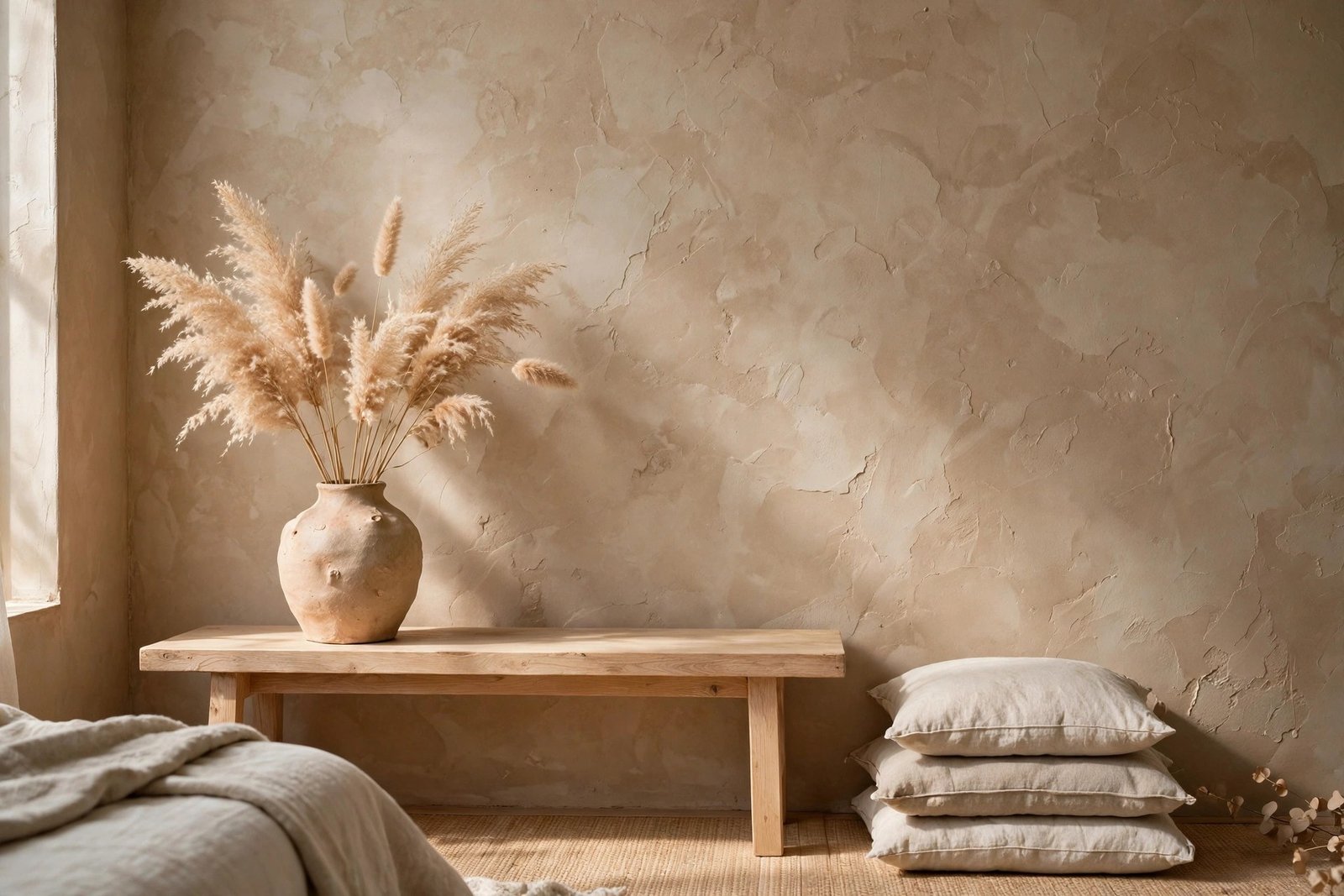
6. Embrace Wabi-Sabi Imperfection
Wabi-sabi — the Japanese philosophy of finding beauty in imperfection — is the soul of the style. Choose handmade ceramics with uneven edges, a vase with a visible crackle glaze, a wooden bowl worn smooth by years of use. These pieces carry character that factory-perfect decor never will, and they give a minimal room its warmth. One or two imperfect pieces are enough: a single hand-thrown vase with dried pampas grass or bare branches on the nightstand says more than a shelf of matching ornaments. Flea markets, pottery studios, and second-hand shops are the best sources. Display them with space around them — negative space is what lets an imperfect object look intentional rather than broken.
7. Light It with Paper Lanterns
Overhead downlights kill the mood; soft, diffused, warm light builds it. A large washi paper lantern pendant over the bed (or beside it) casts the gentle warm-yellow glow the style calls for, and it reads as a sculptural piece even switched off. Pair it with a small ceramic or linen-shaded lamp on the nightstand for reading light, and keep everything at 2700K warm white. This is also where the Scandinavian half shows up: candlelight and low lamps are pure hygge. Layer the light instead of relying on one source — the pendant for ambience, the bedside lamp for reading — and put bedside lamps on dimmers or smart bulbs so the room winds down gradually in the evenings.
8. Create a Floor-Level Tea Corner
A small floor-sitting corner borrows directly from Japanese living and costs almost nothing: a tatami-style mat or a flat-weave cotton rug, two low linen floor cushions, and a small wooden tray or side table for a teapot. It gives the room a second “zone” that is made for slow mornings, journaling, or just sitting with your phone off. Even in a tiny bedroom, a 4-by-4-foot corner is enough. Keep the palette consistent with the bed — oatmeal cushions, a natural wood tray — so it reads as part of the room rather than a separate craft project. This corner also doubles as meditation or stretching space, which suits the calm the style is trying to create.
9. Bring in One Sculptural Plant
One plant is the style’s punctuation mark; five plants is a jungle, and jungles are not Japandi. Choose one sculptural specimen — an olive tree, a fiddle-leaf fig, or a tall snake plant — and give it a hero position in a plain woven basket or simple ceramic pot. The plant’s job is to add life and one hit of organic green against all the beige, so keep the pot quiet and let the foliage do the talking. Real beats fake here; a dusty artificial plant breaks the natural-materials rule that holds the whole look together. If your room is dark, dried branches in a tall vase give the same sculptural effect with zero maintenance.
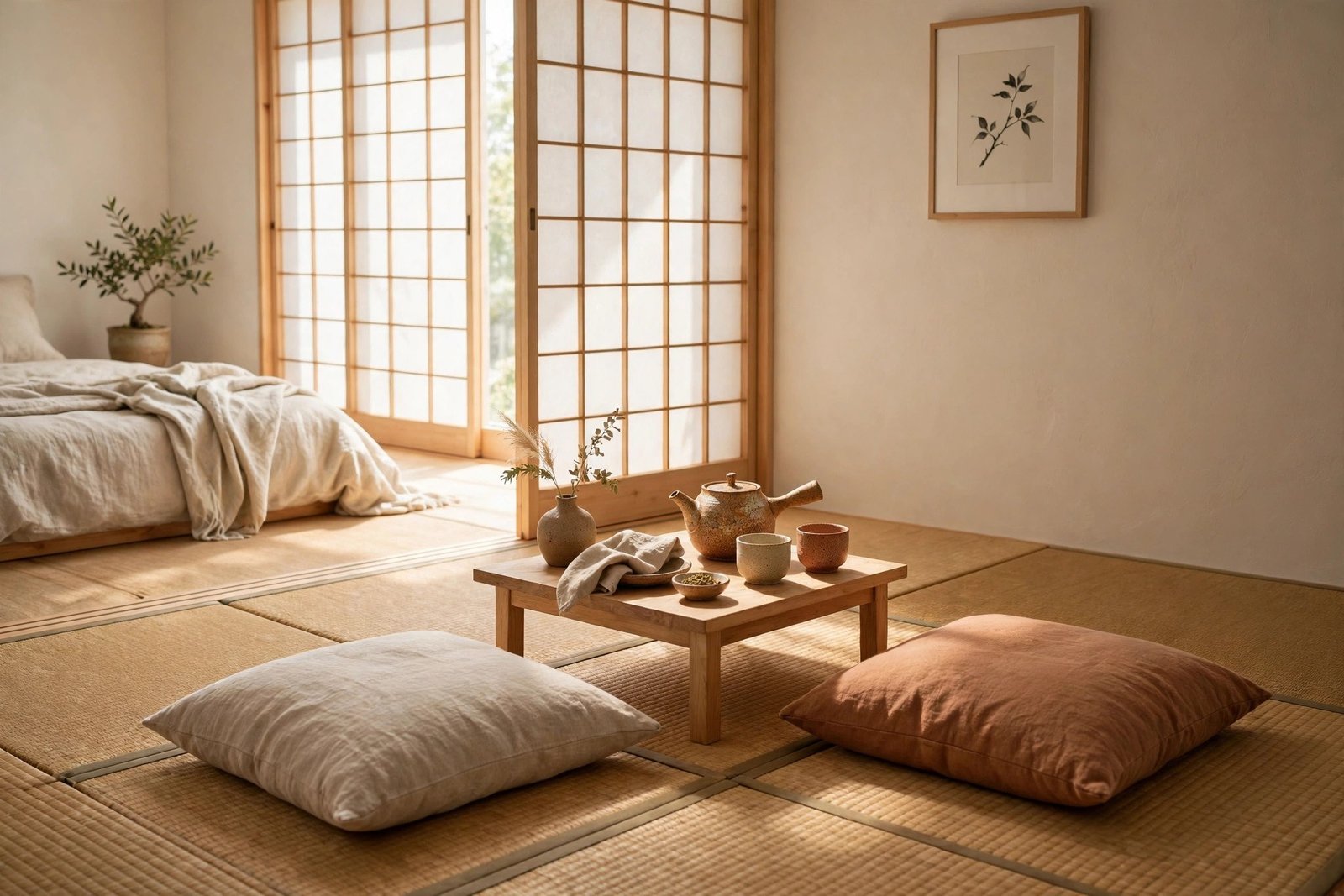
10. Make Storage Disappear
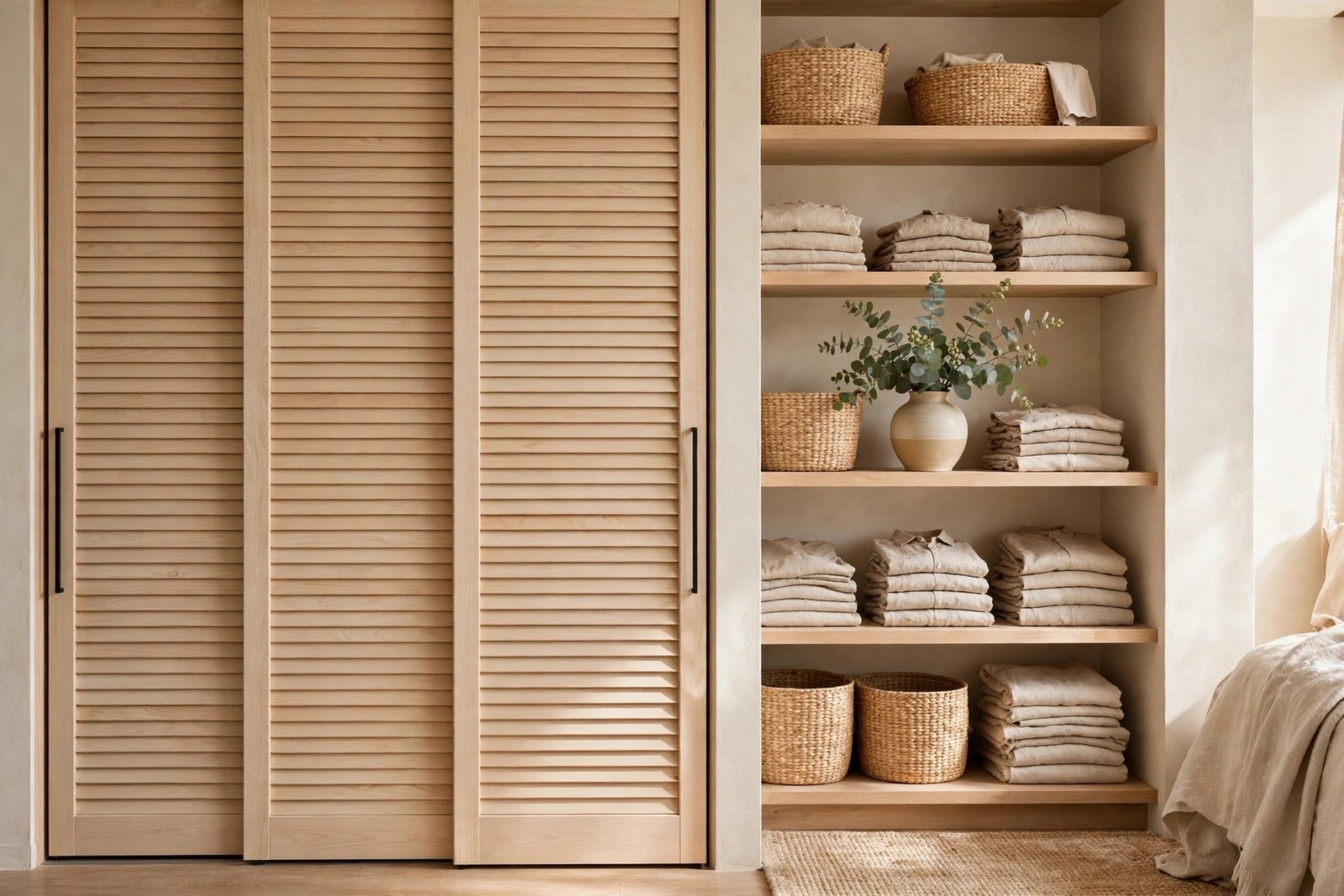
Minimalism only works if the clutter has somewhere to go. In a Japandi bedroom, storage should be invisible: a platform bed with built-in drawers, a wardrobe with sliding wood doors, woven seagrass baskets on open shelving, and lidded boxes in natural fibers. The rule is simple — if it is not beautiful, it lives behind a door. Do a ruthless declutter first, because buying baskets to hide things you do not need is just expensive hiding. Keep surfaces nearly empty: the nightstand holds a lamp and one small object, full stop. When everything has a home, the room stays calm without any daily effort, and that low-maintenance serenity is the real luxury of the style.
11. Layer Soft Hygge Textures
This is the Scandinavian half earning its place: softness on top of the minimalism. A chunky oatmeal wool throw across the foot of the bed, one bouclé or sheepskin cushion, a small hand-knotted wool rug beside the bed — these are what keep the room cozy instead of austere. Stick to natural fibers in the same warm neutral palette so the textures add depth without adding visual noise. The test is touch: if every surface you sit or lie on feels good barefoot or bare-skinned, you have layered enough. Rotate one throw seasonally — a heavier wool for winter, a light cotton waffle for summer — and the room refreshes itself twice a year for the cost of one blanket.
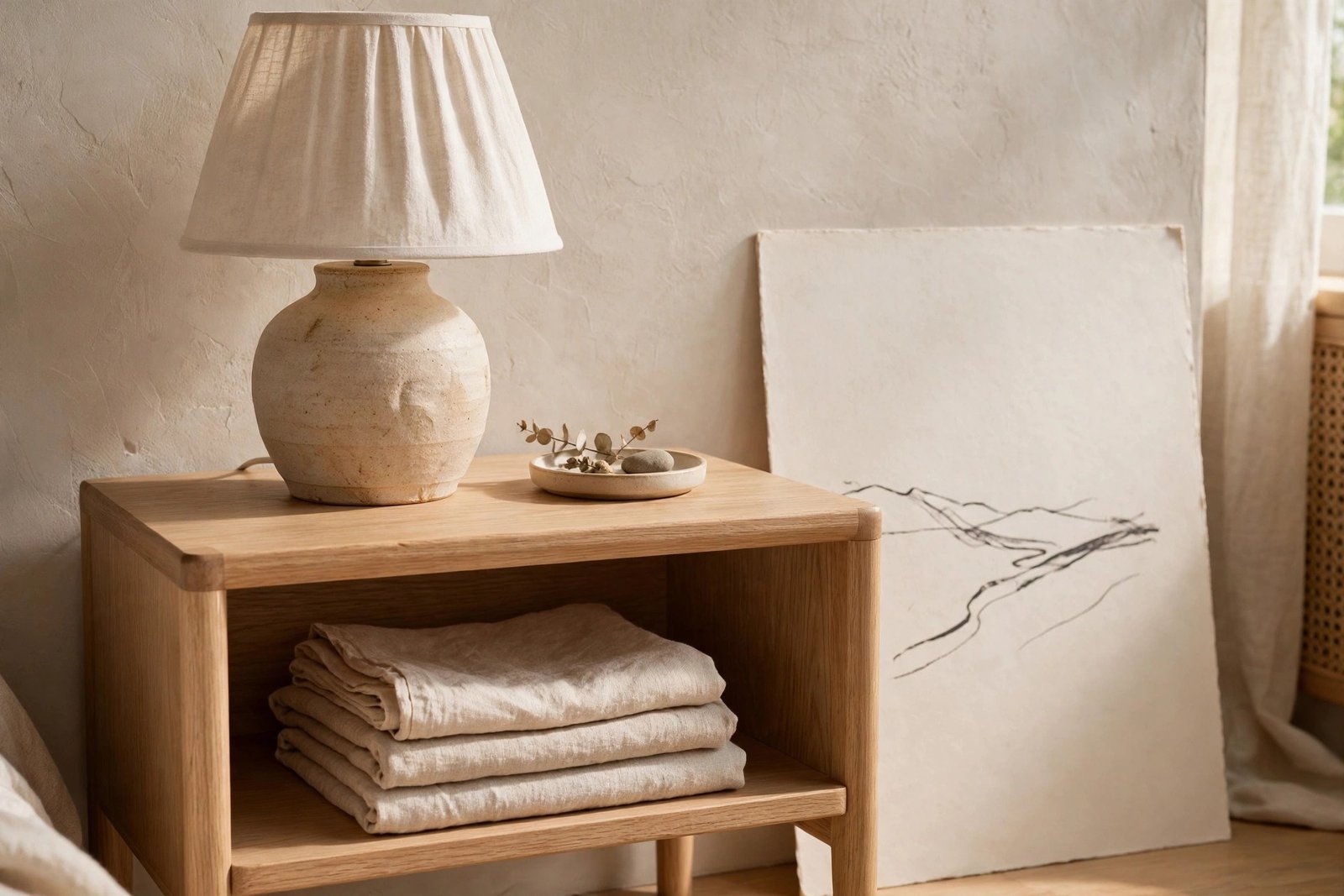
12. Treat Negative Space as Decor
In Japandi, the empty wall is a design choice, not a blank one. Resist the urge to fill every surface: one large piece of art — a soft abstract print, a Japanese ink-style landscape, a single framed textile — hung with generous space around it has more impact than a gallery wall. Leave at least one wall completely bare. This restraint is what separates the style from generic minimalism, and our minimalist decor ideas for a calm home break down the same principle room by room. A good test: stand in the doorway and count the objects you can see. If it is under twenty, the negative space is doing its job and each piece gets to be noticed.
13. Use Natural Materials Only
Make this a hard rule and decisions get easier: wood, linen, cotton, wool, bamboo, stone, paper, clay, rattan. Plastic, chrome, acrylic, and glossy finishes have no place here — they break the quiet organic spell the style depends on. That means swapping the plastic laundry basket for a woven one, the chrome lamp for a ceramic one, the polyester throw for cotton. Replace one synthetic item per month and the room quietly transforms. The payoff is a room that smells, feels, and ages like nature instead of a showroom — wood deepens in color, linen softens, ceramics gain character.
14. Build a Calm Reading Nook
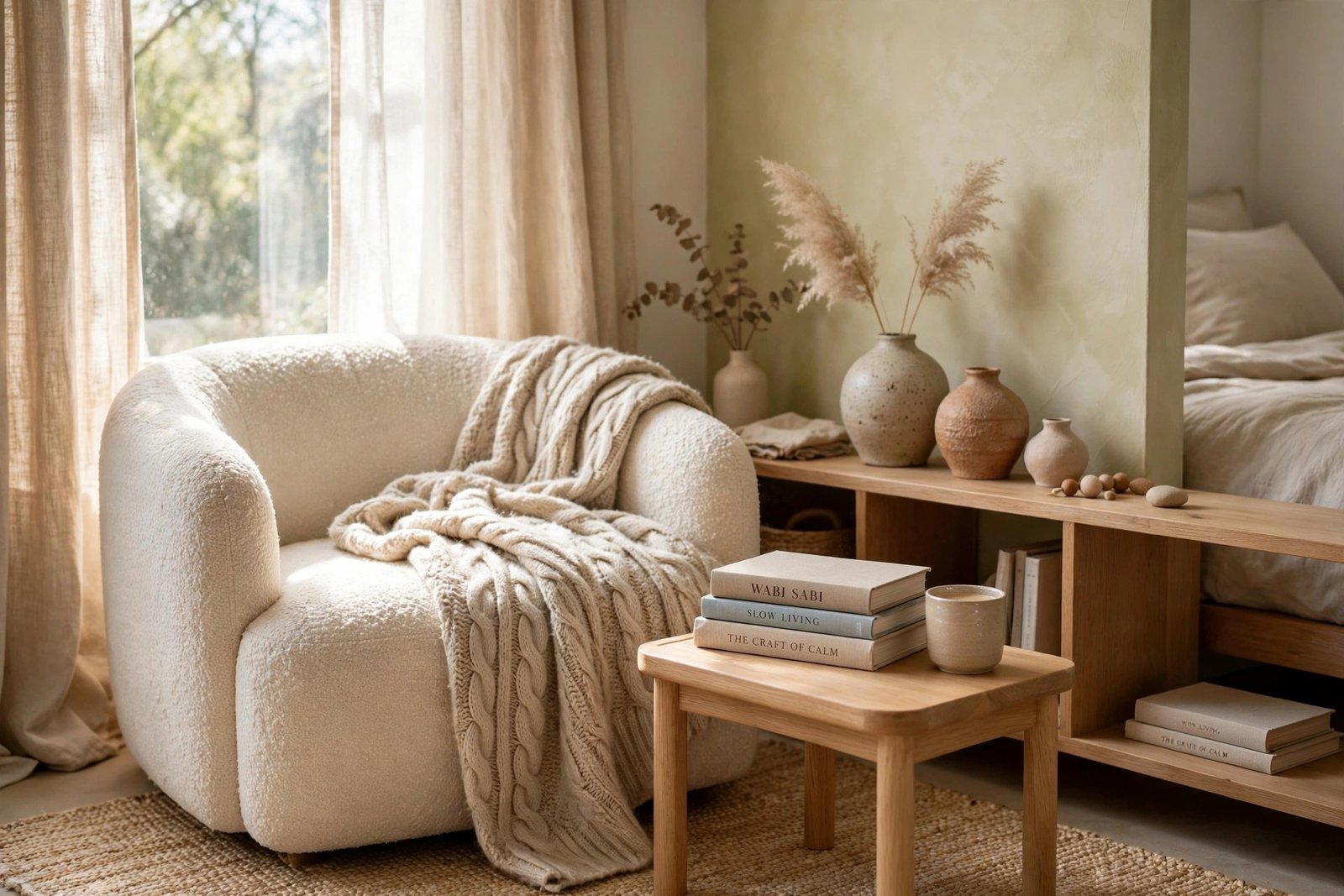
A low armchair in cream bouclé or oatmeal linen, a small light-oak side table, and a soft floor lamp are all it takes — tuck it by the window for the room’s best corner. Keep a short stack of books and one ceramic cup on the table, nothing more. If space is tight, a wide floor cushion with a wall-mounted reading light takes up almost no floor space. This nook is also where the style’s slower-living promise becomes real: a dedicated place to read or journal, with no screen in reach. Face it toward the plant or window rather than the bed, so it feels like its own little room.
15. Finish with One Earthy Accent
After all that beige, the room needs one quiet note of color to feel finished — not loud, just present. Clay terracotta, olive green, warm charcoal, or muted rust, used in two or three small doses: a cushion, a ceramic vase, a book cover on the nightstand. Never the walls, never the bedding — the accent should be removable in five minutes. This one color stops the palette drifting into “rental beige” and gives the eye somewhere to land. Keep the accent pieces in the same tone family. When you tire of it, swapping the accent color is the cheapest full-room refresh there is: three small items and the room feels new.
Try This: The Weekend Starter Combo
Overwhelmed? Do not buy fifteen things. Start with this four-piece combo, which covers the bed, the materials, the light, and the texture — the four pillars of the look:
- Bed: lower your bed (remove the box spring) and dress it in cream or oatmeal linen-look bedding — instant silhouette and texture.
- Materials: one light-wood piece — a thrifted oak nightstand or a bamboo tray — to anchor the natural-material story.
- Light: one washi paper lantern pendant or a linen-shaded ceramic lamp with a warm bulb; switch off the overheads for good.
- Texture: one chunky wool or cotton throw at the foot of the bed for the hygge layer.
Live with that for a week. The room will already read as Japandi, and you will know exactly which of the remaining ideas it actually needs. Most people find the combo carries the theme on its own — the style is about restraint, so buying less is doing it right.
Japandi Bedroom Ideas on a Budget
Japandi is one of the cheapest aesthetics to fake well, because its heroes — light wood, linen, paper lanterns, baskets — are thrift-store and flat-pack staples. Work in tiers:
- Under $50: a paper lantern pendant, warm LED bulbs, a woven basket, dried branches in a thrifted vase, and linen-look pillowcases. This tier alone can theme a plain room.
- $50–$150: a linen-look duvet set, a flat-weave cotton or wool rug, a pair of linen curtains, or a shoji-style screen. Pick whichever layer your room lacks most — usually bedding or the rug.
- $150+: the furniture — a low platform frame or a solid light-oak nightstand. Buy one hero piece and thrift the rest; the style rewards patina over perfection.
Three money rules: thrift before you buy new (light-wood Scandinavian pieces are plentiful second-hand), spend on what touches you daily (bedding, rug) and save on what only gets looked at (vases, screens), and never pay full price for paper lanterns — they are cheap everywhere. A convincing Japandi room for under $150 total is completely realistic. For more wallet-friendly strategies, browse our budget home decor ideas and apply the same thrift-first principles.
Common Mistakes to Avoid
- Going cold instead of warm. Gray walls, white bedding, and chrome are Scandinavian-minimal, not Japandi. Without the warm neutrals and wood tones, the room reads as a dentist’s waiting room.
- Cluttering in the name of cozy. Extra cushions, candles, and knick-knacks are hygge gone wrong. Japandi needs visible negative space — every added object has to earn its place.
- Leaning too far one way. All shoji screens and tatami with no softness reads as a theme park; all beige textiles with no Japanese influence reads as generic minimalism. The blend is the point — keep both halves visible.
- Using fake materials. Plastic wood-look panels, polyester “linen,” and faux plants break the natural-materials rule that holds the look together. One real piece beats three imitation ones.
- Forgetting warmth in lighting. Cool-white bulbs undo everything the palette does. Every bulb in the room should be warm white, and the overheads should stay off in the evenings.
Frequently Asked Questions
What is a Japandi bedroom?
A Japandi bedroom blends Japanese minimalism with Scandinavian warmth: low-profile furniture, natural materials like light wood, linen, bamboo and stone, a warm neutral palette of off-white, beige and soft gray, and a clutter-free, calming layout. It draws on the Japanese philosophy of wabi-sabi (beauty in imperfection) and the Scandinavian concept of hygge (coziness), aiming for a serene, functional space.
What colors are used in Japandi bedrooms?
The core palette is warm neutrals: off-white, oatmeal, sand, beige, soft gray, and natural wood tones. Walls are usually warm white or pale beige. One muted earthy accent — clay, olive, charcoal, or muted rust — can appear in small doses through cushions or ceramics. High-contrast colors and cool grays are avoided because they break the warm, calming effect.
How is Japandi different from Scandinavian or minimalist style?
Pure Scandinavian design is brighter and can lean cool and sparse; pure minimalism can feel stark. Japandi adds Japanese influence — lower furniture profiles, shoji screens, wabi-sabi handmade pieces, and a warmer, earthier palette — which makes it feel more grounded and serene than either style alone. Think of it as minimalism with a soul and Scandinavian design with an Eastern calm.
Can I do Japandi in a small bedroom?
Yes — it is one of the best styles for small rooms. The low platform bed makes ceilings feel higher, the light palette reflects more daylight, and the clutter-free rule forces smart storage. Use a shoji screen to zone a studio corner, keep furniture slim-legged so light passes underneath, and let one statement plant replace several small decorations.
How do I do Japandi on a budget?
Start with the cheapest layers: warm LED bulbs, a paper lantern pendant, linen-look bedding, and a woven basket — all under $50 total. Thrift light-wood furniture (1970s Scandinavian pieces are ideal and cheap), lower your existing bed instead of buying a platform frame, and replace synthetic items with natural ones one at a time. A convincing Japandi bedroom is realistic for under $150.
Is Japandi still trending in 2026?
Yes — searches for Japandi have been rising steadily through 2026 as part of the broader shift toward calm, clutter-free, wellness-focused homes. Unlike fast micro-trends, it is built on timeless materials and principles (natural fibers, low profiles, warm neutrals), so it ages well and is unlikely to look dated the way bolder trend styles do.
Your bedroom does not need a full renovation to catch the Japandi calm — lower the bed, warm the light, and let natural materials do the talking. Pick your favorite ideas from this list, start this weekend, and let the room settle into itself. Save this guide for later, and share it with the friend whose bedroom still feels like a storage unit with a mattress in it.