
Stand in the doorway of a small room and it can feel like the walls are closing in. The sofa looks too big, the corners look dark, and every surface seems to be holding something. Yet two rooms with the exact same square footage can feel different — one cramped and cave-like, the other calm, bright and spacious. The difference is almost never the floor plan. It is light, scale and what your eye is allowed to do as it travels around the room.
That is the encouraging part: learning how to make a small room look bigger is mostly about perception, not renovation. You do not need to knock down walls, move house or replace everything you own. You just need to understand why a room reads as “small,” then fix those signals one by one, in the right order. Most of the fixes in this guide cost nothing at all, and the rest are small, deliberate purchases that pay you back every day you live in the room.
Below you will find the principles first, then the step-by-step method, a worked example using one very tiny living room, and a budget plan that starts with the free fixes. Take it one step at a time — your room will feel bigger long before you finish the list.
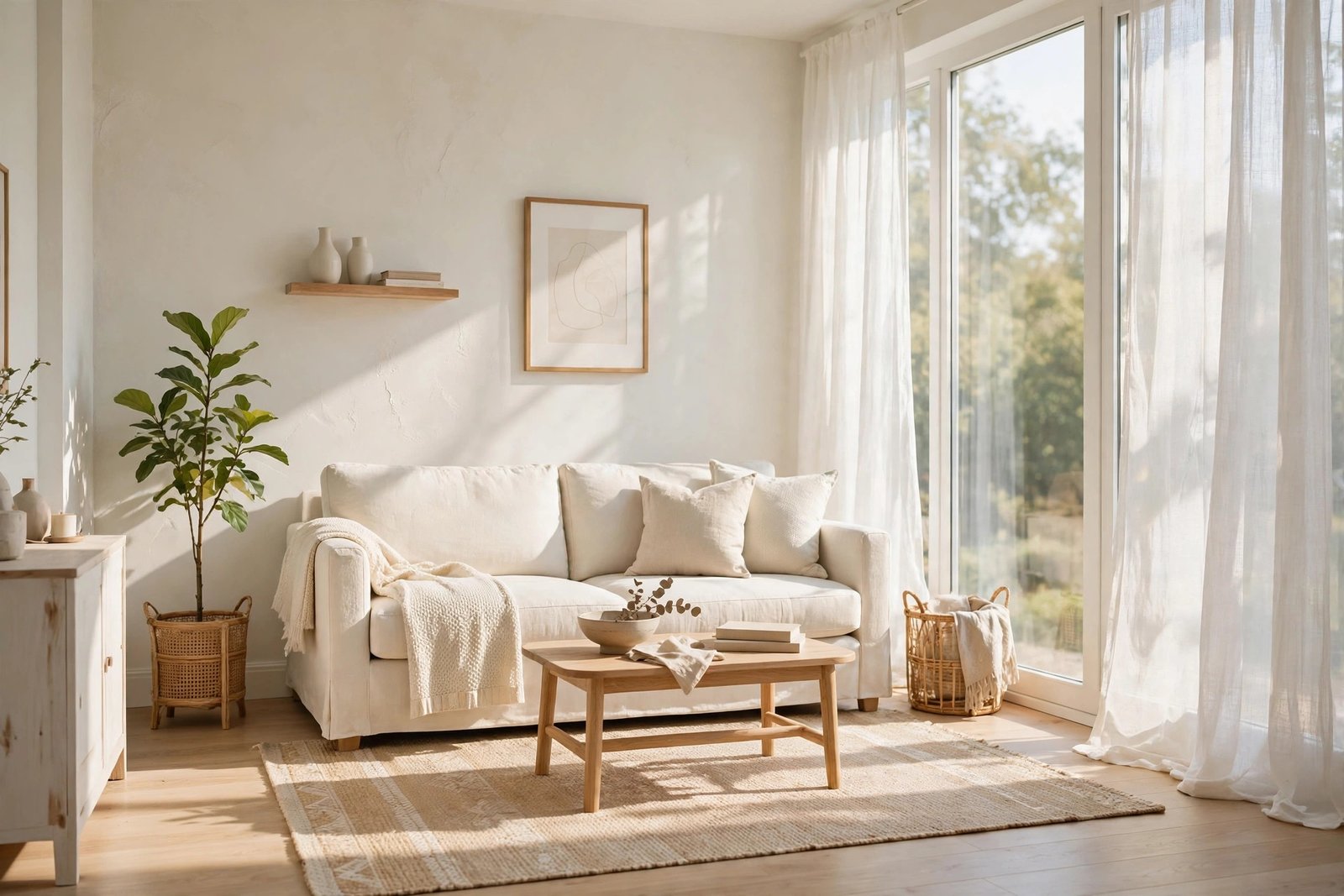
Why Small Rooms Feel Small (It’s Not Just the Square Footage)
Designers have long known that we judge the size of a room with our eyes, not a tape measure. The basic principles of interior design — light, proportion, balance and flow — matter even more in a small space, because there is no spare room for mistakes. When a small room feels cramped, it is almost always one of three culprits at work.
1. Too Little Light, or Light in the Wrong Places
Dark corners read as walls. When light dies in the corners of a room, your brain literally cannot find the edges of the space, so it assumes the room ends sooner than it does. A single overhead bulb makes this worse: it pools light in the center, leaves the perimeter in shadow, and flattens everything. Bright, even, layered light does the opposite: it pushes the boundaries outward, because your eye can travel to every corner and confirm there is more space than you thought.
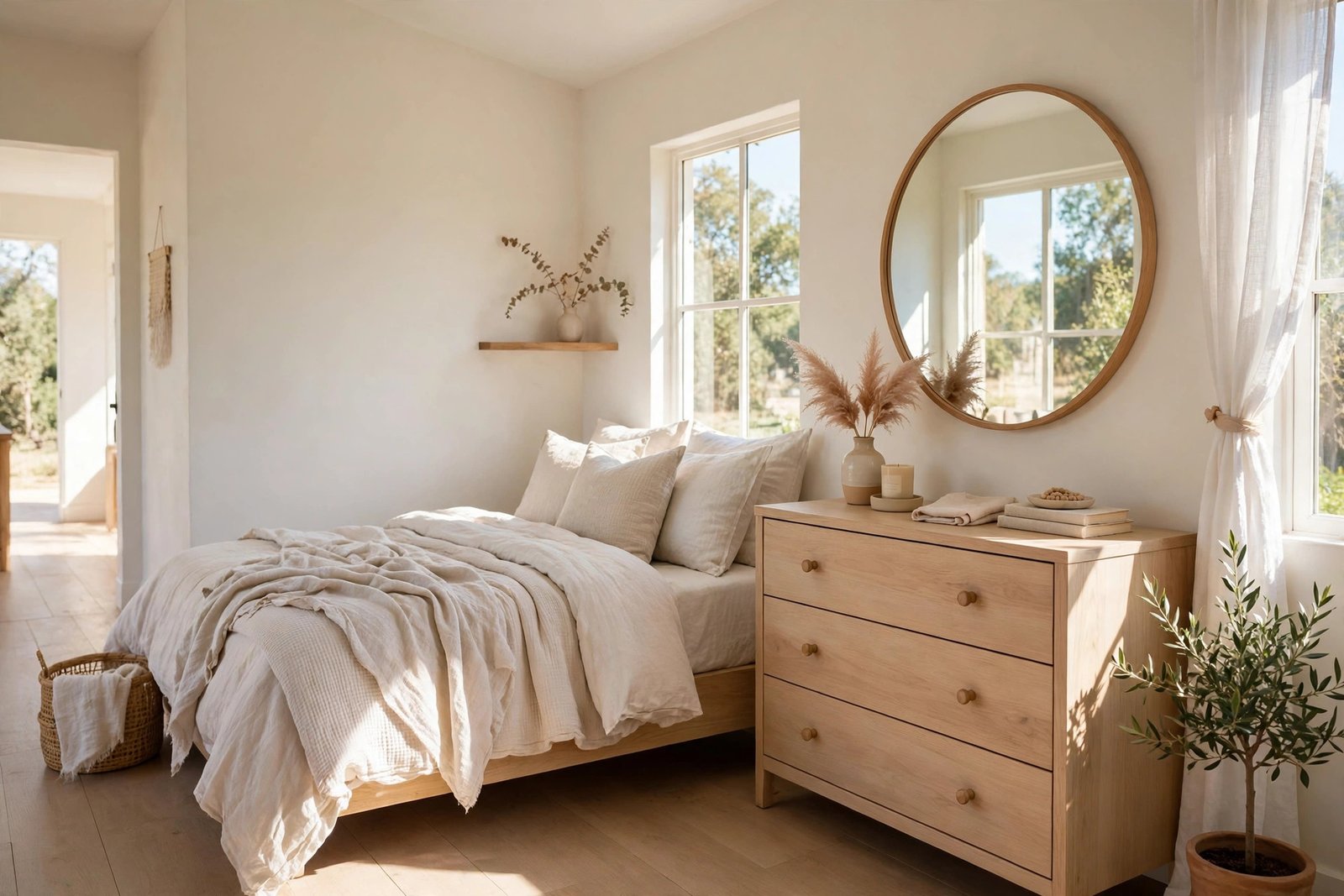
2. Furniture That Is Out of Scale
One oversized, bulky piece can make a whole room feel stuffed, even if everything else is modest. Deep sofas with wide rolled arms, chunky storage furniture that sits flat on the floor, and beds or tables that are too large for the footprint all shout “no room left.” Scale is relative, though. Slimmer, lower pieces raised on legs make a room feel generous, because you can see more floor — and visible floor is one of the strongest “this room is big” signals there is.
3. Visual Clutter
Every object in your line of sight is a tiny stop sign for your eyes. A shelf crowded with forty small items, surfaces covered in mail and chargers, walls dotted with a dozen small frames — each one interrupts the eye’s path and makes the room feel busy, and busy reads as small. Long, calm, unbroken sightlines do the opposite. This is why a spare, edited room almost always feels larger than a decorated one with more square footage. Keep these three culprits in mind — the method below defeats each one.
The Step-by-Step Method for Making a Small Room Look Bigger
Work through these steps in order: the early ones change perception at the largest scale — light and color — and the later ones refine it. You can stop after any step and feel a difference, but together they compound.
Step 1: Start With Color and Light
Paint is the cheapest square footage you will ever buy. Light colors reflect light around the room instead of absorbing it, so walls in a soft white, warm off-white, pale greige or gentle pastel will immediately open a space up. You do not have to go stark white — a slightly warm white usually feels bigger and kinder than a cold blue-white, which can read as gray in low light. Look for paints with a Light Reflectance Value (LRV) of 60 or above; the number is printed on the swatch or the manufacturer’s website.
Two tricks multiply the effect. First, paint walls, trim and doors in the same color family, so there are no hard contrast lines chopping the room into pieces — the eye glides instead of stopping. Second, use one continuous flooring tone and one main color story throughout the space rather than a different scheme in every corner. Then fix the lighting: replace the single overhead light’s job with layers. Add a floor lamp in the darkest corner, a table lamp at reading height, and if you can, a light that washes upward toward the ceiling. A bright ceiling makes the room feel taller instantly. Choose bulbs in the 2700–3000K range for warm, welcoming light.
Step 2: Fix the Furniture Scale and Placement
Before you buy anything, rearrange. Pull furniture a few inches away from the walls — it sounds backwards, but a sofa floating two or three inches off the wall creates a shadow line that suggests breathing room, while furniture shoved hard against the wall advertises exactly how little space there is. Keep clear walking paths, and never block the path from the door to the window; that long diagonal sightline is the longest view the room has to offer, and protecting it makes the whole space feel larger.
When it comes to the pieces themselves, choose low-profile furniture with visible legs. A sofa raised six inches on slim legs lets light and sight pass underneath it, so the floor plane reads as continuous. Low backs keep the eye’s horizon low and the ceiling feeling high. If one piece must be large — every room needs an anchor — let it be only one, and keep everything around it lighter in visual weight: glass or acrylic side tables, an open-frame chair, a narrow console instead of a deep cabinet. In a studio or open-plan space, define zones with a rug and a low bookcase rather than walls or tall dividers, so each area has a purpose without chopping up the light. Our guide to small living room ideas is full of layouts that use exactly this kind of zoning.
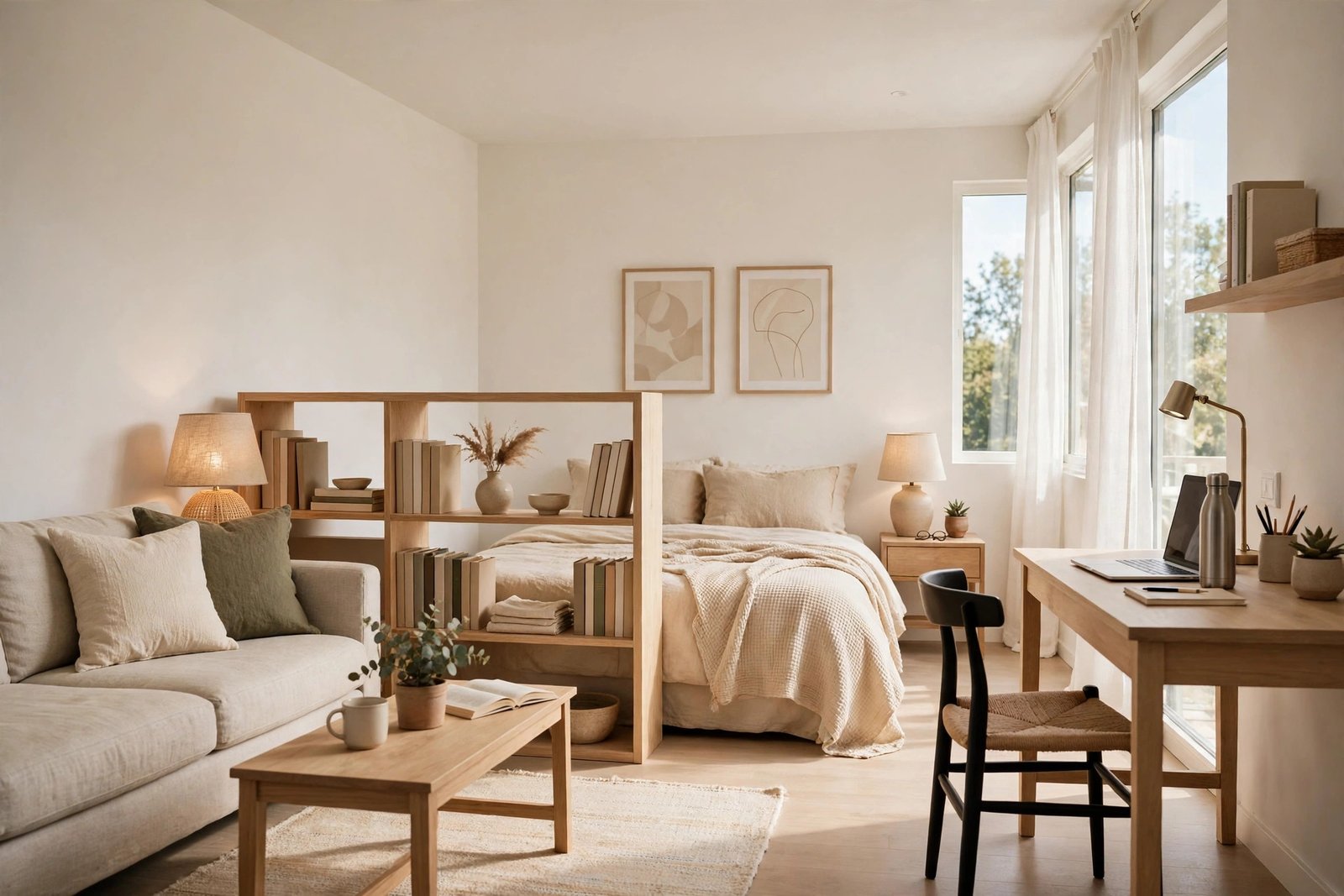
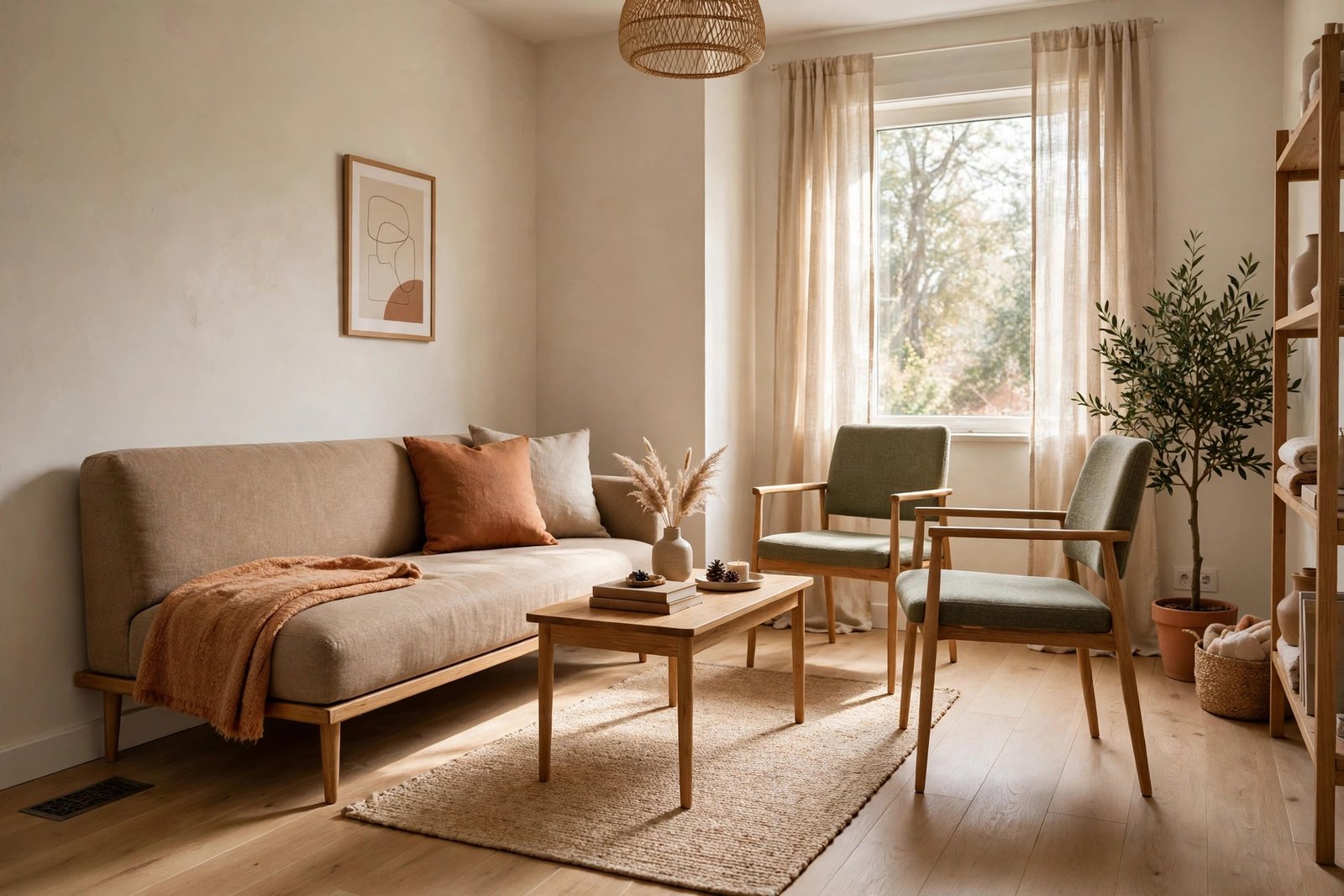
Step 3: Add Mirrors and Reflective Surfaces
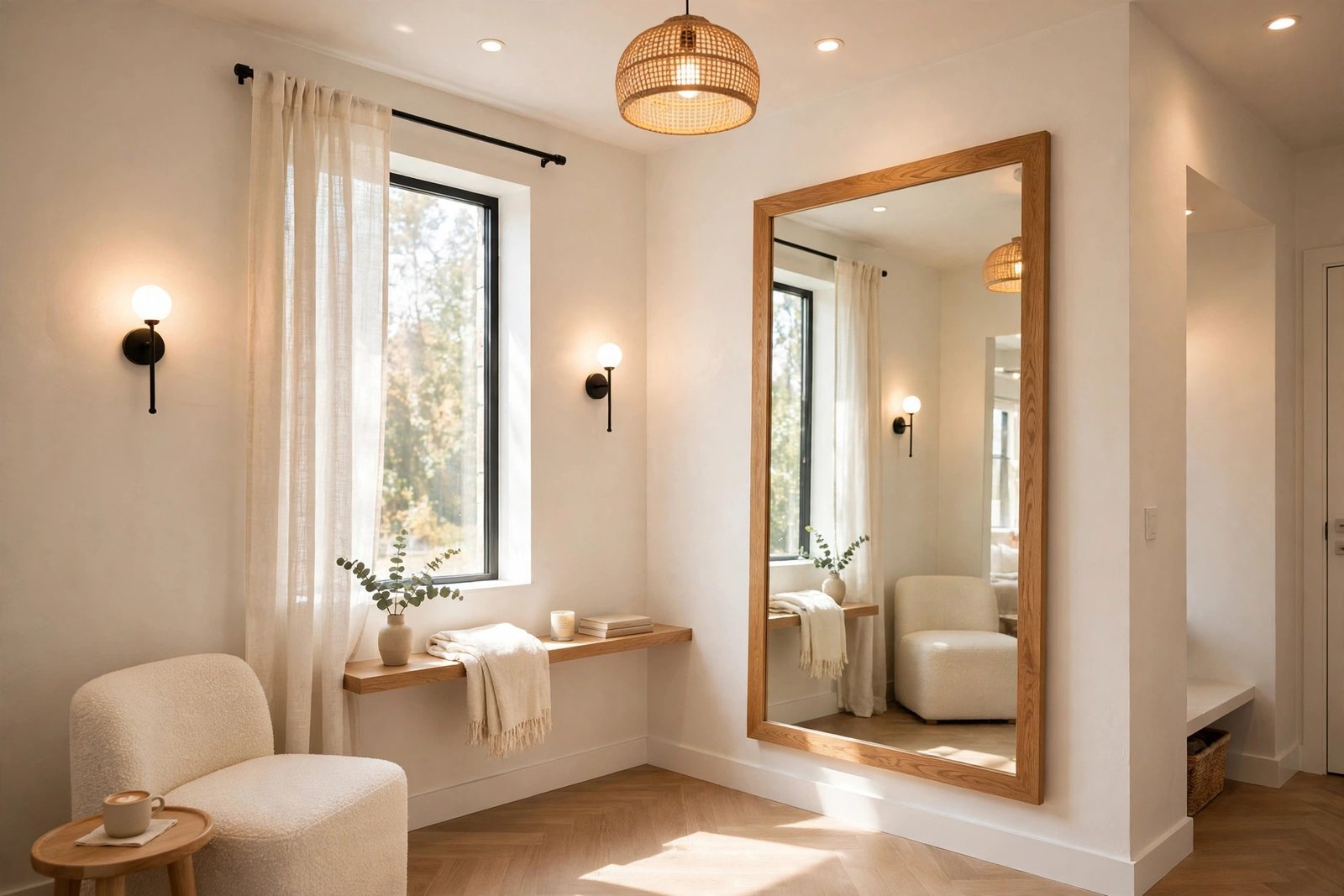
A mirror is the closest thing decorating has to magic, but placement is everything. The golden rule: a mirror should reflect something worth looking at — ideally a window, so it doubles your daylight and fakes a second opening in the wall. Hang one large mirror rather than several small ones; a single generous mirror reads as architecture, almost like a doorway into another room, while a cluster of small mirrors reads as decoration and clutter. Opposite or adjacent to the room’s main window is the classic spot, and it works just as well in a bedroom — a large mirror over a dresser is one of the most reliable tricks in our small bedroom ideas collection.
Extend the same thinking beyond mirrors: glass tabletops, glossy ceramic and metallic accents all bounce light and keep surfaces feeling light rather than heavy. Two or three reflective moments per room are plenty. One caution — never place a mirror where it reflects a cluttered corner or a messy closet. It will faithfully double whatever it sees, including the chaos.
Step 4: Claim the Vertical Space
When floor space runs out, the walls are still empty real estate. Drawing the eye upward makes ceilings feel higher and the whole room feel airier, and it gets storage off the floor at the same time. Tall, narrow bookcases beat short, wide ones. Floating shelves mounted high, with the top shelf near the ceiling, pull the gaze up. Store the things you use least on the highest shelves and keep the shelves at eye level edited and calm, with some breathing room between objects.
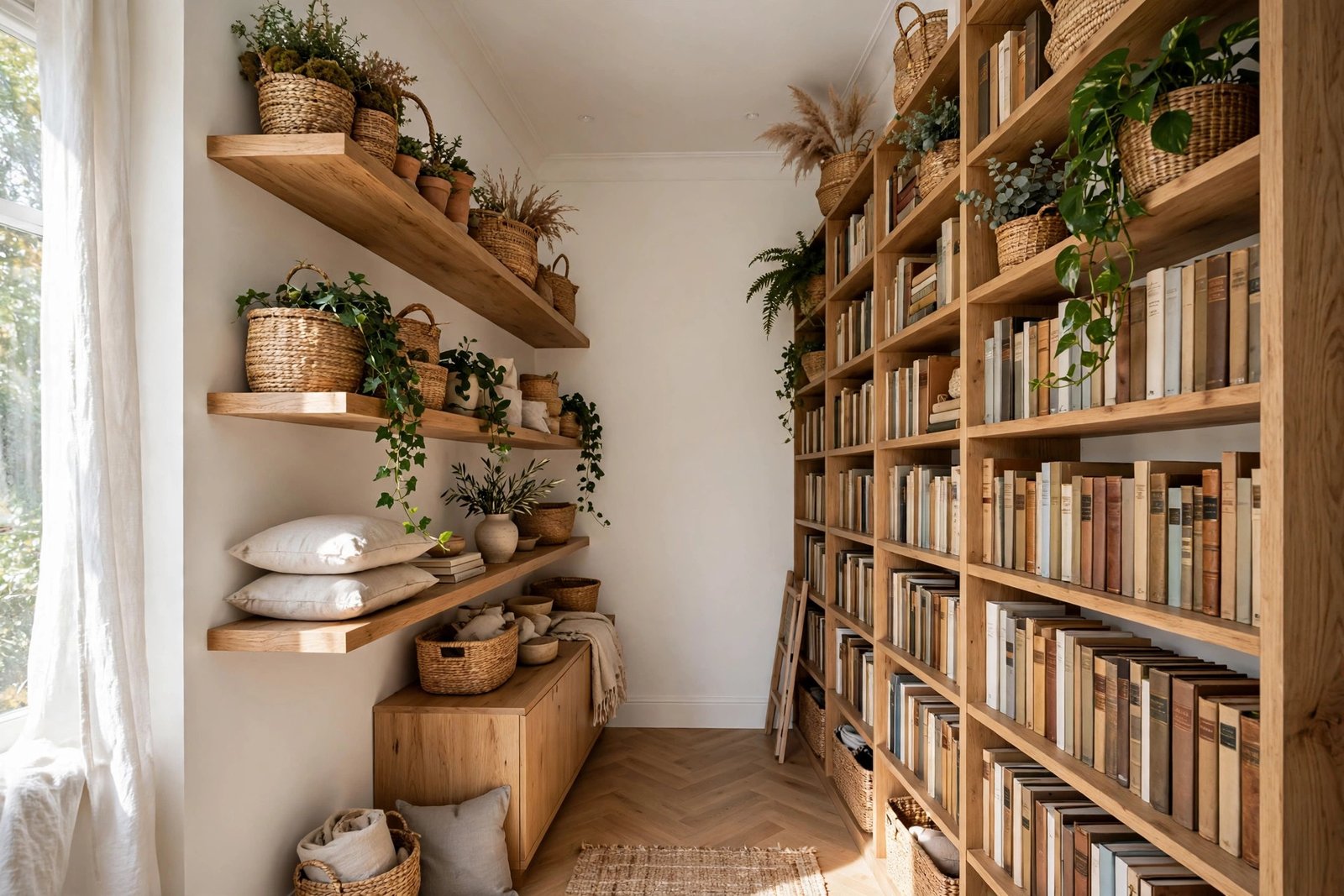
Artwork plays along, too: hang a tall piece, or a vertical arrangement of frames, rather than one wide horizontal line that emphasizes the room’s width limits. Even plants help: a trailing plant on a high shelf or a tall, slender one in a corner adds height without taking floor space. The goal is a room that uses its full cube of volume, not just its floor plan.
Step 5: Hang Curtains High and Wide
Curtains hung at window-frame height make windows — and rooms — look short. The fix costs nothing but a little time with a drill. Mount the rod four to six inches above the window frame, or all the way up just below the ceiling, so the fabric falls from near the top of the wall. Your windows will look dramatically taller, and so will the room. Then extend the rod eight to twelve inches beyond each side of the frame, so when the curtains are open they rest against the wall, not over the glass. That one change can give you a third more daylight, and daylight is the whole game.
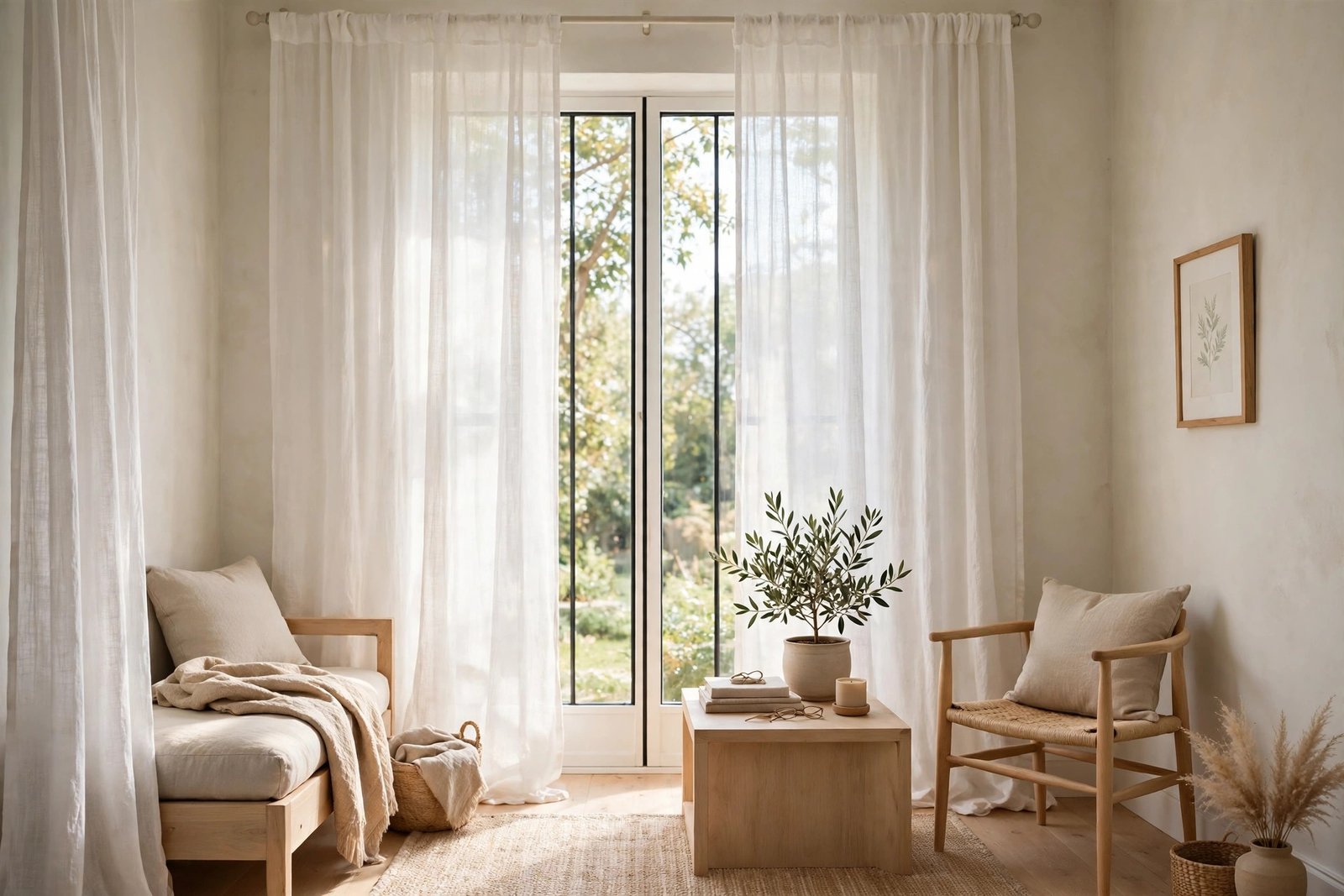
Choose fabric that lets light work for you: linen-look panels, soft cotton or sheers in a color close to the wall color, so the window wall reads as one calm, continuous surface. Let panels just kiss the floor. Heavy, dark, fussy drapes belong to bigger rooms; in a small one, simple and light always wins.
Step 6: Edit Ruthlessly
The final step is the hardest, because it is not about adding — it is about letting go. Work surface by surface: the coffee table, the dresser top, the entry console. Aim to keep at least half of every surface empty, and group what remains into one or two deliberate arrangements — a stack of books with one object on top, a tray that corrals small things into a single visual unit. Move everything else into closed storage — lidded baskets, boxes, drawers, cabinets. Hidden clutter does not count against the room; visible clutter always does.
Adopt the one-in, one-out rule to keep the room from slowly refilling, and be honest about duplicate furniture — the extra side chair nobody sits in is costing you more space than it gives back. If you are working with a truly compact home, the mindset in our guide to small apartment decorating ideas pairs perfectly with this step: in a small space, every item should be beautiful, useful, or gone.
A Worked Example: One Tiny Living Room, Transformed
Theory is nice, so here is the method applied to a real-feeling scenario: a rental living room, eleven by twelve feet, with one window, beige walls, a deep three-seat sofa, a chunky media unit, heavy lined curtains and a rug that is far too small. The room is not messy — it just feels like a waiting room. Here is what changed, in the order of the steps.
First, color and light. The walls went to a warm off-white, trim included, and the single ceiling light gained company: a slim floor lamp in the dark corner by the door and a small table lamp on a side table. Second, furniture. The media unit was replaced with a low, leggy console; the sofa stayed (renters have budgets too) but was pulled three inches off the wall, and the too-small rug was swapped for a large, light, low-pile rug that the front legs of the sofa and chairs could sit on, defining the seating zone and showing far more continuous floor. Third, a large round mirror went on the wall opposite the window, doubling the light. The tall bookcase moved to the short wall and the clutter from its middle shelves went into two lidded baskets on the bottom shelf. Finally, the curtain rod moved up to just under the ceiling and out past the frame, with simple linen-look panels in a shade close to the walls.
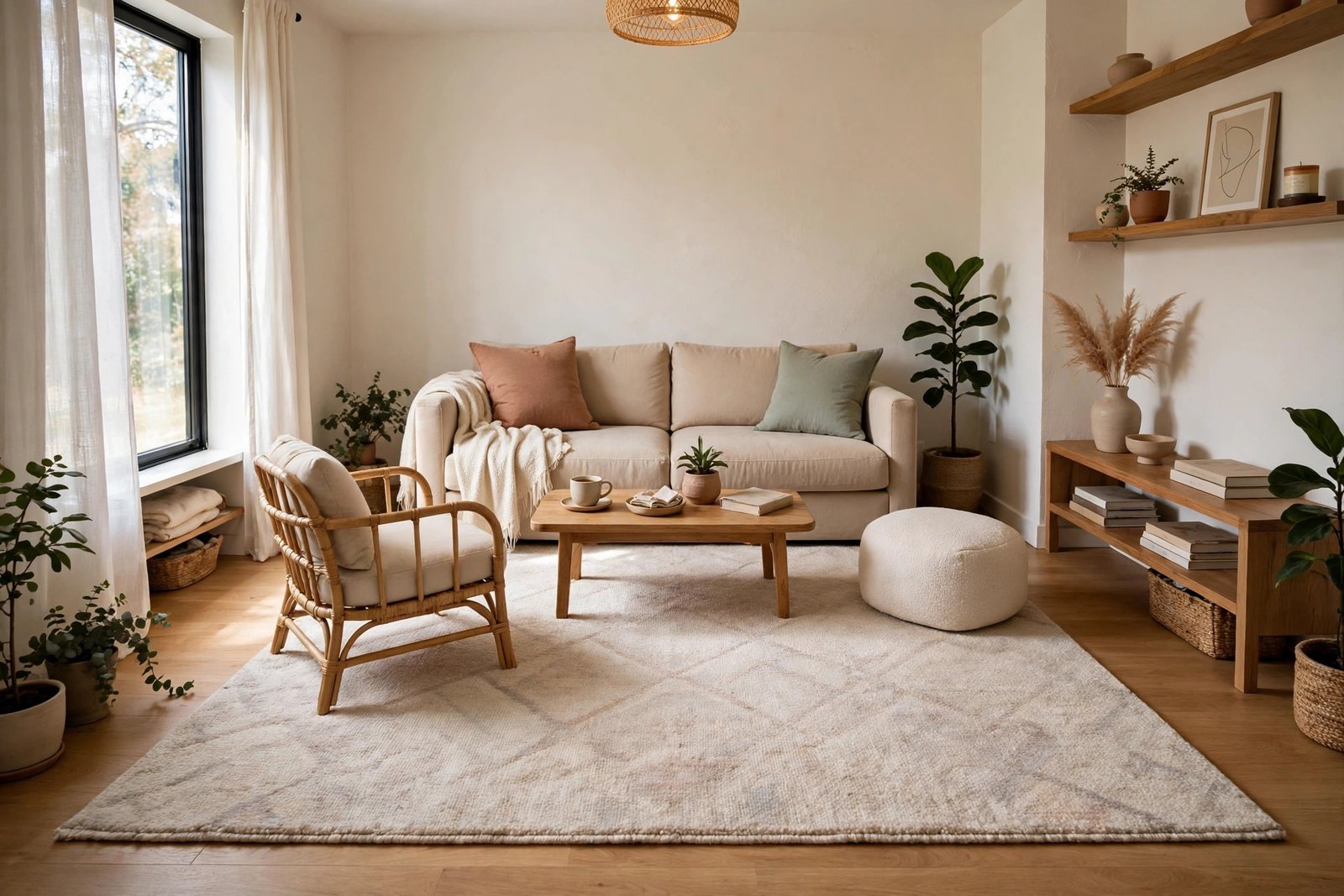
Total spent: paint, one rug, one mirror, two lamps and curtains — a few hundred dollars, most of it thriftable. Nothing about the room’s dimensions changed. But the sightline from the door now runs unbroken to a bright window, the floor reads as one generous plane, and the ceiling feels a full foot higher. Visitors guess the room is bigger than the identical unit next door. That is the power of working with perception instead of against it.
The Budget Plan: Free Fixes First, Then Cheap, Then Worth It
Free Fixes ($0 and One Afternoon)
Start here, because these changes alone often deliver half the transformation. Rearrange the furniture: float pieces off the walls, clear the door-to-window sightline, and remove one piece entirely if the room is crowded. Edit every surface down to a few deliberate items and hide the rest in closets and drawers. Raise and widen your existing curtain rod — most rods can be remounted higher as they are. Clean the windows inside and out; dirty glass steals surprising light. Swap a heavy, dark lampshade for a lighter one from another room, and move lamps so the darkest corners get light. Finally, gather your lightest throws, cushions and linens into this room and move the darkest ones out, so the color story stays continuous.
Cheap Fixes (Under $50 Each)
When you are ready to spend a little, spend it on light and reflection. A gallon of warm off-white paint is the single highest-impact purchase on this list. Sheer or linen-look curtain panels cost very little and transform a window. Warm-white LED bulbs for every fixture make the light consistent. A set of lidded baskets or simple storage boxes makes the ruthless edit permanent. And watch secondhand listings: large mirrors are one of the best thrift-store bargains in existence — heavy, common and dramatically underpriced.
Worth-the-Money Purchases
Three purchases earn their cost in a small room. First, the right-size rug — large, light and low-pile — because it defines the space and unifies the floor. Second, one properly scaled anchor piece, like a low-profile sofa or a leggy console, if your current one is actively fighting the room. Third, layered lighting done well: a good floor lamp and table lamp you will use every evening. Notice what is not on this list: more decor. In a small room, money spent on fewer, better, lighter things beats money spent on more things, every time.
Common Mistakes to Avoid
Pushing all the furniture against the walls. It feels like it creates space in the middle, but it actually outlines the room’s smallness and kills the sightlines. Floating pieces a few inches out, with a rug anchoring them, feels bigger every time.
Choosing a rug that is too small. A tiny rug floating in the center makes the room look like it is shrinking around it. The front legs of your seating should sit on the rug; when in doubt, size up.
Painting one dark accent wall to “add depth.” In a small room this usually just brings one wall closer and chops the space. If you love dark colors, use them in textiles and one piece of furniture, and keep the walls light and continuous.
Hanging curtains at the frame. Rod at window height, panels covering the glass when open — this is the most common small-room mistake of all, and the cheapest to fix. High and wide, always.
Using lots of small furniture and small decor. Many tiny pieces create visual noise and make a room feel like a dollhouse. Fewer, slightly larger, well-chosen pieces read as calmer and more spacious.
Lighting only from the ceiling. One overhead light flattens a room and abandons the corners to shadow. Layers at different heights are what make a space feel generous after dark.
Frequently Asked Questions
What colors make a small room look bigger?
Light, warm neutrals work best: warm whites, off-whites, pale greige and soft pastels with a Light Reflectance Value of 60 or higher. The real secret is continuity — walls, trim and large furniture in the same color family, so the eye never hits a hard edge. You can still have color; bring it in through cushions, art and one or two furniture pieces.
Do mirrors really make a small room look bigger?
Yes — when they are placed to reflect light or a view. A large mirror opposite or beside a window doubles your daylight and creates the illusion of another opening in the wall. One large mirror works far better than several small ones, and it should never reflect a cluttered corner, or it will double the clutter instead.
How can I make a small room look bigger on a budget?
Do the free fixes first: rearrange furniture off the walls, clear the sightlines, edit surfaces, remount curtains high and wide, and clean the windows. Then spend your first dollars on paint, warm-white bulbs and sheer curtains. Most people feel a dramatic difference before spending anything.
What furniture should I avoid in a small room?
Avoid pieces that are deep, bulky and sit flat on the floor: oversized sofas with wide arms, chunky storage units and anything that blocks the path between the door and the window. Choose low-profile pieces on visible legs instead, and let only one piece in the room be genuinely large.
Can I use dark colors in a small room?
You can, with care. An all-dark room can feel cocoon-like and intentional, but it will not feel bigger — it trades spaciousness for mood. The safer approach for most people is light walls with dark accents: a deep-toned chair, cushions or a throw give you the richness without shrinking the room’s perceived size.
How do I make a small room look bigger without buying anything?
Edit, rearrange and raise. Remove one piece of furniture, clear at least half of every surface, float the sofa off the wall, remount the curtain rod higher and wider, and move a lamp into the darkest corner. Those five moves, all free, are the exact first steps of this method — and they work in rentals, dorms and owned homes alike. If your whole home is compact, our small apartment decorating ideas take the same approach room by room.
The Bottom Line
A small room is not a problem to apologize for — it is a puzzle with known solutions. Light first, then scale, then reflection, height and an honest edit: work through the steps in order and the room you already have will start to feel like the room you wanted. Start with the free fixes this weekend, live with them for a week, and let the difference convince you. Small, it turns out, was never the issue. Dark, crowded and out of scale were — and those, happily, are all fixable.