
There is a particular kind of quiet that arrives in January. The Christmas tree is gone, the fairy lights are boxed away, and suddenly the house feels bigger, calmer, and a little bit bare. That empty feeling is not a problem to fix in a hurry — it is the whole point of the season. These january decor ideas are about leaning into that calm instead of fighting it, with soft neutrals, gentle light, and textures that make a cold month feel warm.
January decorating is different from the rest of the year. There is no party to prepare for and no holiday deadline. It is the one month where slow, simple, and soft wins over bold and busy. Think creamy whites, warm wood, chunky knits, candlelight, and a few bare branches in a vase. Nothing here needs a big budget or a full room makeover — most of these ideas take an afternoon, a basket, or a single shopping trip. Pick three or four favourites, start there, and let the rest of the house catch up at its own pace.
Below you will find 15 practical ideas that work in real homes, not just in photos. They cover the living room, bedroom, entryway, and the small corners in between, plus a budget plan and the mistakes that make January decorating feel cold instead of cozy. If you are still deciding what stays up from winter, our winter decor ideas hub is a good place to compare the two looks before you start.
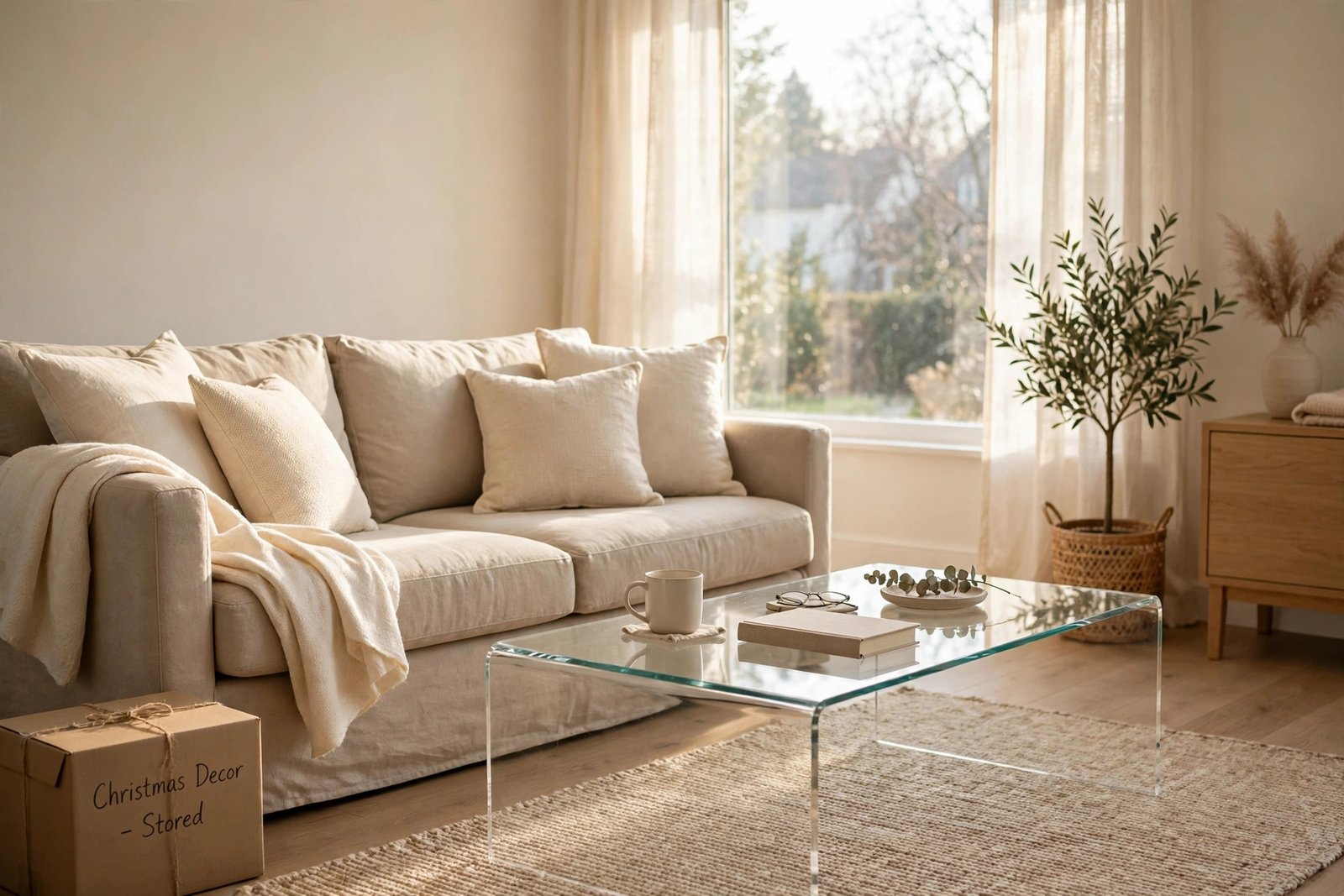
1. Start With a Clean Slate
Before you add a single new thing, take everything Christmas away — and then keep going for ten more minutes. Clear the mantel, empty the coffee table, and take the extra cushions off the sofa. January looks best when surfaces have room to breathe, and you cannot see what a room needs until you can see the room itself. Work one surface at a time with a laundry basket in hand, and give every stray item a home or a bag for donation. The goal is not a perfect, empty house.
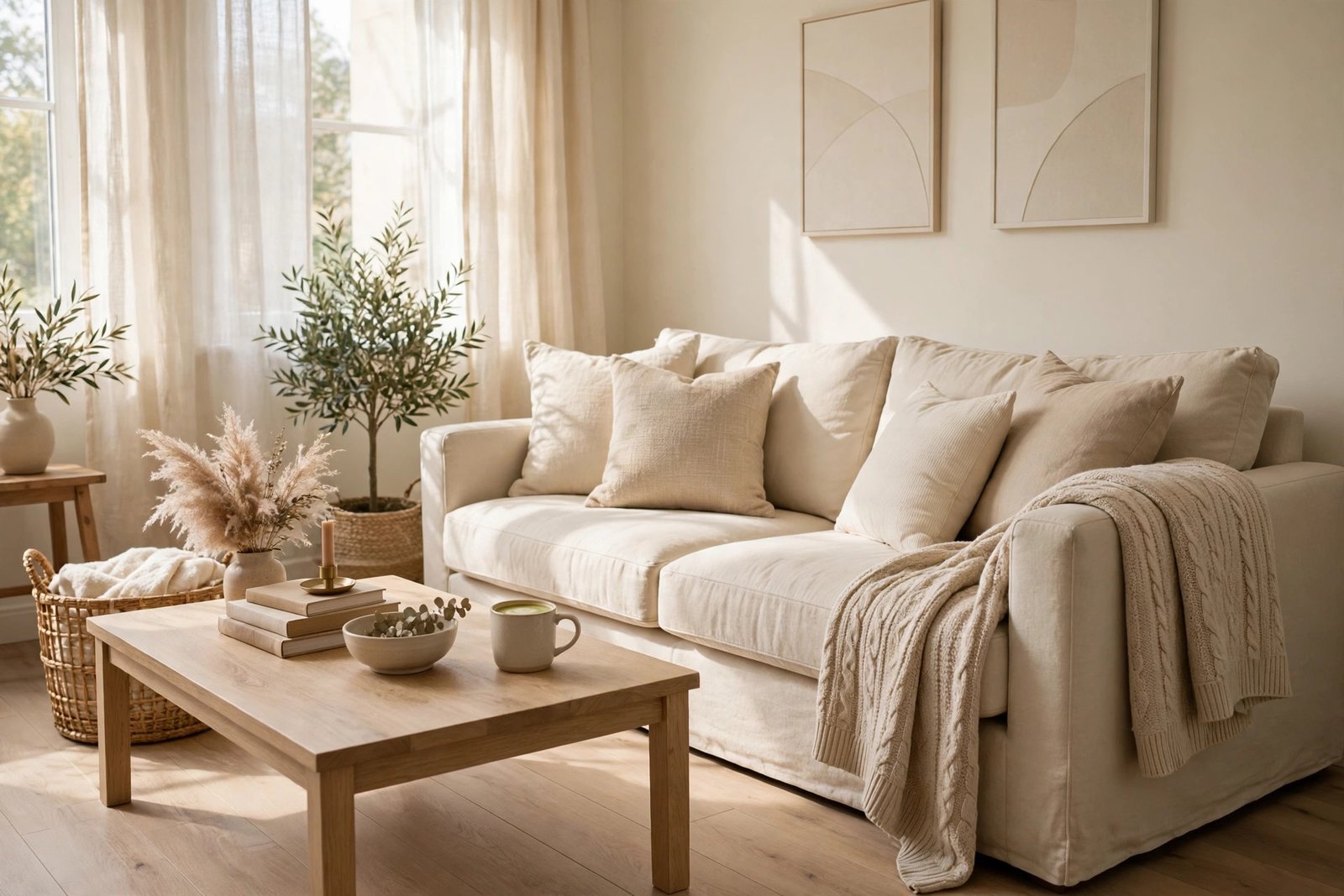
2. Swap Red and Green for Soft Neutrals
The fastest way to move a room from Christmas to January is a colour swap. Pack away the reds, deep greens, and golds, and bring in cream, oatmeal, warm grey, and soft taupe instead. You do not need to buy a new sofa or repaint a wall — cushion covers, a throw, and a different table runner do most of the work. Neutrals work in January because they reflect the low winter light, and they make a room feel restful when everyone is tired. If a cushion cover costs less than a takeaway dinner, it is probably the best decorating money you will spend all month.
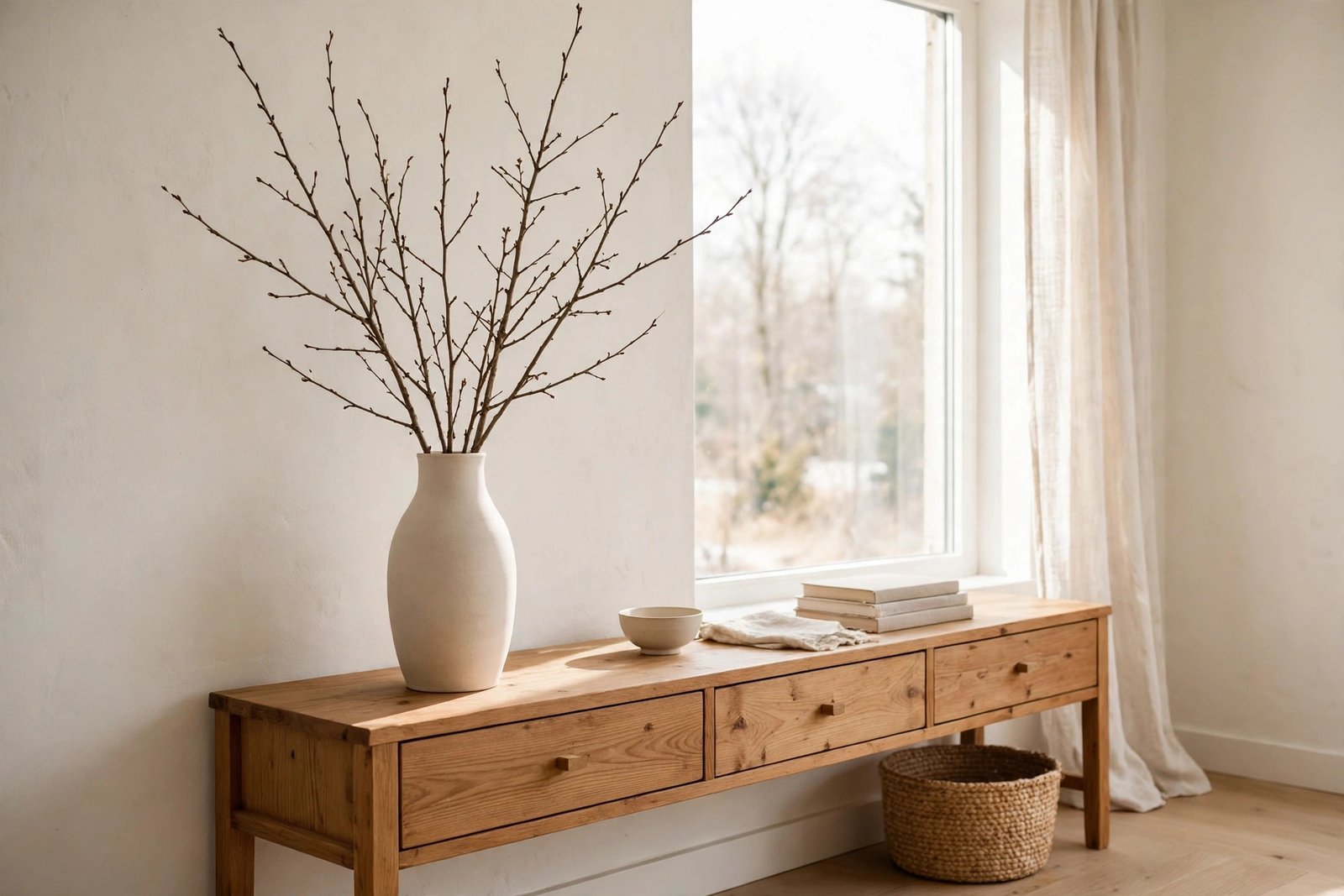
3. Bring In Bare Branches
Nothing says January quite like a tall vase of bare branches. Cut a few straight stems from the garden, or pick up birch, willow, or eucalyptus branches from a florist, and stand them in a tall ceramic or glass vase on a console table, sideboard, or dining table. They last for weeks with almost no care, they cost very little, and their thin, graphic lines look beautiful against a plain wall. Keep the arrangement loose and a little uneven — nature does not grow in perfect symmetry, and a too-tidy bunch looks stiff. One good branch arrangement can carry a whole corner of a room.

4. Layer Chunky Knit Throws
January is the month for texture you can feel, and nothing delivers it like a chunky knit throw. Drape one over the arm of the sofa, fold one across the foot of the bed, and keep one more in a basket by your favourite chair. The trick is to mix knit with smooth: a heavy knitted throw against plain linen cushions, or a soft wool blanket over a leather chair. A good knit throw is also the most-used decor item in the house, because on a cold evening it stops being decoration and becomes the warmest seat in the room.
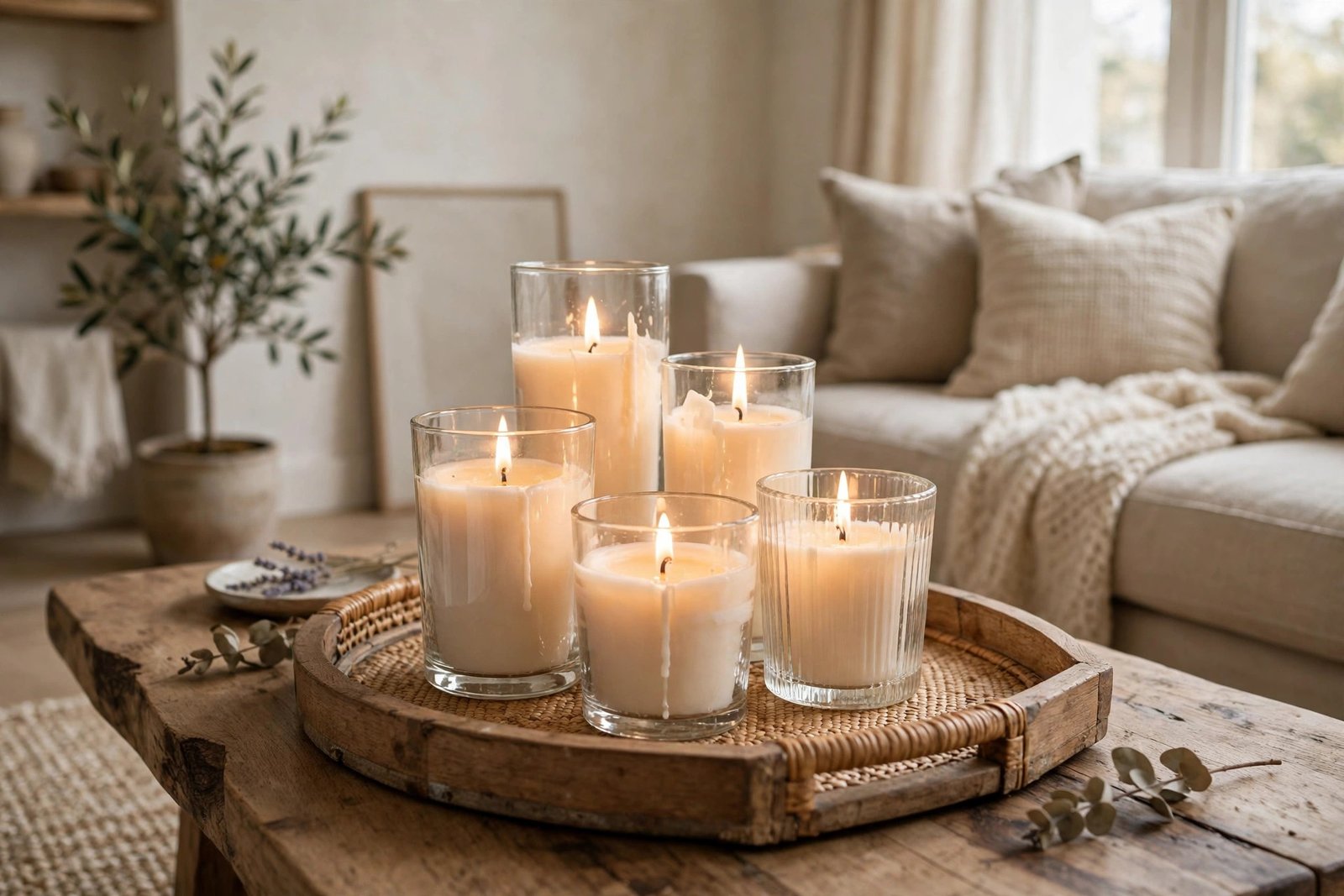
5. Let Candlelight Do the Work
When the afternoons go dark at four o’clock, candles are the cheapest and kindest light a room can have. Group three or five candles of different heights on a wooden tray or a ceramic plate, and place the cluster where you actually sit in the evening — the coffee table, the dining table, or the bathroom shelf. This is the heart of hygge, the Danish idea of cozy contentment. Our cozy winter decor guide has more candle styling ideas if you want to build a whole evening ritual around it. Never leave candles burning unattended, and keep them away from curtains, throws, and little hands.
6. Swap Heavy Curtains for Sheer Linen
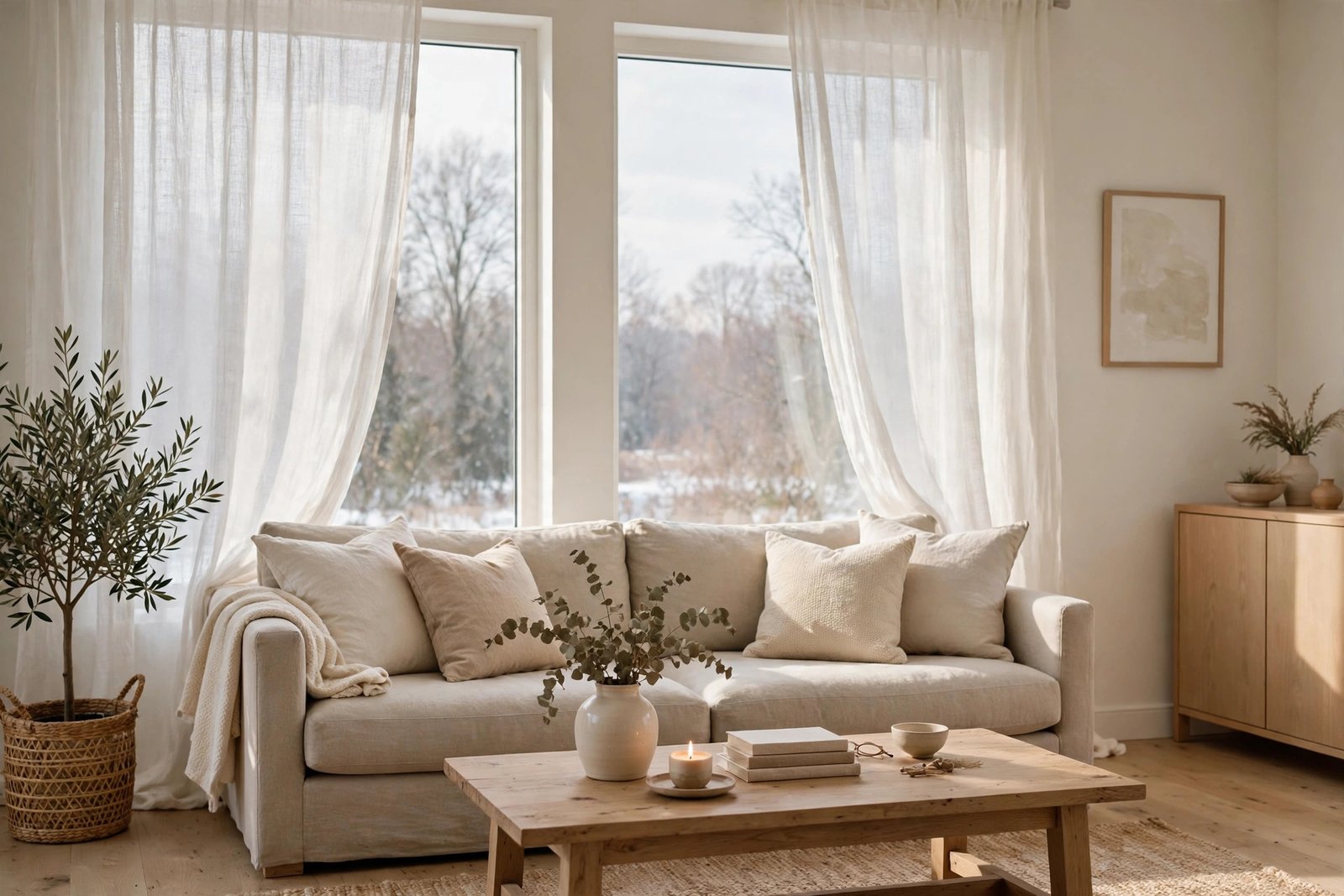
Winter daylight is short, so January is the worst month to block it with heavy curtains. Swap thick drapes for sheer linen or lightweight cotton panels, and let the pale light filter through instead of stopping at the window. The room will feel brighter, taller, and calmer, and the soft, diffused light makes even a plain wall look good. If you need privacy in the evening, layer the sheers over a simple roller blind that you can pull down after dark. Wash the panels before you hang them so they fall softly, and keep the curtain rod simple — the fabric is the feature here, not the hardware.
7. Reset the Entryway
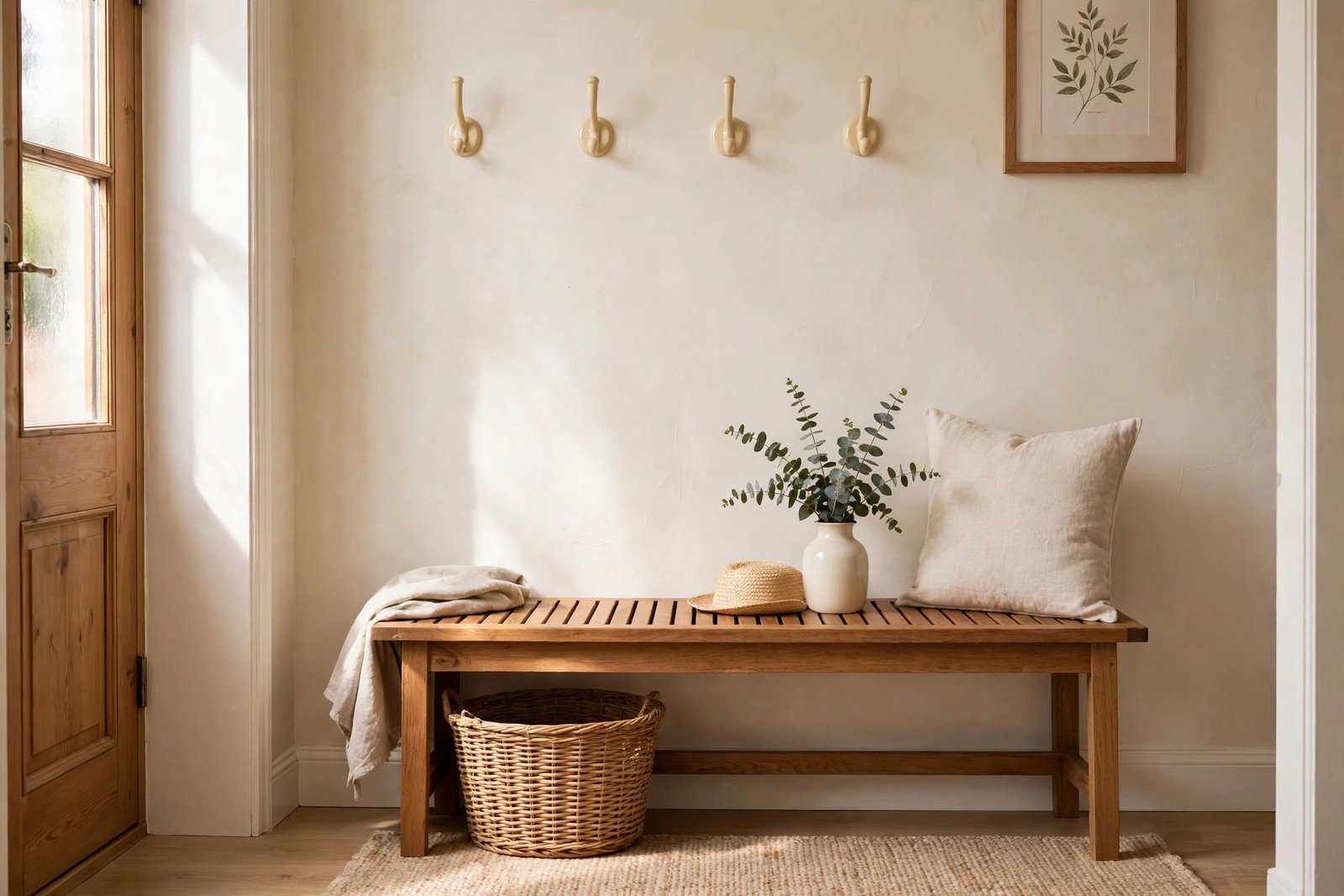
The entryway sets the mood for the whole house, and in January it usually needs a reset more than any other spot. Put away the holiday wreath, clear the pile of coats that grew over Christmas, and give the space one calm job: welcoming you home. A wooden bench or a single sturdy hook rail, a woven basket for scarves and gloves, and a small vase of eucalyptus are honestly all it takes. Keep the floor clear enough to walk through without stepping over shoes, and add one soft light — a small lamp or a candle in a lantern — so coming home on a dark evening feels warm instead of gloomy.
8. Add Fresh Winter Greenery
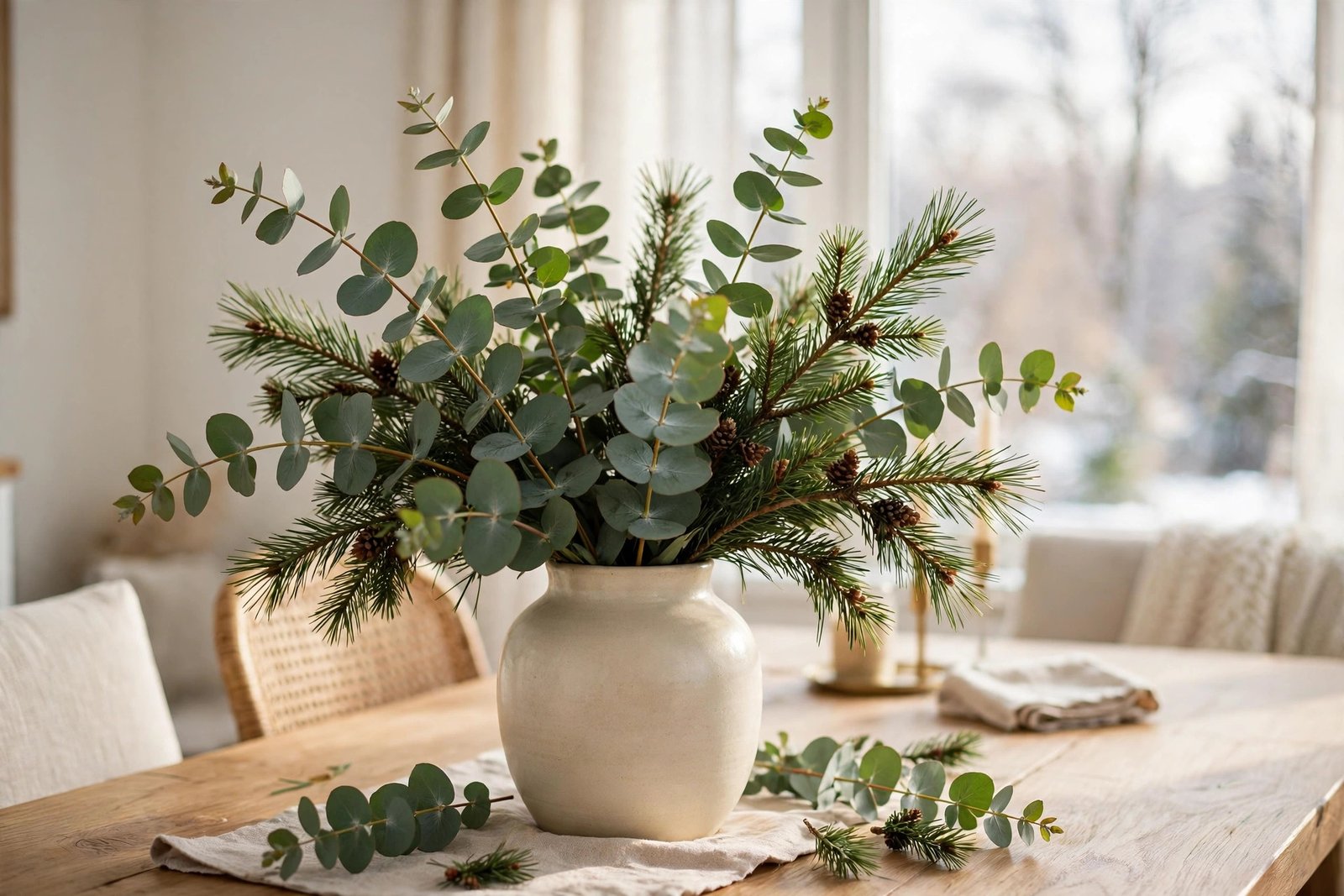
January greenery should look like it was just cut, not like it was bought in a box. Eucalyptus stems, pine sprigs, olive branches, and rosemary all last well indoors, smell wonderful, and cost far less than a bouquet of flowers. Stand a few stems in a ceramic jug on the dining table, tuck a sprig into a napkin ring, or lay a simple pine garland along a shelf — no glitter, no berries, no red ribbon. The deep green against cream walls is the one bit of colour a January room needs, and it keeps the house feeling alive while the garden sleeps.
9. Restyle the Coffee Table, Low and Slow
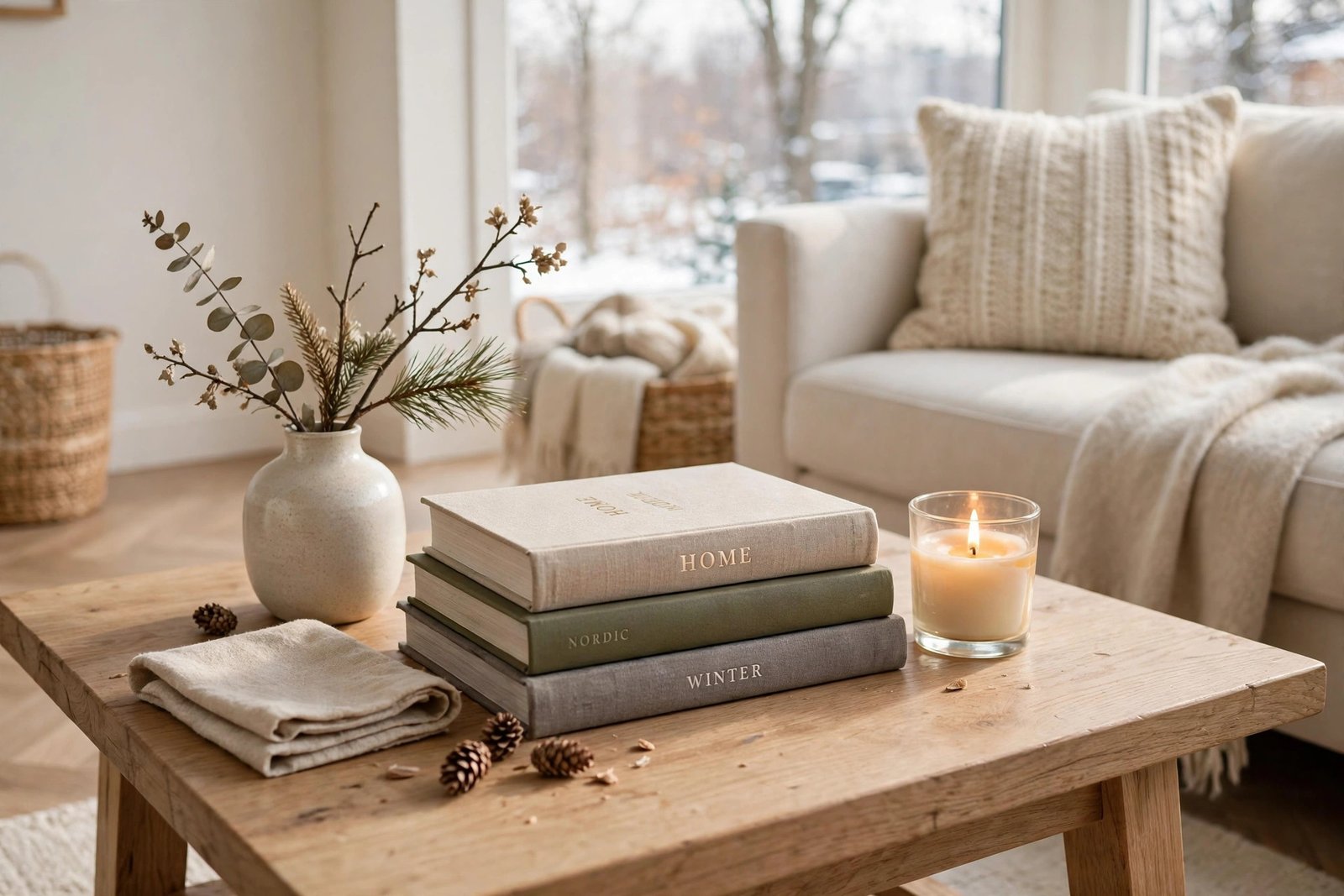
A January coffee table should look calm, not crowded. Take everything off, then put back just three things: something to read, something that glows, and something natural. A stack of two books, a candle in a glass holder, and a small vase with a single stem is a combination that almost never fails. Keep everything low so the table does not block the view across the room, and leave one clear corner for a mug of tea — a table you cannot use is just a shelf. If the table still feels bare, add a small wooden tray to group the pieces together.
10. Keep a Few Warm White Fairy Lights
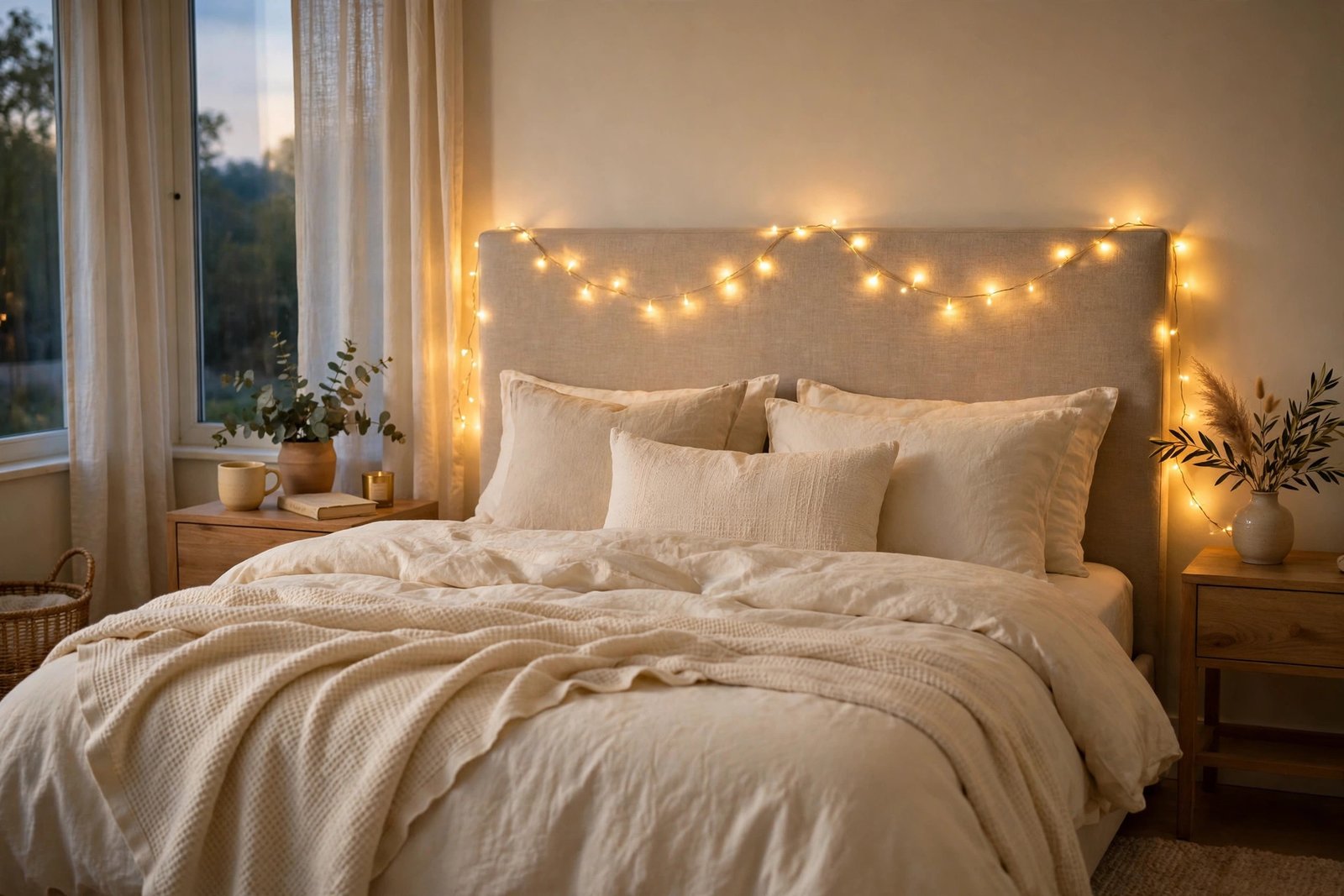
Not all fairy lights belong in the Christmas box. A single strand of warm white lights, kept well away from anything red or green, can carry a room through the darkest weeks of the year. Drape them along a bedroom headboard, coil them inside a large glass jar, or run them along a bookcase where they will glow softly in the evening. The trick is restraint: one strand, warm white only, and no flashing settings. Cool white lights feel harsh and festive in the wrong way, so check the box before you buy. Used sparingly, fairy lights turn a plain January evening into something a little bit magical.
11. Build a Reading Nook
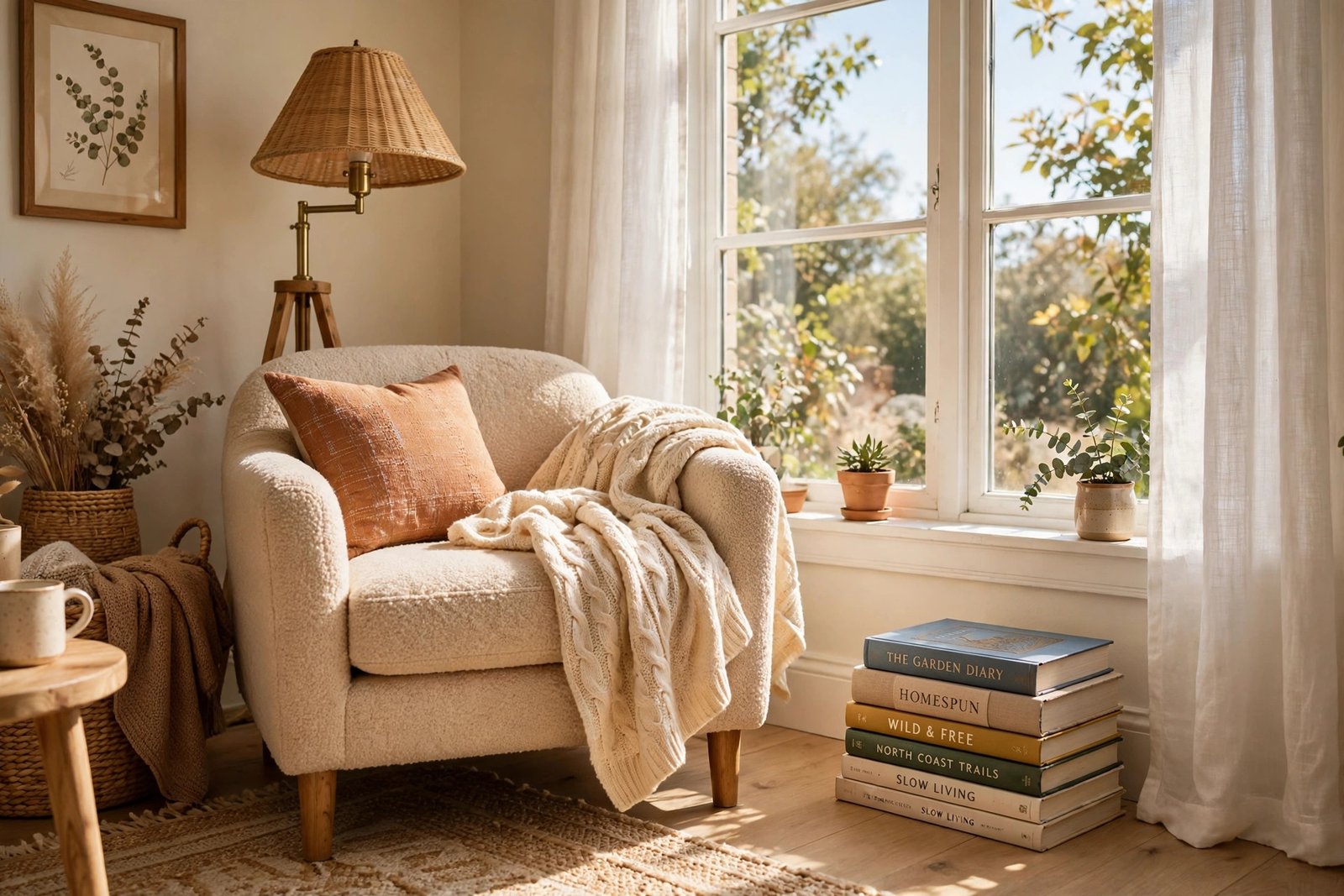
January evenings are long, and a proper reading nook turns them from something to endure into something to look forward to. You do not need a spare room — one quiet corner is enough. Place an armchair near a window or a floor lamp, add a small side table for tea, and drape a knit throw over the arm. Good light matters most: a warm bulb at shoulder height, aimed at the page, beats a bright ceiling light. Once the nook is set up, protect it — keep the chair clear of laundry and laptops, and let it be the one place in the house that is only for slowing down.
12. Refresh the Bedding
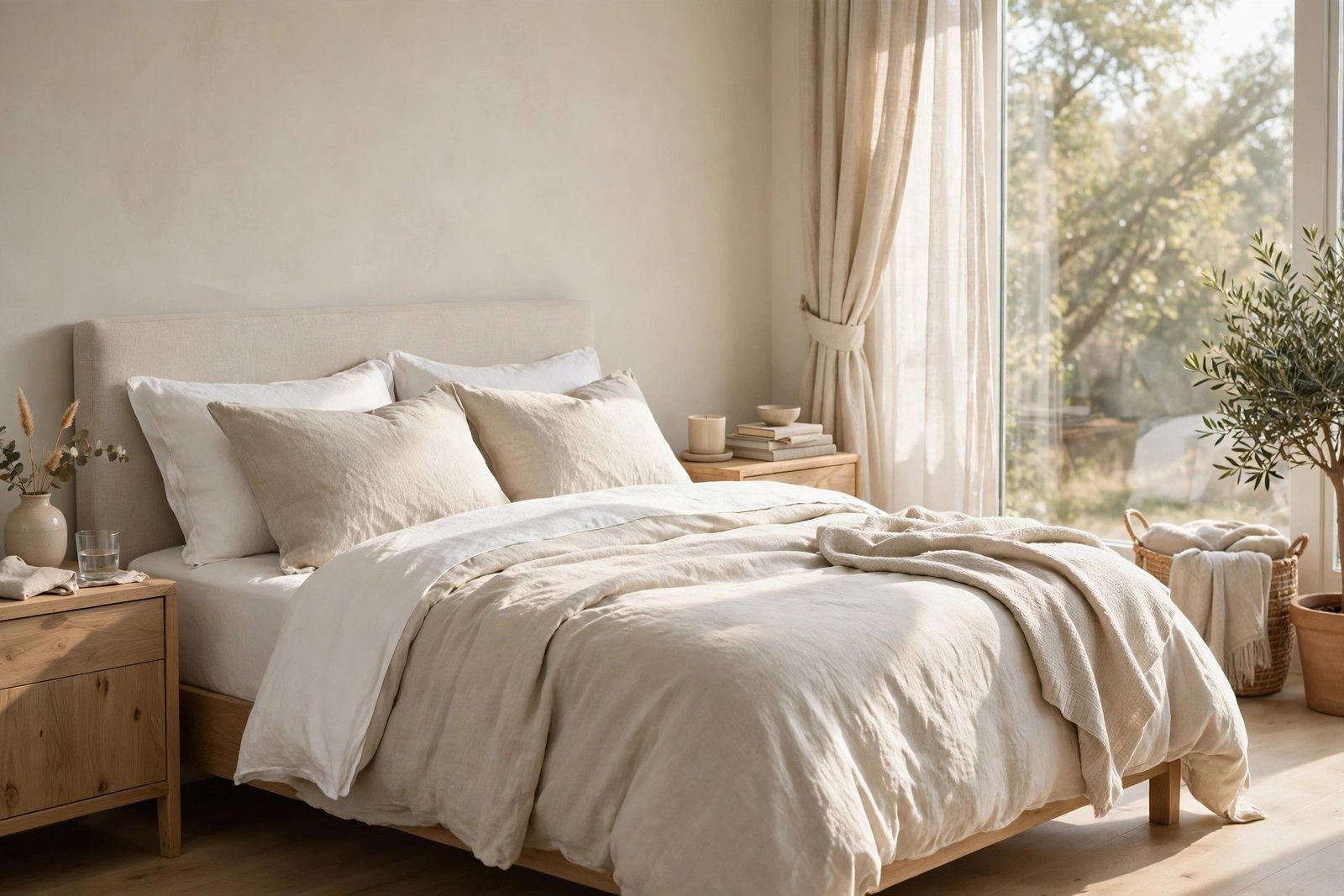
January is the perfect excuse for fresh bedding, because you spend more time in bed than anywhere else in a cold month. Strip the bed right down, wash everything, and rebuild it in crisp whites and oatmeal: plain linen sheets, a soft duvet, and one knit or waffle throw folded across the foot. Keep the palette calm and the layers visible, so the bed looks inviting rather than flat. Our winter bedroom decor guide has more ideas for layering warmth without making the room feel heavy. Fresh bedding is a small job with an outsized payoff: the first night you climb into it, January will feel like a fresh start.
13. Simmer Something Seasonal
January should smell like the season, and the simplest way to do that is a stovetop simmer pot. Fill a small saucepan with water, add dried orange slices, a cinnamon stick, a few cloves, and a sprig of rosemary, and let it bubble gently on the lowest heat. The scent will drift through the house within minutes, and it costs almost nothing. Unlike plug-in air fresheners, a simmer pot smells real because it is real, and you can refresh it with a splash of water all afternoon. Just remember to turn the hob off before you leave the room.
14. Swap the Wall Art
A single picture change can shift the whole mood of a room, and January is the ideal time to try it. Take down the busy, colourful prints and replace them with calm winter landscapes, black-and-white photography, or simple line drawings in plain wooden frames. You do not need to buy new art — print a free winter landscape photograph at home, or move a quiet picture from the bedroom into the living room and see how it feels there. Keep the frames consistent in colour so the wall reads as one calm arrangement rather than a jumble. One large print beats five small ones in a January room, because the eye needs somewhere restful to land.
15. Create One Slow-Living Corner
End your January refresh with one small corner that belongs to nothing but slowing down. It can be a chair, a windowsill, or a single shelf — the size does not matter. Give it three things: something to read, something warm, and something alive. A journal and a pen, a candle, and a small potted plant is a combination that works almost anywhere. This corner is not for show, and it does not need to impress anyone. It is a visible reminder that January is a month for rest, not for rushing into the new year at full speed.
Try This
Give yourself one quiet hour this weekend and do the January reset in three moves: first, take down every last bit of Christmas and clear one room completely; second, swap in your neutrals — cushion covers, a throw, and a candle cluster on the coffee table; third, cut or buy a few bare branches and stand them in your tallest vase. That is the whole job. Then light a candle, make a pot of tea, and sit in the room for ten minutes before deciding what, if anything, is still missing. Live with the room for a week before buying anything else, and notice what it actually needs: usually it is light, texture, or one small plant — not a shopping trip. If you want a matching look for the room you sit in most, our winter living room decor ideas will help you finish the space without starting over.
January Decor on a Budget
A calm January home does not need a big spend. In fact, most of these ideas are free: clearing surfaces, moving art between rooms, and cutting branches from the garden cost nothing at all. Check charity shops and end-of-season sales too — January is the best month of the year for picking up plain linen and simple candle holders cheaply. If you do spend, spend where you will feel it every day. A set of cushion covers in cream or oatmeal usually costs less than a family takeaway, and a chunky knit throw is an investment you will use until spring. Candles are the best value in the whole list — a few pounds buys weeks of evening light. The one thing to avoid is buying a whole new “January look” in one go. Buy one piece, live with it for a week, and only then decide what is missing. A good rule of thumb is to keep the total under the cost of a weekly shop: if the refresh costs more than that, you are probably buying decoration instead of calm.
Common Mistakes to Avoid
Leaving Christmas up too long. A tree in mid-January stops feeling festive and starts feeling tired. Take it down in the first week and let the house breathe.
Going all grey and white. A room with no warmth at all feels cold, not calm. Keep wood tones, a warm cream, or a caramel accent so the neutrals feel soft rather than stark.
Overfilling the empty space. The bare feeling after Christmas is normal, and filling every surface again in a week just recreates the clutter. Leave some space empty on purpose.
Using cool white lights. Cool white bulbs and fairy lights feel harsh in January. Choose warm white everywhere — it is the single easiest way to make a winter room feel cozy.
Buying everything at once. A room decorated in one shopping trip looks like a shop display. Add pieces slowly, live with them, and let the room grow into itself.
Frequently Asked Questions
How to decorate in January after Christmas?
Start by taking down all Christmas decorations and clearing surfaces, then swap red and green for soft neutrals like cream and oatmeal. Add texture with knit throws, light candles in the evening, and bring in bare branches or fresh eucalyptus. Keep it simple: three or four changes are enough, and you can add more over the month. Work through the house room by room rather than all at once, and give yourself a full weekend for the changeover.
What is January decor?
January decor is the calm, cozy style people use after the holidays — soft neutrals, natural textures, candlelight, and simple winter greenery instead of festive colour. It focuses on warmth and rest rather than celebration, with chunky knits, bare branches, and sheer curtains that make the most of short winter days. It is less about buying new things and more about removing the festive clutter and letting texture and light do the work.
When should I take down Christmas decorations?
Most people take Christmas decorations down in the first week of January, often by the 5th or 6th. Leaving them up much longer makes a room feel tired rather than festive, and an early reset gives you the whole month to enjoy the calm January look. If you celebrate into the new year, the weekend after New Year’s Day is the natural moment to pack everything away.
What colours work best for January decor?
Soft neutrals work best: cream, oatmeal, warm grey, taupe, and soft white, with natural wood tones for warmth. Add one warm accent, like caramel or dusty blush, so the room does not feel flat. Deep green from fresh foliage is the only strong colour you need. Avoid bright reds and greens left over from Christmas, and skip anything glittery — January is about matte, natural finishes.
How can I make my home feel cozy in January without spending much?
Clear and clean first — it costs nothing and changes everything. Then use what you already own: move art between rooms, cut branches from the garden, and group candles you already have on a tray. If you buy one thing, make it cushion covers or a knit throw, which transform a room for very little money. A pot of simmering orange and cinnamon on the stove also makes the whole house smell wonderful for pennies.
Can I keep fairy lights up after Christmas?
Yes, as long as they are warm white and used sparingly. A single strand along a headboard or inside a glass jar looks cozy all winter, not Christmassy. Take down anything red, green, or flashing, and remove the lights in February when the days get longer. Keep them out of sight during the day if you can, so the glow feels like a treat when you switch them on at dusk.
January does not ask for much. A clear surface, a lit candle, a warm throw, and a vase of bare branches will carry a home through the darkest weeks of the year. Start with one room, keep it simple, and let the calm build from there.