
When the tree comes down and the stockings are packed away, the house can suddenly feel bare — and a little bit sad. The good news is that January and February still deserve a beautiful home. These winter decor after Christmas ideas will help you keep the warmth without keeping the Christmas. The trick is simple: take away the red, the glitter and anything that says “holiday”, and keep the pieces that say “winter” — fresh greenery, soft candlelight, warm wood, brass and layers of cozy texture. What is left is a calm, restful home that carries you right through to spring.
If you are starting from scratch, our winter decor ideas hub is a good place to begin, because it covers the whole season in one place. Below, we focus on the in-between weeks: the quiet stretch after the holidays when your home still needs warmth, light and a little bit of beauty every single day.
1. Take Down the Red and Glitter, Keep the Green
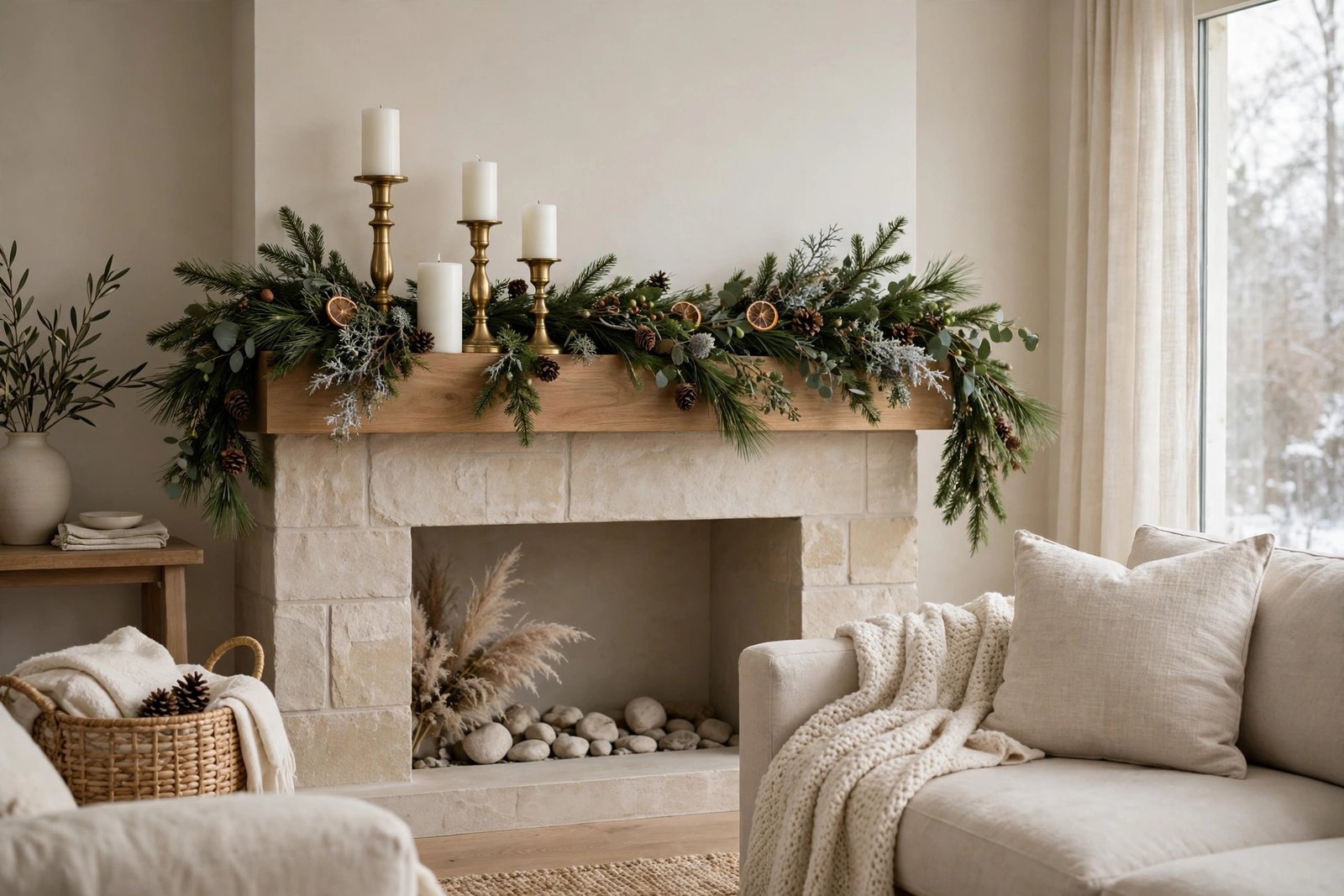
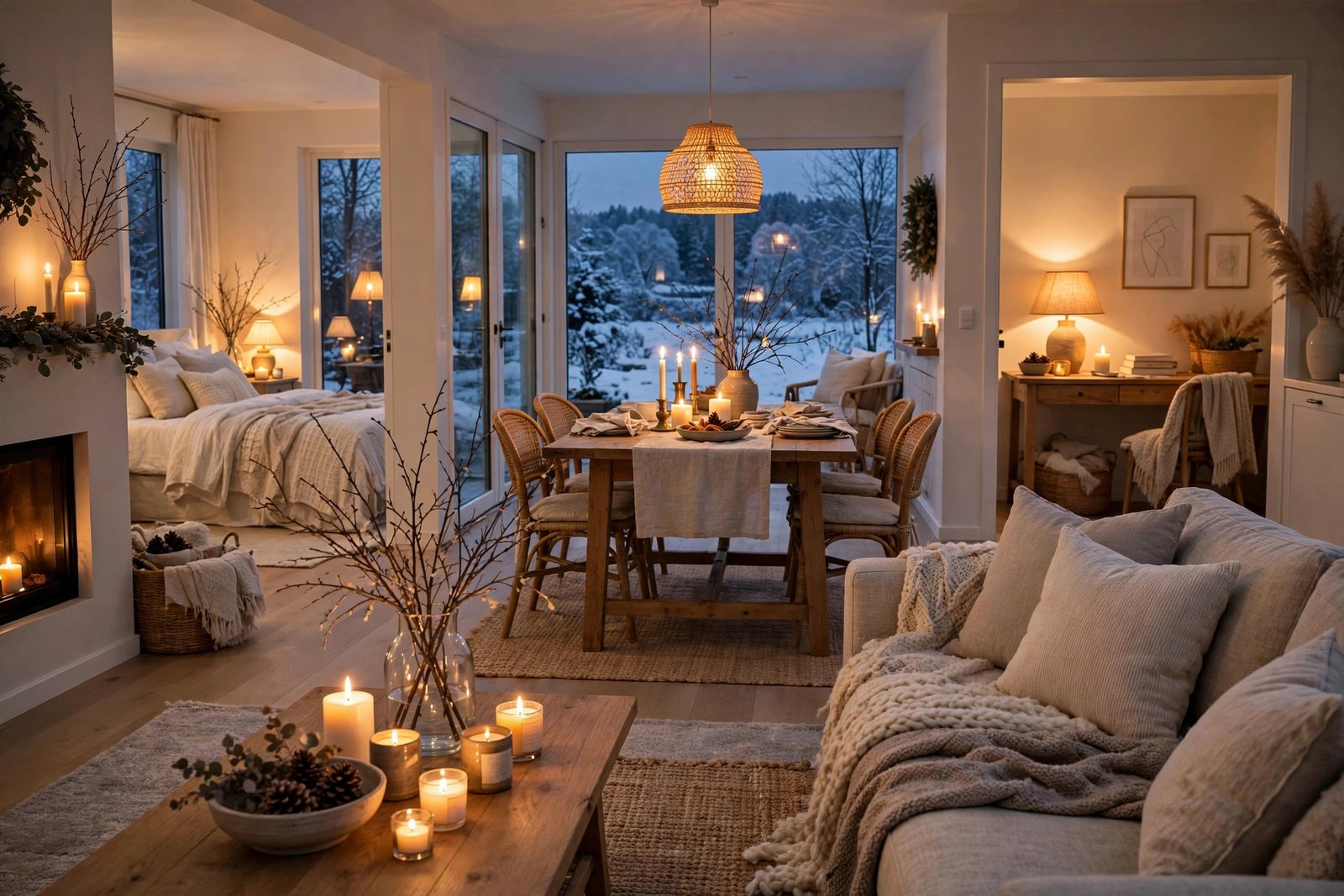
Start with the easiest edit of all. Remove anything red, gold-glittery or shaped like a holiday symbol — the ornaments, the Santa figures, the “Merry Christmas” signs and the tinsel. What stays is the greenery. Pine garlands, cedar sprigs and eucalyptus look just as lovely in January as they did in December, and they bring life into a room when everything outside is bare. Keep the garland on the mantel or the staircase, fluff it up, and let it stand on its own without baubles. A plain green garland against a white wall is one of the calmest, prettiest sights of winter.

2. Swap the Tree for Bare Branches
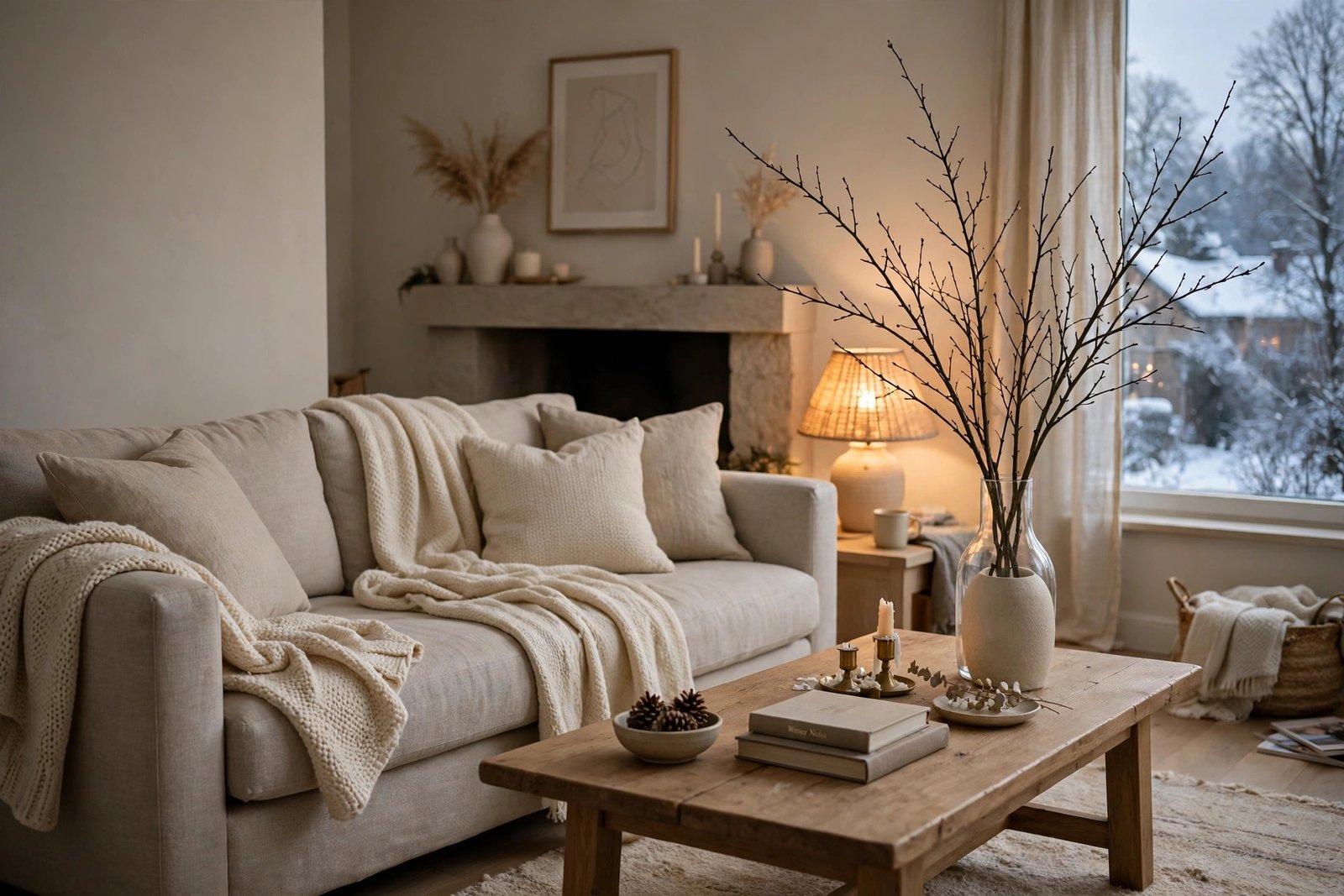
The empty corner where the tree stood does not need a new piece of furniture — it needs a tall vase of bare branches. Gather a few slim branches from the garden, or buy a bunch of curly willow or birch, and stand them in a large floor vase. They give you height and shape without any fuss, and they look sculptural against a plain wall. If the branches feel too stark, wrap a single strand of warm-white fairy lights around them, or hang two or three plain glass ornaments. This is winter at its most honest: simple, natural and quietly beautiful.
3. Restyle the Mantel in Calm Neutrals
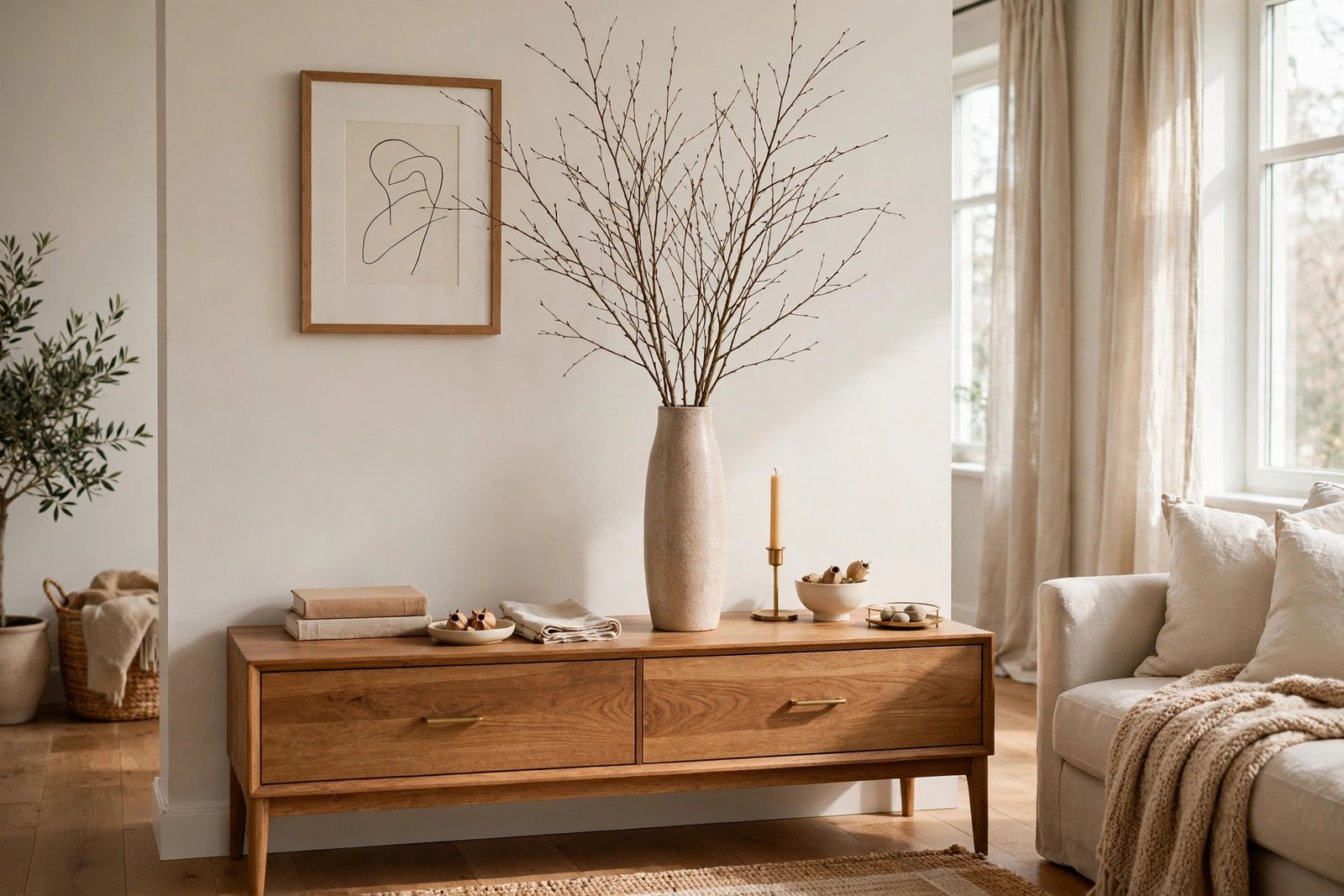
The mantel is usually the most “Christmas” spot in the house, so it deserves a proper reset. Clear everything off, wipe it down, and start again with a calm palette of cream, white, wood and brass. A low pine garland along the top, a pair of white pillar candles in brass holders, and one framed print or a small mirror is all you need. For more mantel inspiration, see our winter mantel decor ideas. Leave some empty space on purpose — a mantel that is not crowded feels peaceful, and peaceful is exactly the mood January calls for.
4. Layer Cozy Textures on the Sofa
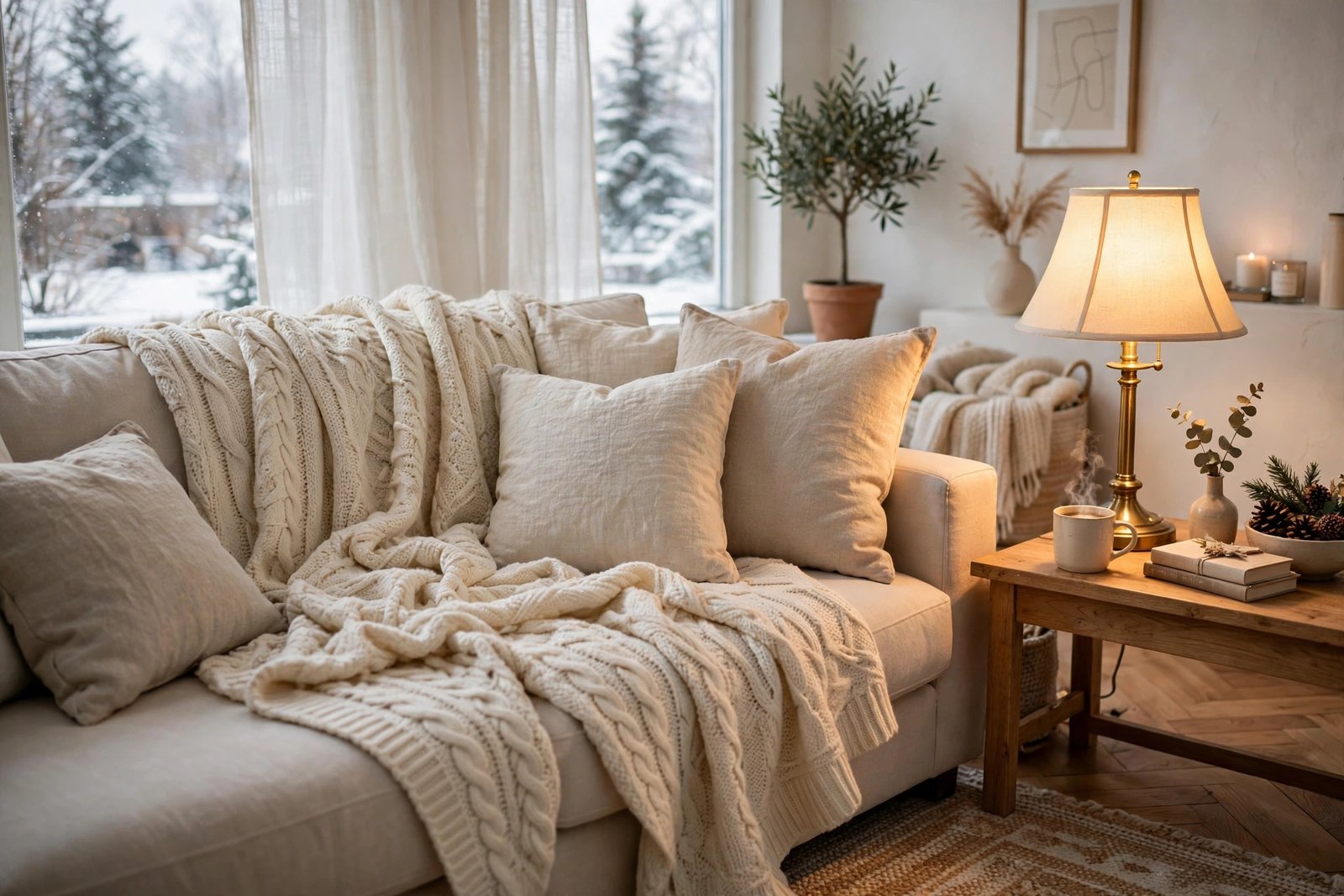
Once the festive cushions are gone, the sofa is your best friend for winter warmth. Layer a chunky knit throw over one arm, add two or three linen or bouclé cushions in cream, oatmeal and soft grey, and drape a second lighter throw across the back. The secret is mixing textures rather than colours: knit, linen, velvet and wool together feel rich even when every shade is neutral. Our winter living room decor ideas show how these layers work across a whole room. Keep one throw folded in a basket nearby so the room always looks inviting.
5. Hang a Winter Wreath, Not a Christmas One
Do not take the wreath down with the rest of the decorations — just change it. A winter wreath made of eucalyptus, pine and a few dried oranges or pinecones reads as seasonal rather than festive, and it can stay on the door well into February. Skip the red bow and the jingle bells; a simple linen ribbon or a sprig of berries is enough. If you love making things, our winter wreath ideas have plenty of gentle, natural designs. A fresh wreath on the door is also the kindest welcome for anyone arriving on a cold evening.

6. Light Lamps and Candles at Seated Height
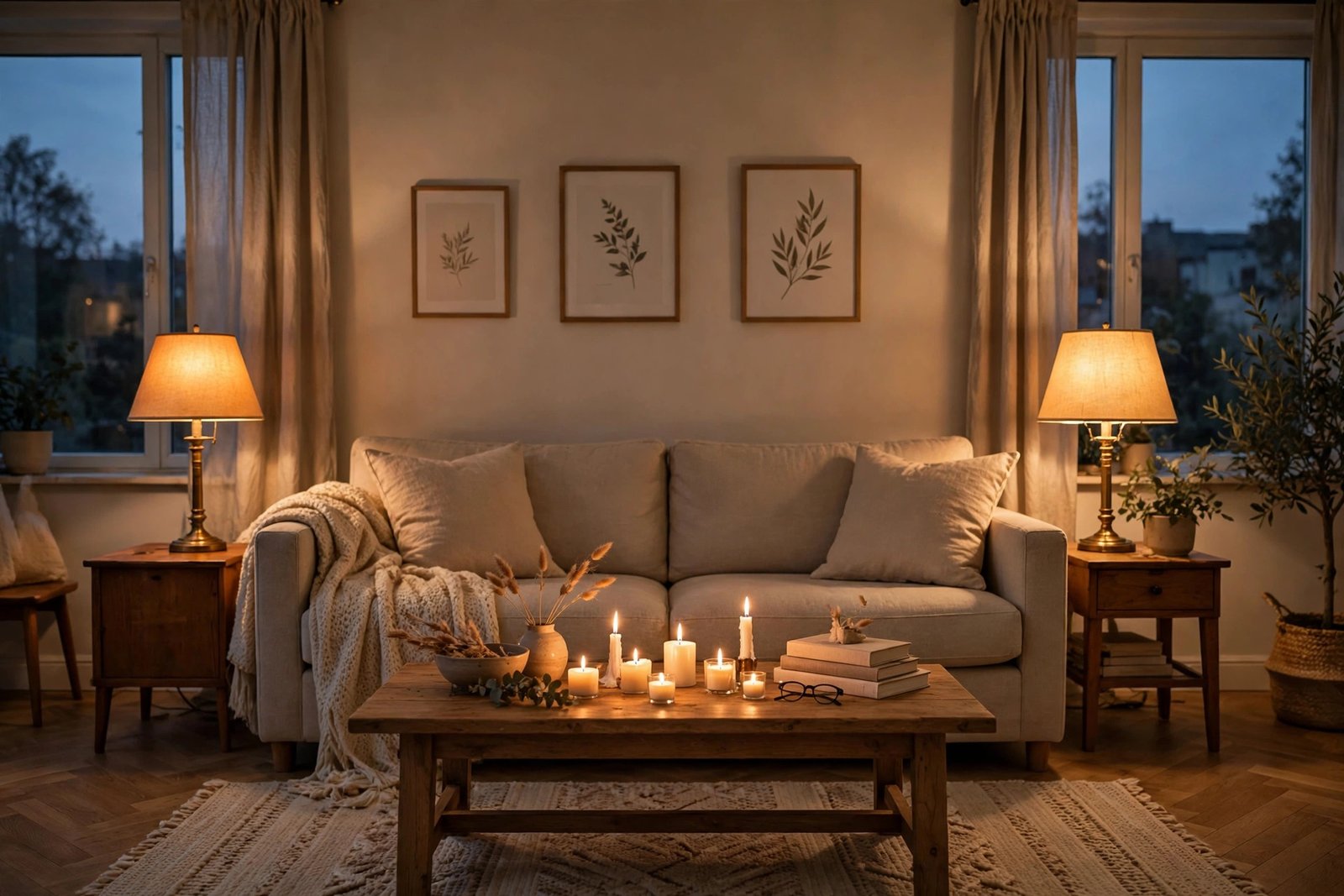
January evenings are long and dark, so light matters more than almost anything else. The trick is to keep the light low: table lamps, candles on the coffee table and a floor lamp beside your reading chair, all at about seated height. Light that comes from below eye level feels warm and intimate, while a single bright ceiling light feels cold and flat. Use warm-white bulbs, group candles in odd numbers, and light them every evening around the same time. This small daily ritual makes the whole house feel cared for, and it costs almost nothing.
7. Build a Simple Winter Table Centerpiece
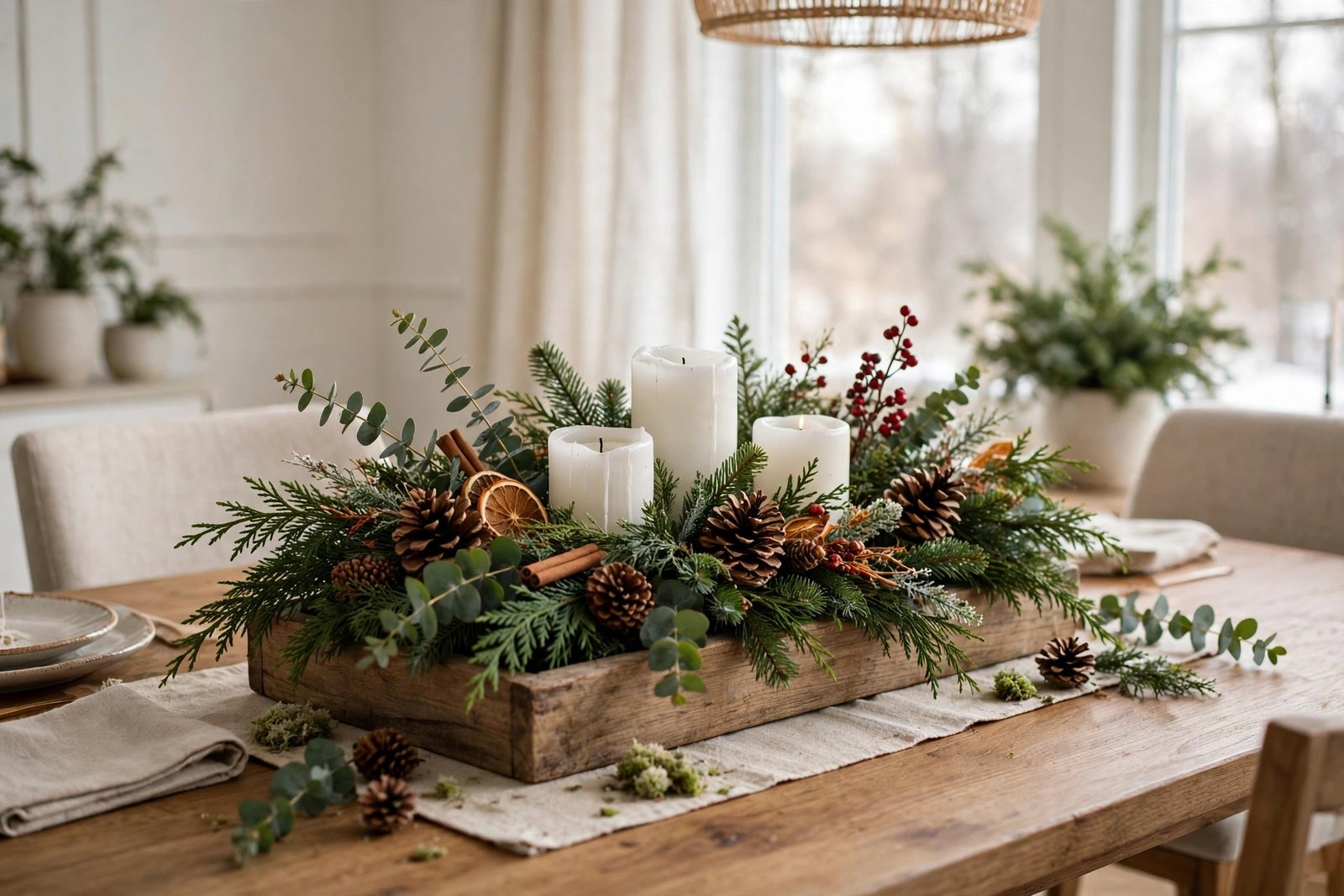
The dining table does not need a holiday theme to look special. Lay a wooden tray or a folded linen runner down the middle, then add three white pillar candles of different heights, a scatter of pinecones and a few sprigs of pine or eucalyptus. That is the whole centerpiece, and it works for everyday dinners as well as for guests. Change the greenery every week or two so it stays fresh, and keep the candles unscented at the table so they never compete with the food. A calm table makes even a simple weeknight meal feel like a small occasion.
8. Bring in Wood and Brass Warmth
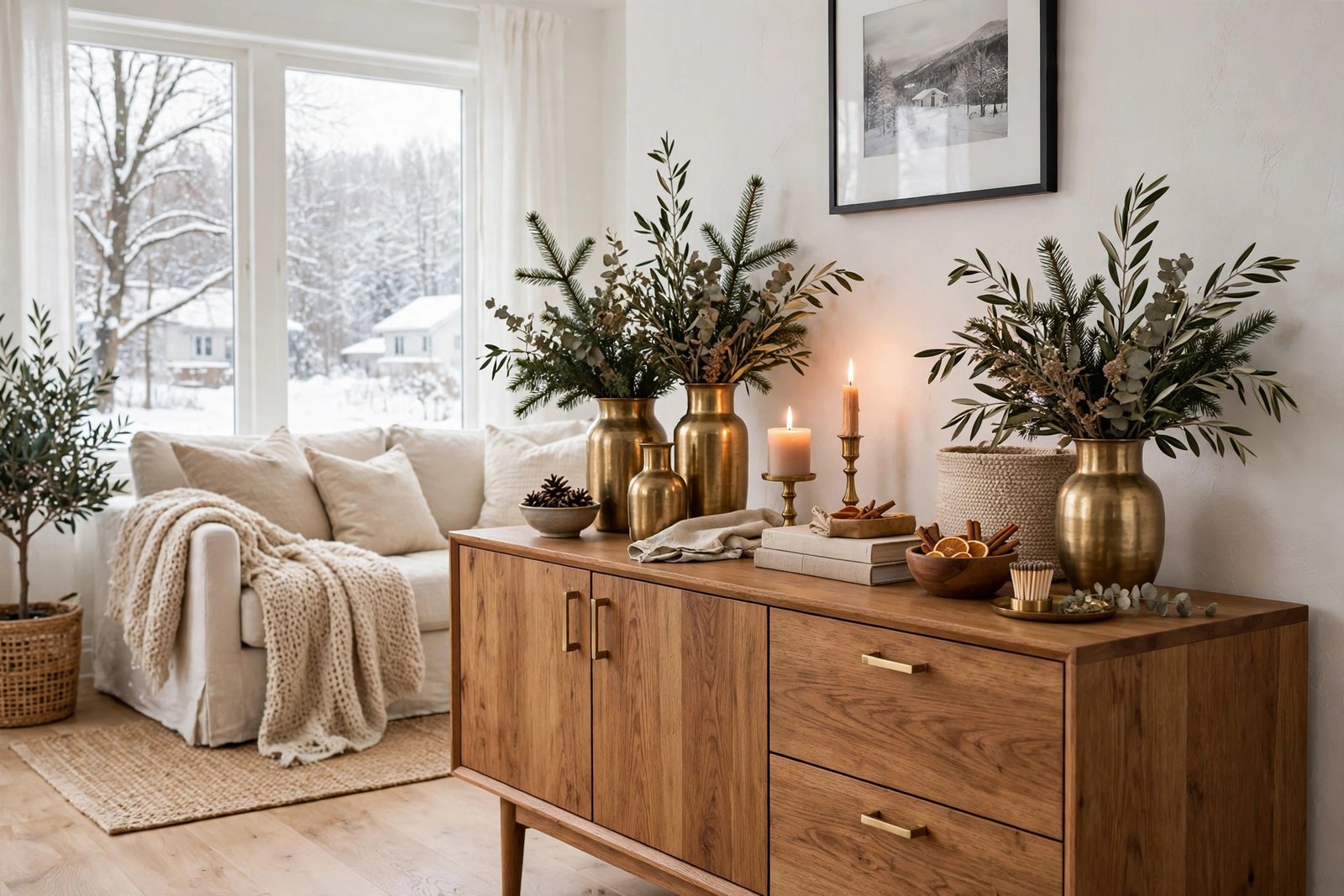
When the colour leaves the room, warm materials have to do the work. Wooden bowls, a brass vase, a woven basket or a leather tray add the golden, honeyed tones that make a neutral room feel warm instead of washed out. You do not need to buy anything new — look around the house for pieces you already own and gather them where you spend the most time. A wooden cutting board leaning against the kitchen backsplash, a brass candle holder on the sideboard, a basket of firewood by the door: these small, honest materials are what make a winter home feel grounded and real. Look for pieces with a little age on them — a worn wooden bowl or a tarnished brass vase has far more character than something shiny and new, and it fits the quiet mood of the season. Group them in small clusters of two or three rather than scattering single objects around the room, and leave breathing space between the groups so each piece can be seen.
9. Refresh the Bedroom for Slow Winter Mornings
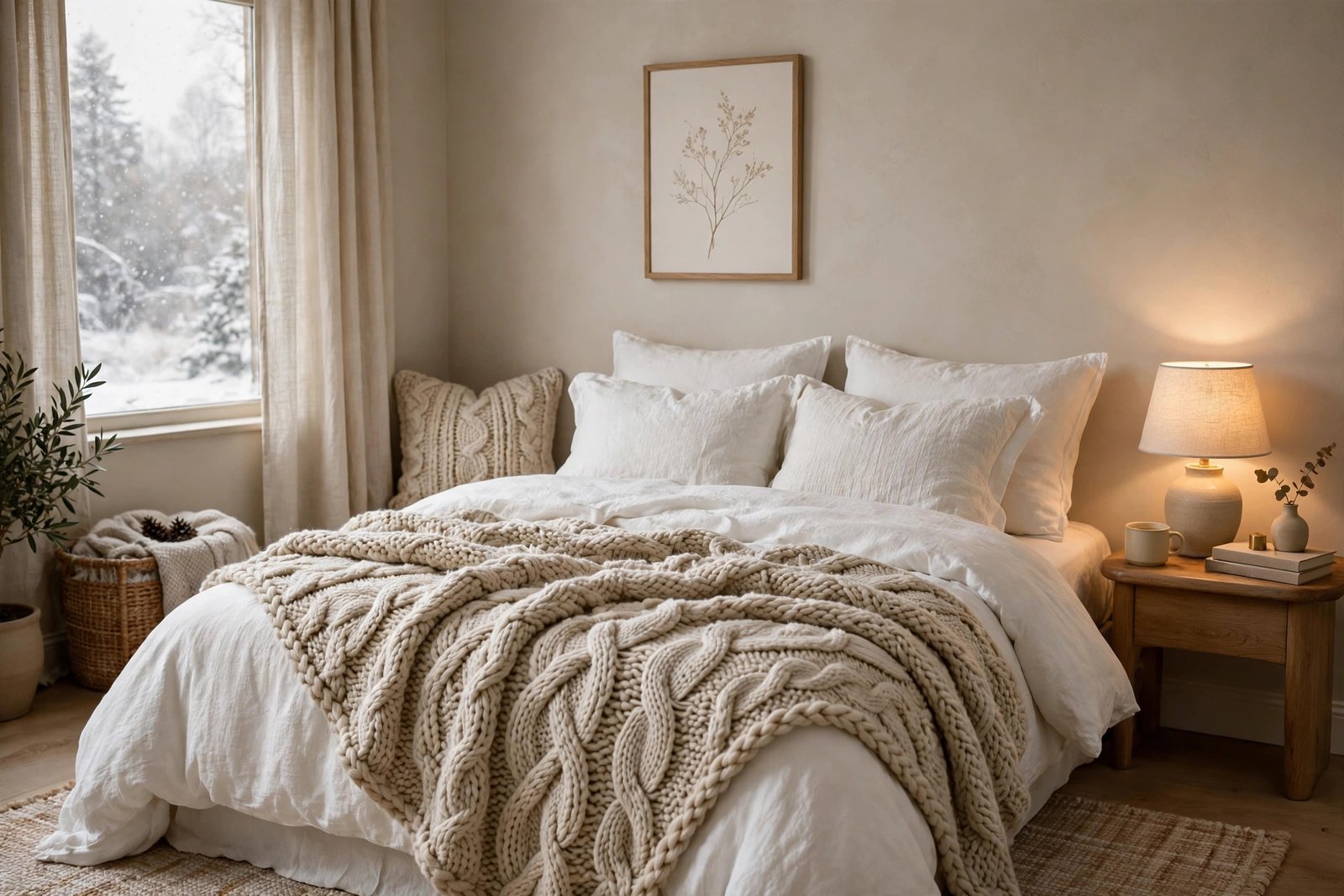
The bedroom deserves the same gentle reset as the living room. Swap festive bedding for crisp white or soft cream sheets, add a chunky knit throw at the foot of the bed, and put a small vase of eucalyptus on the nightstand. A warm lamp with a fabric shade makes early mornings and late evenings feel softer than a bright overhead light ever will. Keep the surfaces clear — one book, one candle, one small plant — and the room becomes a quiet place to wake up slowly. Winter mornings are hard enough; your bedroom should make them easier, not busier.
10. Style the Entryway for Winter Arrivals
The entryway works hard in winter: coats, boots, scarves and cold air all arrive here first. Give it a calm, practical reset. A wooden bench to sit on, a woven basket for scarves and gloves, and a row of hooks for coats keep the clutter contained. Add one pretty touch — a pine garland along a mirror, a small vase of branches, or a lantern with a candle — so the first thing you see when you come home is something beautiful. A tidy entryway also means you never trip over boots in the dark, which is a small winter blessing.

11. Add Eucalyptus in the Kitchen and Bath
Eucalyptus is the hardest-working winter plant: it looks fresh for weeks, smells wonderful, and suits every room. Tie a small bundle with twine and hang it from the shower head, where the steam releases its scent every morning. In the kitchen, stand a few sprigs in a glass jar on the windowsill or lean them against the backsplash beside wooden boards. A single bunch costs very little and can be split across two or three rooms. When the leaves dry out, keep them anyway — dried eucalyptus is just as pretty and lasts for months. In the bathroom, a bundle hung in the shower turns an ordinary morning into a small spa moment, and in the kitchen a jar of sprigs on the sill softens the hardest-working room in the house. If fresh eucalyptus is hard to find, rosemary or pine sprigs do the same job and smell just as wonderful.
12. Create a Reading Nook
Every winter home needs one small corner made for doing nothing much. Choose the warmest spot in the house — near a window, beside a lamp, close to a radiator — and set a comfortable chair there with a soft throw, a cushion and a small side table. Add a stack of two or three books, a candle and, if you like, a mug that lives on the table. The nook does not need to be big; even a single chair and a floor lamp counts. Having one place that is only for resting makes the long evenings feel like a gift instead of a wait for spring. Guard this corner gently: keep the chair clear of laundry and clutter, keep the candle and the book within reach, and use the nook at the same time each evening so it becomes a habit. Even ten quiet minutes there, with the lamp on and the phone in another room, can change how the whole evening feels.
13. Use White and Cream as the New Base
After weeks of red and green, a base of white, cream and soft grey feels like a deep breath. You do not need to repaint anything: white slipcovers, cream throws, pale cushions and light linen curtains are enough to shift the whole mood. Against this pale base, the green of your plants and the gold of your brass will stand out beautifully. This is also why winter decorating works so well with natural materials — snow, bare branches and pale light are the season’s own palette. Let your home echo what is happening outside the window. If the room still feels flat, add one deeper accent — a forest-green cushion, a charcoal throw, a dark wooden frame — to give the pale base something to lean against. One dark note is enough; two or three will pull the room back toward heaviness.
14. Keep One Sparkle, Done Softly
You do not have to give up sparkle entirely — just make it quieter. One strand of warm-white fairy lights along a mantel, inside a glass jar, or wrapped around bare branches is enough. The key is warmth and restraint: warm white, not cool blue, and one strand, not five. Turn them on at dusk and off at bedtime, and they become a small evening ritual rather than a decoration. If you want more glow, add candles instead of more lights. A home with one soft sparkle feels magical; a home with sparkle everywhere feels like a shop window. Glass jars and lanterns are the easiest way to hold the light: a string of fairy lights coiled inside a large jar on the sideboard glows softly without any fuss, and a lantern by the front door welcomes you home on the darkest evenings. Keep the lights low and warm, and let the rest of the room rest in gentle shadow.
15. Do a Slow January Refresh, Room by Room
Finally, do not try to redo the whole house in one afternoon. Pick one room a day — the living room on Monday, the bedroom on Tuesday, the kitchen on Wednesday — and give each a fifteen-minute refresh: remove one festive thing, add one winter thing, clear one surface. By the end of the week the whole house will have changed, and you will not have felt rushed or exhausted once. Slow decorating suits the season. January is not a month for big, dramatic makeovers; it is a month for gentle, steady care, one small room at a time.
Try This
This weekend, try the one-hour winter reset: set a timer, put on your favourite music, and walk through the house with a basket. Into the basket goes everything red, glittery or holiday-shaped. Out of the basket, into the rooms, come the things that say winter — the greenery, the candles, the knit throws and the bare branches. Light the candles when you finish, sit down with a warm drink, and look around. If the room feels calmer than it did an hour ago, you have done it right. For more gentle, layered ideas, browse our cozy winter decor ideas and pick one more small change to try next week. The best part is that nothing in this reset is permanent: if a branch arrangement does not work in one corner, move it to another. Winter decorating is forgiving, and the only rule that matters is that the room feels good to sit in when the light fades.
Winter Decor After Christmas on a Budget
A calm winter home does not need a big budget — most of this look comes from editing what you already own, not from buying new things. Start with the free changes: remove the festive pieces, rearrange the furniture slightly, and bring in branches, pinecones and greenery from the garden. If you do spend, spend small and spend on things that last all winter: a bunch of eucalyptus (a few dollars, split across rooms), a set of white pillar candles, and one good knit throw. Thrift shops and end-of-season sales are excellent for brass candlesticks, wooden trays and woven baskets, often for a dollar or two. Set a simple limit — say, $30 for the whole refresh — and you will be surprised how far it goes when the look is built on texture and light rather than on new decorations. Another good trick is to shop your own home first: move the brass candlesticks from the dining room to the living room, carry the knit throw from the bedroom to the sofa, and the whole house will feel new without a single purchase. Winter decorating rewards patience and a good eye far more than a big budget.
Common Mistakes to Avoid
Leaving everything up until February. A Christmas tree in mid-January stops looking festive and starts looking tired. Take the holiday pieces down in the first week of January and your home will thank you.
Removing too much at once. Stripping every decoration leaves the house echoing and bare. Keep the greenery, the candles and the textures — remove only the holiday symbols.
Sticking with cool, bright light. Cool-white bulbs make a neutral room feel like an office. Warm-white bulbs and low lamps are what make white and cream feel cozy.
Buying a whole new “winter” set. You do not need matching winter collections. A few natural pieces you already own will look better than a store-bought theme.
Forgetting the scent. A home that looks calm but smells stale misses the point. Fresh eucalyptus, a simmering pot of orange and cinnamon, or a single beeswax candle finishes the feeling.
Frequently Asked Questions
How to decorate after Christmas without it looking bare?
Keep the winter pieces and remove only the holiday symbols. Leave the greenery, candles and cozy textures in place, add bare branches and warm lamps, and the house will feel calm rather than empty.
When should Christmas decorations come down?
Most people take them down in the first week of January, often by the 6th. Whenever you choose, do it in one focused session, then immediately add a few winter touches so the house never sits bare.
What colours work for winter decor after Christmas?
White, cream, soft grey, warm wood tones and brass, with green from real plants. This calm palette feels restful in January and makes candlelight and greenery stand out.
Can I keep my Christmas garland up in January?
Yes, if it is plain greenery. Remove the ornaments, bows and lights that read as festive, fluff the branches, and a pine or cedar garland works beautifully as winter decor into February.
How do I make my home feel cozy in January?
Layer textures — knit throws, linen cushions, wool rugs — and light lamps and candles at seated height every evening. Warm, low light and soft layers matter far more than any decoration.
What is the cheapest way to decorate for winter after Christmas?
Use what you already have: branches and pinecones from outside, candles and throws from other rooms, and one bunch of eucalyptus split across the house. A full refresh can cost under $30.
A Calm Home Until Spring
Winter after Christmas is not an empty season — it is a quiet one, and a quiet home is a beautiful thing. Keep the green, keep the glow, keep the textures that make you want to stay in, and let the rest go. One small change a day is enough. By the time the first spring light arrives, your home will have carried you through the coldest weeks gently, warmly and well. The house does not need to be perfect, and it does not need to be finished — it only needs to feel like a place where winter is welcome. Light the candles, fluff the throws, put the kettle on, and enjoy the quiet weeks. Spring will come soon enough; until then, let your home be the warmest place you know.