
You love the calm of a minimalist room, but you also love the soul of your grandmother’s vintage rug — and you’re not willing to give up either. If you’ve ever wondered how to mix decor styles without ending up with a room that looks like a furniture store clearance aisle, you’re in the right place. Mixing styles is not about buying more things or having a designer’s eye. It’s about a few simple rules that hold everything together, even when the pieces themselves come from completely different worlds. This guide walks you through exactly why mixed rooms fail, the method that makes them work, and three pairings that are almost impossible to get wrong.
Here’s the good news first: the most beautiful, personal rooms you see on Pinterest are almost never one single style. They’re layered — a modern sofa softened by a vintage rug, a minimalist shell warmed up with rustic wood. Pure one-style rooms can feel flat and showroom-like. Mixed rooms feel lived in. The trick is learning the difference between a mix that looks intentional and a mix that looks accidental, and that difference comes down to structure, not taste.
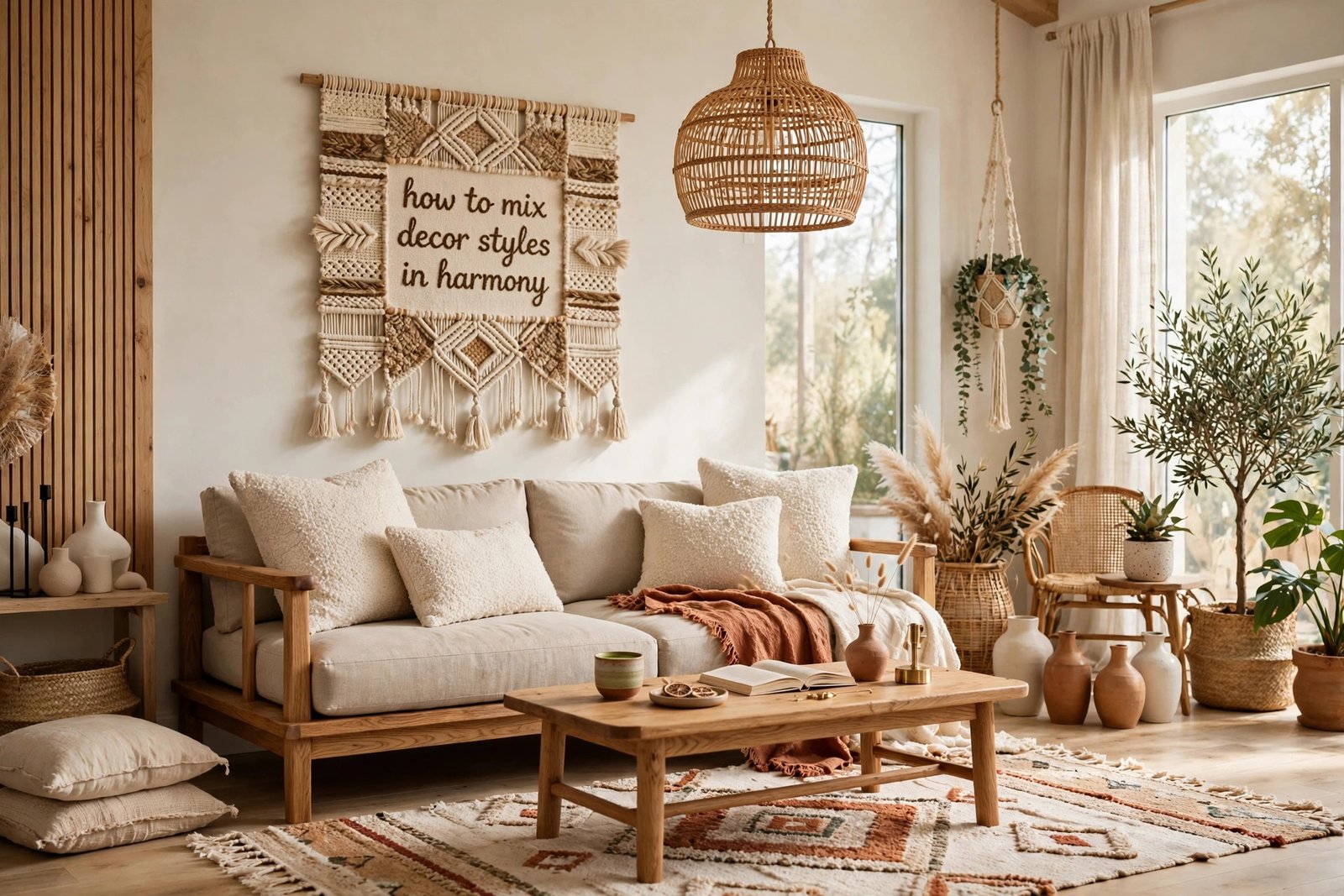
Why Mixed Rooms Fail: The Three Usual Suspects
Before we fix anything, it helps to know why mixed-style rooms so often feel “off.” In almost every case, one of three problems is to blame — and none of them is the pieces themselves. Your furniture is probably fine. The way it’s combined is the issue.
1. There’s No Anchor
An anchor is the one element that tells your eye what the room is “about.” Without it, every piece competes for attention at the same volume, and the room feels like several small arguments happening at once. A common version of this mistake: a boho rattan chair, an industrial metal shelf, a glam velvet ottoman and a farmhouse sign all in one small living room, each shouting its own style. Nothing is wrong with any single item — but there’s no lead singer, so the whole band sounds like noise. Successful mixed rooms always have a clear dominant style that sets the tone, with everything else playing a supporting role.
2. The Palettes Are Competing
Every decor style tends to arrive with its own default colors. Boho brings terracotta and mustard. Coastal brings navy and sea-glass blue. Scandinavian brings pale grey and white. Industrial brings black and rust. Drop pieces from three styles into one room without adjusting their colors, and you get three palettes fighting instead of one palette flowing. This is the single most common reason a mixed room feels chaotic even when the furniture shapes get along fine. Color is the loudest language in a room — louder than shape, louder than era — and when the colors clash, the eye reads the whole room as a mistake.
3. The Scales Are Fighting
Scale is the quiet problem nobody notices until the room is finished. A chunky farmhouse table paired with delicate mid-century chairs, an oversized industrial pendant hanging over a dainty vintage desk, a huge squishy sectional next to a spindly Scandinavian side table — each pairing creates a subtle visual tension. Styles have typical proportions: farmhouse and traditional pieces run large and solid, Scandinavian and mid-century pieces run light and leggy, industrial pieces run heavy and dark. When the weights of the pieces in a room are wildly uneven, the room feels unbalanced no matter how good the colors are. The fix isn’t matching sizes exactly; it’s making sure no single piece looks like it wandered in from a different-sized world.
The Method: Five Rules That Make Any Mix Work
Now for the part that actually changes your room. These five rules work for every pairing in this guide — and for pairings nobody has named yet. Learn them once and you can mix almost anything.
Rule 1: Follow the 80/20 Dominant-Plus-Accent Rule
Choose one style to lead — it should account for roughly 80 percent of the room: the big furniture, the overall mood, the bones. Your second style gets about 20 percent: accents, textiles, lighting, art and smaller pieces. This single decision prevents the “no anchor” problem instantly. A room that is 80 percent modern with 20 percent vintage feels curated and confident. A room that is 50/50 modern and vintage often feels like two rooms arguing. And if you love a third style, it can appear in tiny doses inside that 20 percent — a single industrial stool in a modern-vintage room works; a full industrial corner does not. Beginners should stick to two styles per room until the method feels natural.
Rule 2: Let One Shared Color Palette Be the Glue
Pick three to five colors — and let every piece in the room, whatever its style, belong to that palette. This is the most powerful rule in this entire guide. A vintage rug and a modern sofa in the same cream, terracotta and sage palette will look like they were chosen together, because in the way that matters most, they were. When you shop for an accent from your second style, shop by color first and style second. If a piece you love falls outside the palette, you have three options: pass on it, change its color (paint, a slipcover, a throw over it), or — occasionally — promote it to be the room’s one deliberate wildcard. One wildcard is charm; five wildcards are chaos.
Rule 3: Repeat Each Style at Least Twice
A single piece from a second style looks like a mistake. Two or three pieces look like a decision. If your accent style appears exactly once — one lone rustic stool in a modern room — the eye reads it as an accident or a leftover. Repeat it: the rustic stool plus a rustic wooden bowl on the shelf plus a raw-edge picture frame, and suddenly the room has a story. The repetitions don’t need to be large or expensive. They need to be visible and spread around the room rather than clustered in one corner, so the accent style feels woven through the space instead of dumped in one spot.
Rule 4: Use Bridge Pieces to Connect the Two Worlds
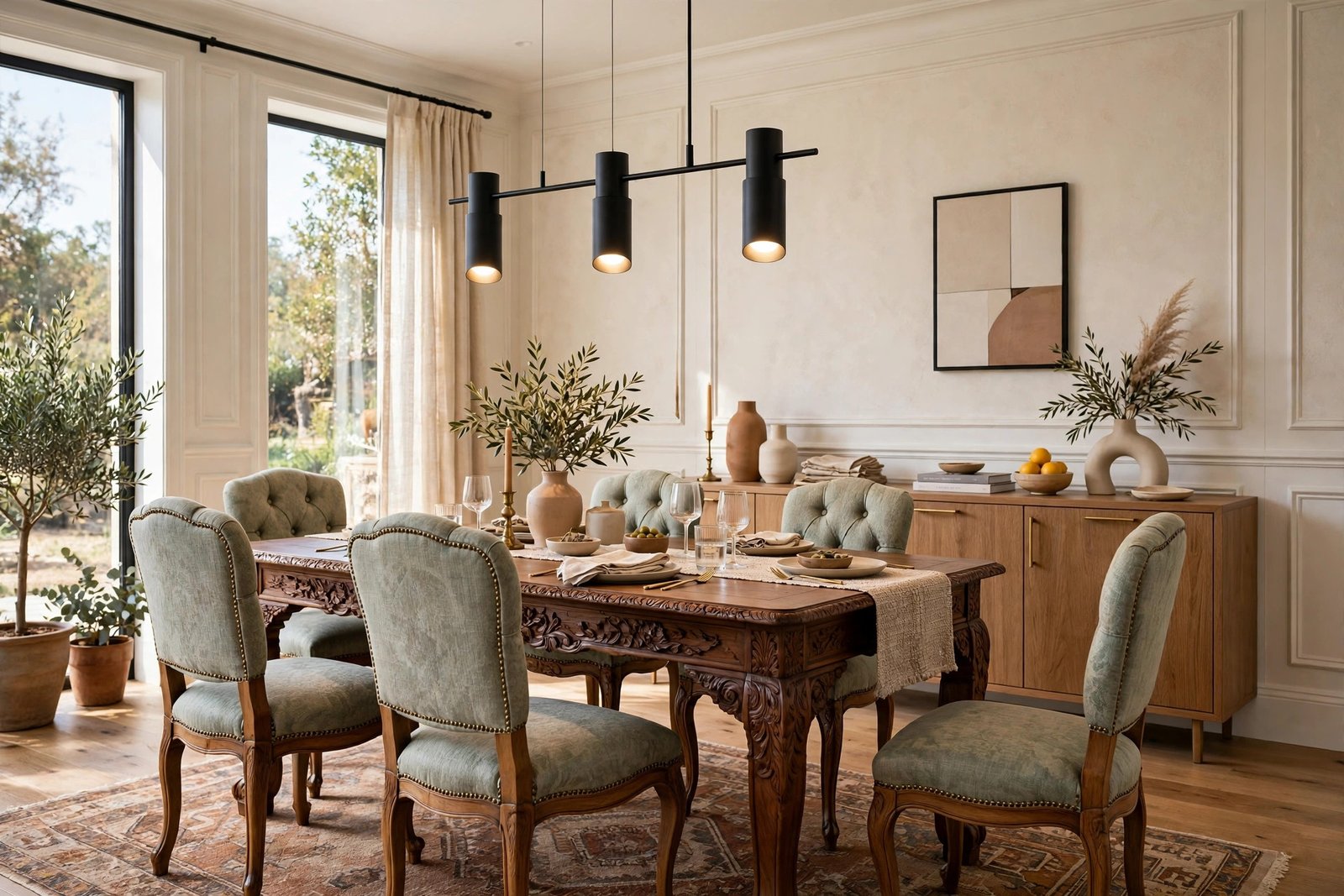
A bridge piece is an item that contains something from both styles at once, and it quietly convinces your eye that the two styles belong together. A modern sofa (clean lines) in a nubby, earthy bouclé fabric (boho texture) is a bridge. A vintage rug in your modern room’s exact palette is a bridge. A traditional wooden table paired with a sleek modern pendant above it creates a bridge moment in the dining room. When a mix feels almost right but slightly disjointed, you usually don’t need to remove anything — you need to add one bridge. Look for pieces that borrow a material, color or shape from the other side, and place them where the two styles meet.
Rule 5: Let Texture Do the Translating
When shapes and eras differ, texture is the translator that makes them sound like the same language. Styles that seem far apart often share textures: Japandi and boho both love natural fibers, woven materials and matte finishes; modern and vintage both shine with velvet, brass and marble. A room full of mixed styles but united textures — linen, light wood, woven rattan, soft wool — feels calm and cohesive. The opposite is also true: a room where every surface is a different shiny finish will feel restless. As a working rule, aim for at least three textures in every room, repeat your main texture in both styles’ pieces, and be suspicious of any piece whose finish is the only one of its kind in the space.
Three Proven Pairings, Explained in Depth
Some combinations are forgiving because the two styles already share DNA. Here are three pairings that work reliably, why they work, and exactly how to divide the 80/20 in each one.
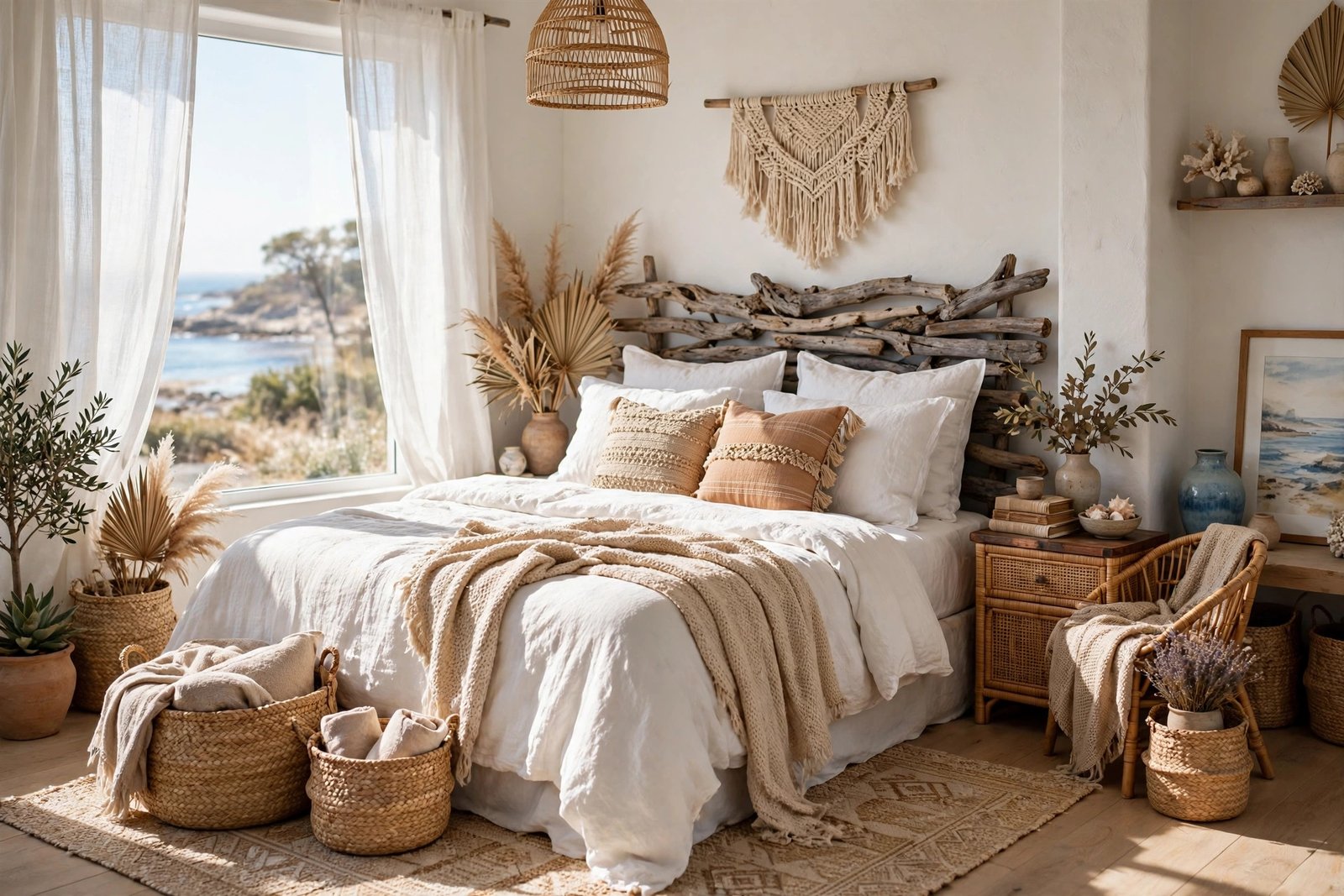
Japandi + Boho: Calm Meets Cozy
This pairing works because both styles are built on natural materials, earthy neutrals and handcrafted texture. Japandi — the blend of Japanese minimalism and Scandinavian warmth — brings the calm: low furniture, clean lines, uncluttered surfaces and a palette of warm whites, beige and light wood. Boho brings the life: layered textiles, plants, woven baskets and global patterns. Let Japandi lead at 80 percent — the furniture shapes, the breathing room, the restrained palette — and let boho be the 20 percent layered on top: a patterned cushion or two, a macramé hanging, a cluster of plants, a woven throw. If you want to see the Japandi side in its pure form first, our Japandi bedroom ideas show the calm base clearly, and our boho bedroom ideas show the relaxed layers you’ll be borrowing from. The failure mode to avoid: letting boho’s love of abundance creep past 20 percent. The moment every surface is covered, the Japandi calm — the whole point of the pairing — is gone.
Modern + Vintage: Clean Lines, Real Soul
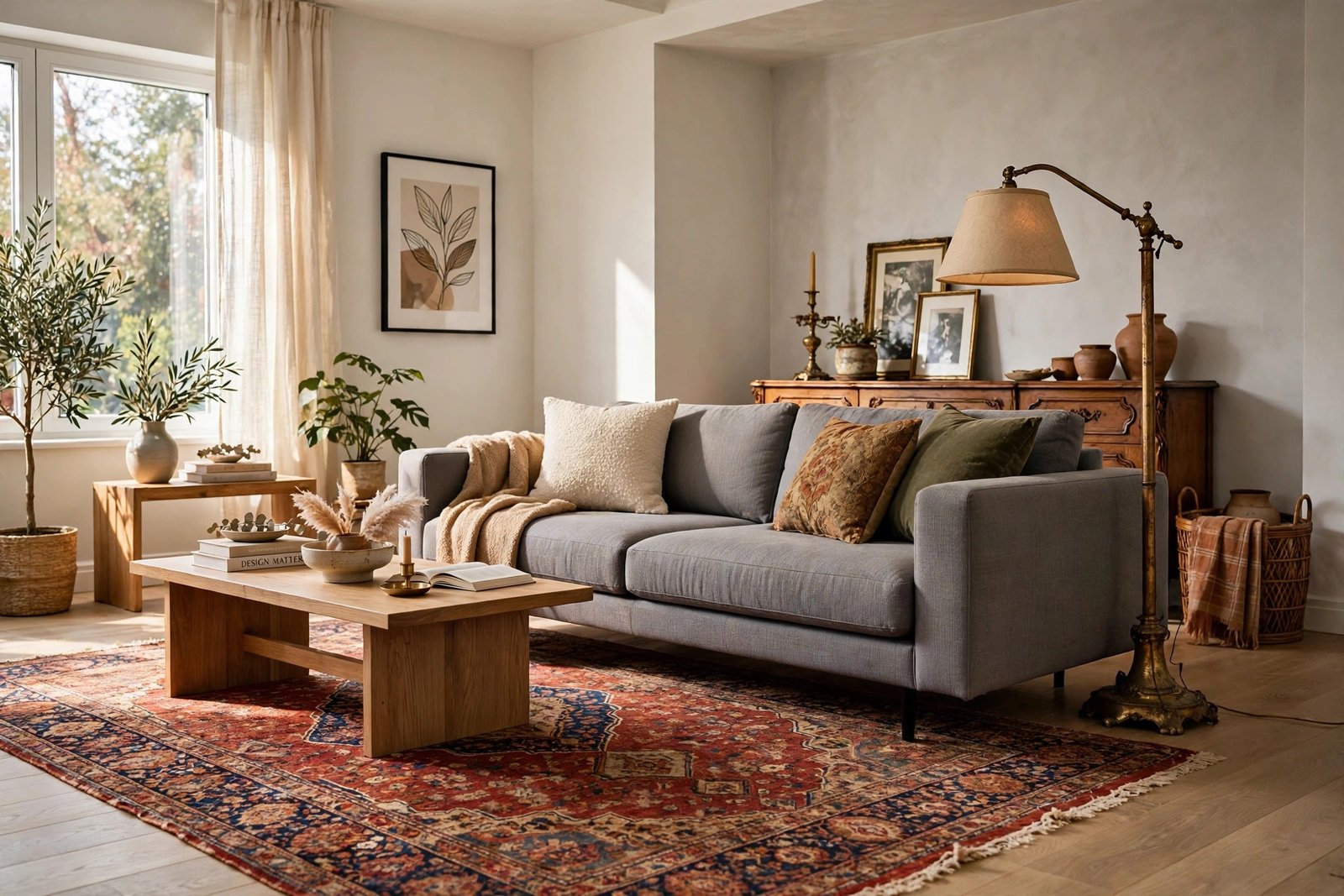
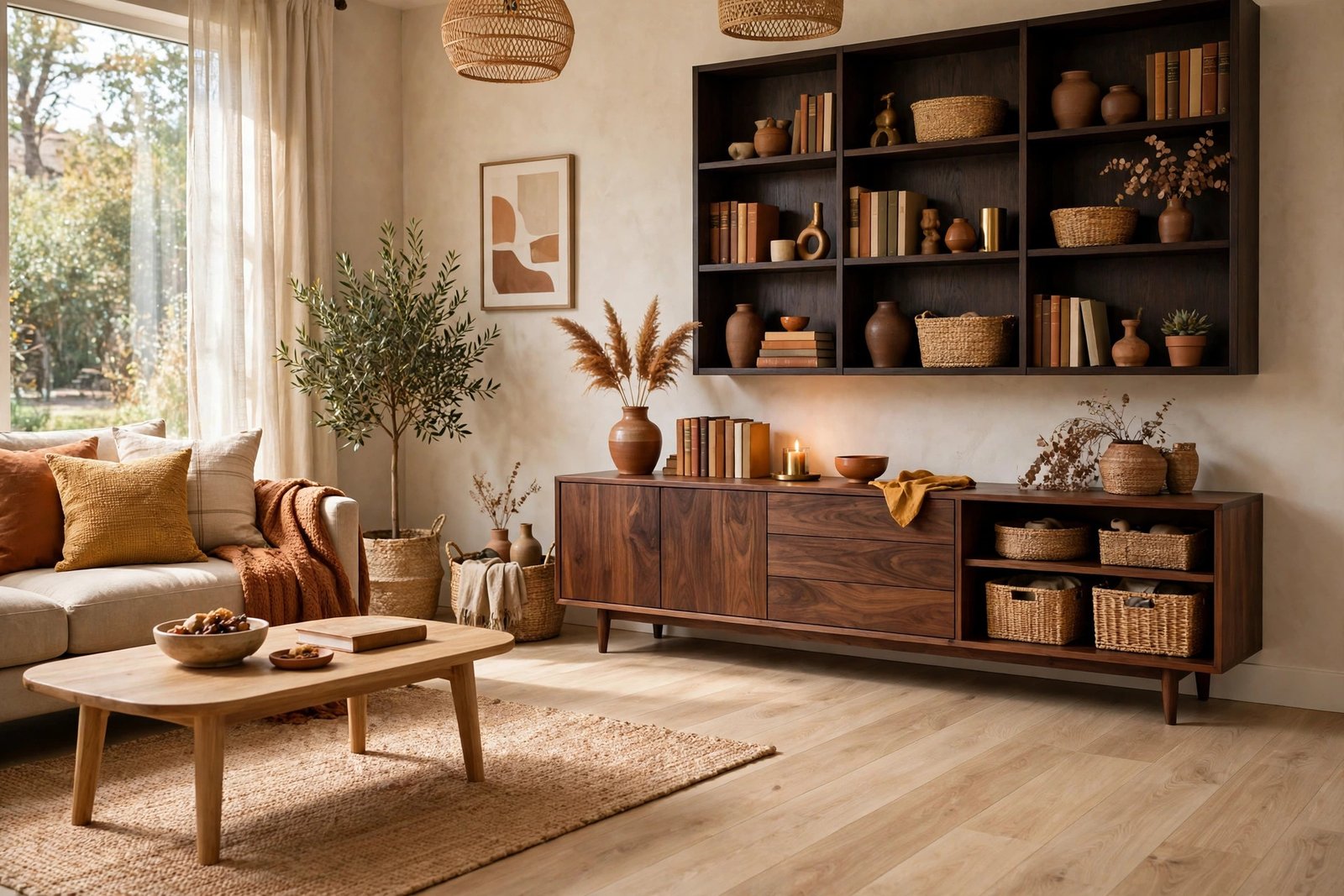
Modern rooms are easy to live in but can feel sterile; vintage pieces have soul but a whole room of them can feel like a museum. Together, they fix each other. Keep modern in charge of the big, practical pieces — the sofa, the shelving, the lighting plan — at about 80 percent. Then let vintage own the moments of character: a worn Persian-style rug under the modern coffee table, a brass lamp with a beautiful patina, a mid-century sideboard, framed antique prints. The palette rule matters enormously here: choose vintage pieces in colors that already exist in your modern scheme, and the decades blend seamlessly. One more tip specific to this pairing: vintage wood tones rarely match modern wood tones, and that’s fine. Mixed woods look intentional when each tone appears at least twice and the undertones are all warm or all cool — see the mixed-wood photo in this guide for how natural it can look.
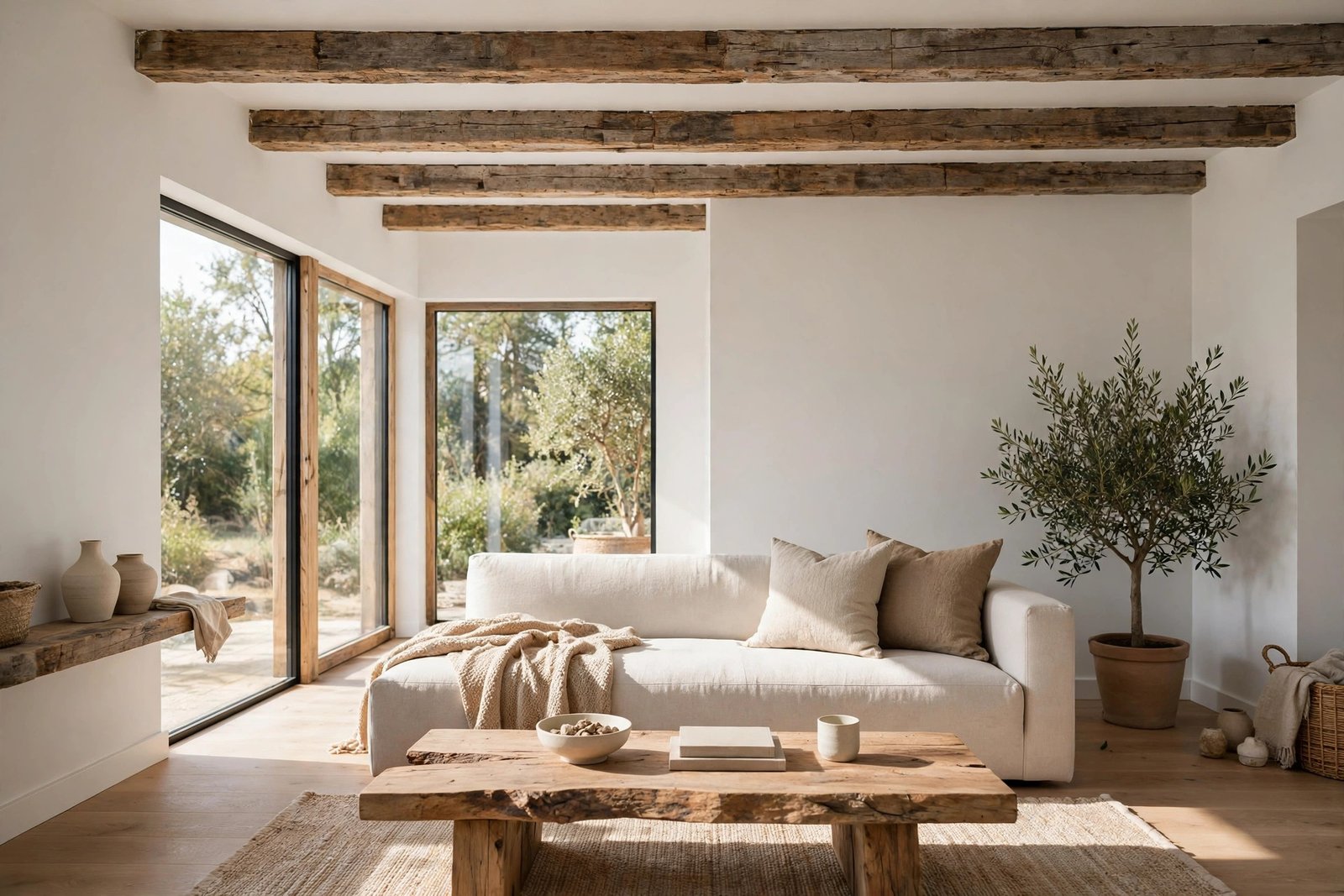
Minimalist + Rustic: Less, But Warmer
Minimalism’s weakness is coldness; rustic’s weakness is heaviness. Mixed well, you get a room that is serene and grounded at once. The minimalist side leads: few pieces, generous empty space, a tight neutral palette. The rustic side appears in materials rather than quantity — a raw-edge wooden bench, a chunky knit throw, a stoneware vase, one reclaimed-wood shelf. Because the room holds so few objects, each rustic piece gets to be a small event, and its texture does the work that color does in busier pairings. Our minimalist decor ideas for a calm home are a good starting point for the base layer before you warm it up. The failure mode: rustic pieces are often large, so watch the scale rule — one oversized rustic table can quietly become a third of the room and break your 80/20 without you noticing.
A Worked Example: One Living Room, Start to Finish
Let’s put the whole method to work on a real-feeling room. Say you have a plain rental living room: white walls, a grey modern sofa you already own, and a deep love of boho style you’re afraid to use. Here’s the mix, step by step.
Step 1 — Pick the leader. The sofa stays, and it’s modern, so modern leads at 80 percent. The room’s bones — sofa, a simple media console, plain curtains — stay clean and modern.
Step 2 — Set the palette. Warm white, terracotta, sage green and natural jute. Every new purchase must match this list.
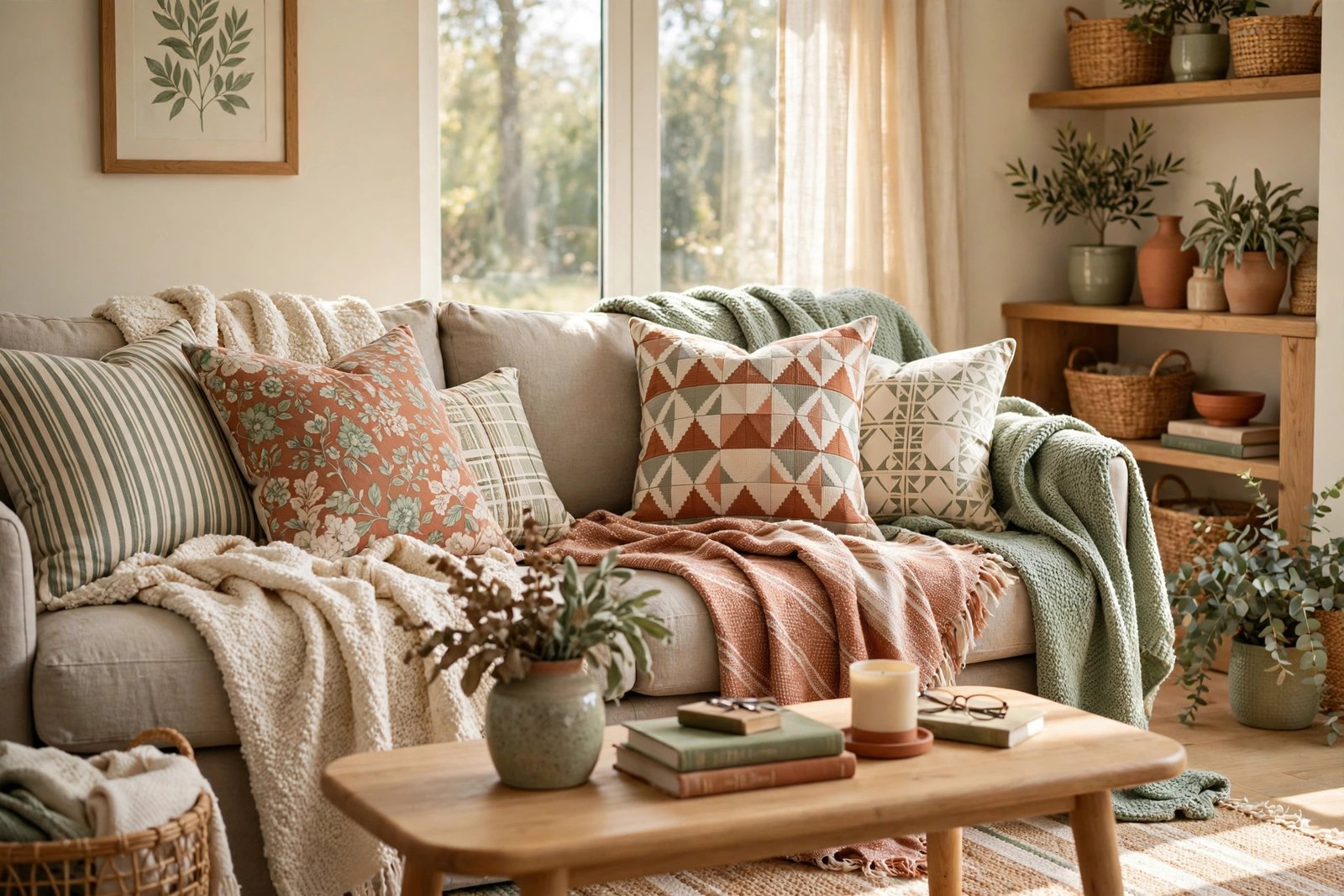
Step 3 — Add the 20 percent, repeated. Boho enters three times, spread around the room: a terracotta-and-cream patterned rug under the coffee table, two woven cushions and a fringed throw on the sofa, and a rattan pendant shade plus a tall plant in the corner. Three appearances, one story.
Step 4 — Add a bridge. A light-wood coffee table with a slightly organic, handmade feel: modern in shape, boho in material. It sits literally between the rug and the sofa, and visually between the two styles.
Step 5 — Check texture and scale. Linen curtains, jute rug fibers, rattan, smooth sofa fabric — four textures, all matte and natural. Nothing in the room is dramatically bigger or more delicate than its neighbors. Stand in the doorway and squint: if your eye lands calmly instead of darting between rivals, the mix is working.
Mixing Styles on a Budget
Here’s a secret: mixing styles is the cheapest way to decorate, because it lets you keep what you own and shop secondhand without worrying about matching sets. A practical order of operations, cheapest first:
- Start with textiles (roughly $20–$80). Cushions, throws and a rug are the fastest way to introduce your accent style and your shared palette at the same time. They are also the easiest things to change if the mix feels wrong.
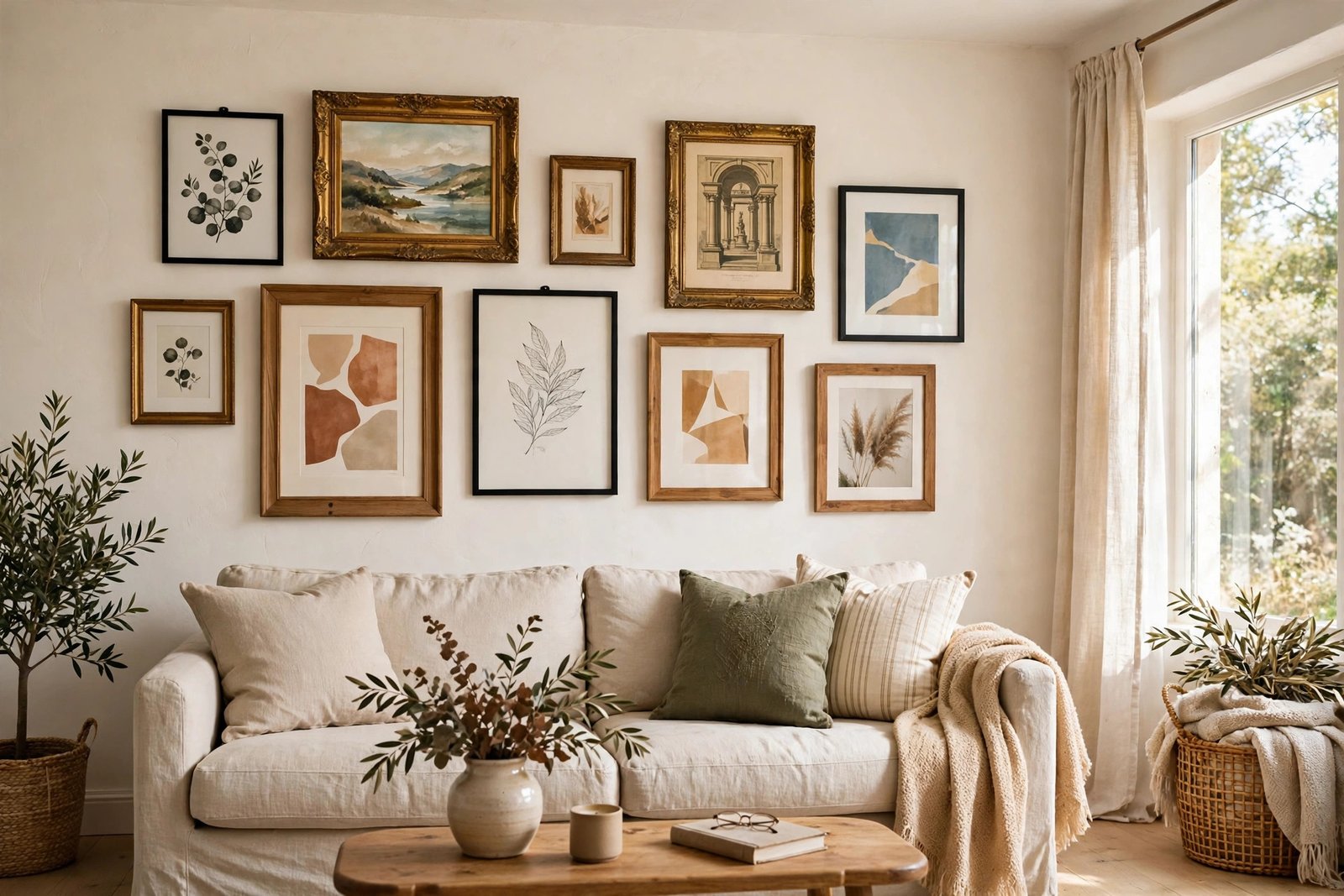
- Paint is your palette enforcer (about $30–$50 a can). A thrifted side table in the wrong color becomes a perfect bridge piece with one coat of a palette color. Painting mismatched frames one color instantly unifies a gallery wall.
- Shop vintage for the 20 percent. Accent pieces are small, which is exactly what thrift stores and estate sales are full of: lamps, mirrors, side tables, ceramics. Vintage accents cost a fraction of new ones and bring the character new pieces can’t fake.
- Spend on the anchor, save on the accents. Your 80-percent style includes the sofa and the big furniture — that’s where comfort and quality matter. The 20 percent can be almost entirely secondhand and still look expensive, because the palette makes it look chosen.
- Swap before you buy. “Shop your home” first: a rustic stool from the bedroom or a modern lamp from the study might be the exact bridge piece your living room needs, free.
Common Mistakes to Avoid
- Splitting the room 50/50. Two styles at equal strength almost always fight. Commit to a leader and let the second style be a seasoning, not a second main course.
- Letting each style bring its own colors. The pieces can come from anywhere; the palette cannot. Three to five colors, total, for the whole room.
- Using an accent style exactly once. One lonely piece reads as a mistake. Repeat the accent at least twice more, in different parts of the room.
- Mixing more than two styles in a small room. Small spaces amplify every conflict. Two styles plus discipline beats three styles plus hope.
- Ignoring wood undertones. Warm woods (honey, walnut) and cool woods (grey-washed, ash) clash quietly. Mixed wood tones are fine — mixed undertones are the problem.
- Buying the accent pieces first. Without the anchor in place, you can’t judge proportions. Set the 80 percent, then shop the 20.
- Forgetting the doorway test. If the room doesn’t feel calm from the door, something is competing. Check palette first, then scale, then count how many times each style appears.
Frequently Asked Questions
How many decor styles can you mix in one room?
Two is the sweet spot for most rooms and nearly all beginners: one dominant style at about 80 percent and one accent at 20 percent. A third style can work in very small doses inside that 20 percent — a single piece or two — but every added style multiplies the chances of clashing palettes and scales. Large, open-plan spaces tolerate three styles better because each zone can have its own leader.
What decor styles go together best?
Pairings that share materials or mood are the most forgiving: Japandi with boho (shared natural textures), modern with vintage (contrast balanced by palette), minimalist with rustic (shared warmth in materials), Scandinavian with mid-century (shared light woods and clean lines), and coastal with boho (shared relaxed, woven textures). Styles that fight hardest are usually the ones with opposite palettes and finishes, like glam and rustic — mixable, but they demand strict palette discipline.
Can you mix modern and traditional furniture?
Yes — it’s one of the most classic mixes there is. Let one lead (modern usually handles the big practical pieces well), keep both sides inside one color palette, and add a bridge: traditional chairs around a simple modern table, or a sleek pendant over a carved wooden one. Matching the wood undertones — all warm or all cool — makes the decades feel like one deliberate room.
How do you mix patterns without clashing?
Use one shared palette and vary the scale of the patterns: one large-scale print (a bold floral), one medium (a stripe), and one small (a tiny geometric or dot). If every pattern pulls its colors from the same three to five shades, patterns in completely different styles will read as a coordinated set. When in doubt, separate busy patterns with a solid in a palette color.
Can you mix different wood tones in one room?
Absolutely — mixed woods look layered and collected when two rules hold. First, keep the undertones consistent: all warm or all cool. Second, repeat each wood tone at least twice so no single piece looks accidental. A light oak floor, a walnut sideboard and a dark-stained shelf can absolutely share a room when a warm palette ties them together.
What if my mixed room still looks wrong?
Run the three checks from this guide in order. Palette first: remove or cover anything outside your three to five colors — this fixes most rooms. Scale second: swap out any piece that looks dramatically heavier or more delicate than its neighbors. Repetition third: count how many times your accent style appears; if it’s once, add two small echoes of it. Change one thing at a time and re-check from the doorway after each change.
The Takeaway
Mixing decor styles isn’t a talent — it’s a structure. One style leads, one palette glues, every style repeats, a bridge piece shakes hands between the two worlds, and texture translates. With those five habits, the vintage rug and the modern sofa stop arguing and start telling the same story: yours. Start with one room, use what you already own, and add your 20 percent slowly. The most personal rooms are never bought in a single style — they’re gathered, one well-chosen piece at a time.